
Reviewed · ANGKOR WAT SUNRISE TOURS
Siem Reap Angkor Wat Sunrise Explore The Most Iconic Temples
Angkor Wat at sunrise is the main event here, but the real strength of this day is the range of temples that follows. You see the grand galleries of Angkor Wat, the tree-covered ruins of Ta Prohm, the giant stone faces of Bayon, and the quieter corridors of Banteay Kdei before lunch.
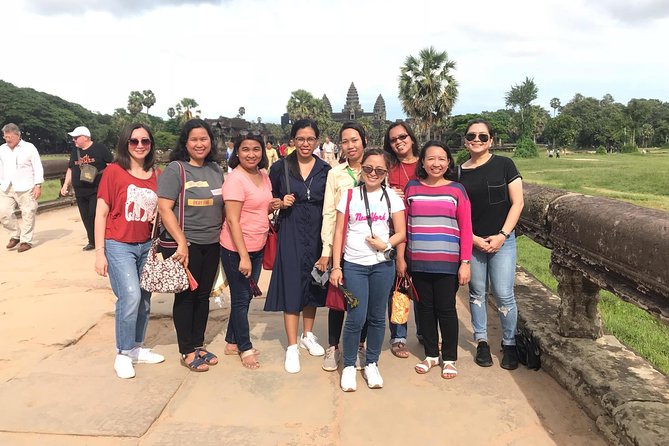
I like the low $13 price, air-conditioned transport, hotel pickup, drinking water, and the chance to cover several major sites without arranging your own tuk-tuk or driver. I also like that guides such as Noun have been praised for clear temple explanations and useful photo advice.
The trade-off is group size. One booking party found more than 40 people being managed by one guide, with two buses involved. That can mean repeated instructions, slower movement, and less time for personal questions, so this suits you best if value matters more than a private, unhurried visit.
Key points to know before you book
- Sunrise begins around 4:20 to 5:15am pickup: Your day starts very early, but you reach Angkor Wat before the heat and much of the daytime crowd.
- Five major stops fit into eight hours: You visit Angkor Wat, Banteay Kdei, Ta Prohm, Bayon, and Tonle Om Gate.
- The $13 fare covers the basics: Transport, an English-speaking guide, hotel pickup and drop-off, and drinking water are included.
- Your Angkor ticket is extra: Temple admission is not included, and meals are also your responsibility.
- Noun is a guide to look for: Several strong ratings specifically praise his explanations, enthusiasm, and ability to point out good photo spots.
- Expect a shared group format: The price is appealing partly because the tour can carry a large group, not because it offers a private visit.
Why the early start is worth it
Your hotel pickup in Siem Reap is scheduled between 4:20 and 5:15am, with the return generally between noon and 1pm. That is a serious start, so set out your clothes, water, and ticket money the night before.
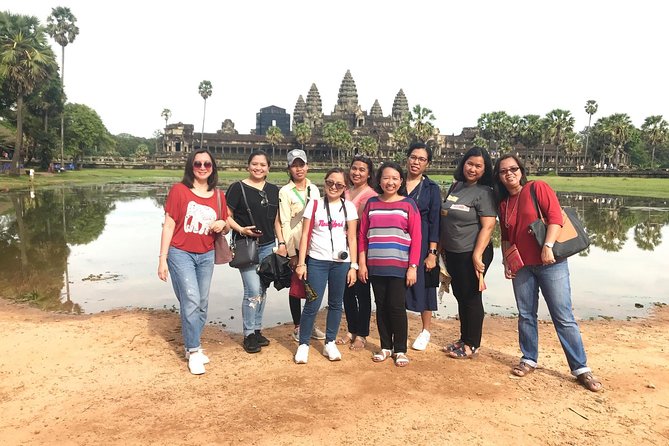
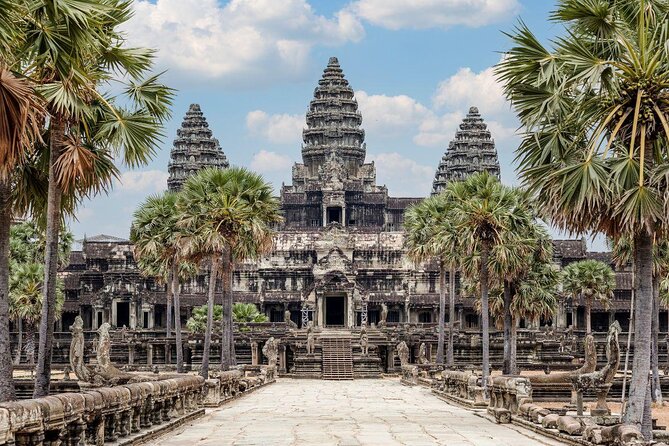
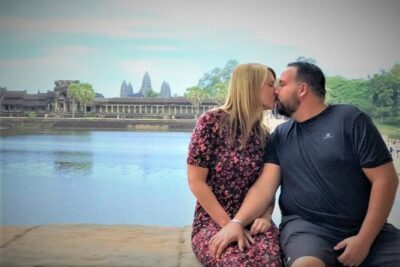
The early hour has two practical benefits. First, Angkor Wat is cooler than it will be later in the day. Second, the temple’s towers and moat are at their most striking before the sun climbs high. The sunrise portion is planned as a photo stop and guided visit, with about two hours assigned to Angkor Wat overall.
You should keep your expectations sensible. A sunrise visit is popular, and the view depends on clouds and light conditions. The tour gives you the chance to see the towers reflected in the moat, but it cannot guarantee a perfect sky or an empty foreground.
The air-conditioned minibus is another useful feature. After the first stop, you will spend time walking between ruins and riding through the park, so having a cool vehicle between temples matters. The included drinking water is welcome, though you should still bring anything else you need for a half-day outdoors.
Other early starts at the temples from Siem Reap:
- Angkor Wat Sunrise or Sunset Tour with Guide from Siem Reap
★ 5.0 · 12,109 reviews - Angkor Wat Sunrise tour with Small – Group and Guide tours
★ 5.0 · 3,655 reviews - Full-Day Angkor Wat Sunrise Private Tour with Guide from Siem Reap
★ 5.0 · 2,920 reviews
Angkor Wat, from reflected towers to carved galleries
Angkor Wat was built as a Hindu temple dedicated to Vishnu and later became a Buddhist site. That change is visible in the way the monument serves both as a grand architectural statement and a living place of worship.
After sunrise, the tour takes you inside for a longer visit. The galleries contain detailed bas-reliefs drawn from Hindu mythology, while the central sanctuary gives the complex its vertical drama. You are not simply looking at a large pile of stones here. The design leads your eye inward and upward, from the moat and outer enclosure toward the central towers.
The two-hour allocation includes the sunrise and interior visit, so your guide’s pacing matters. A good guide can help you notice scenes and carvings that are easy to pass without context. Noun has received particular praise for explaining Angkor Wat and showing people useful places for photographs.
The drawback is that Angkor Wat can feel hurried when a group is large. You may need to stay close to the guide and move with the schedule rather than lingering wherever you like. If you want to study every bas-relief or photograph the same corridor from several angles, a private tour would give you more control.
Still, for a first visit, this is a strong introduction. You get the classic sunrise setting, the main interior spaces, and a guide who can provide a framework for the rest of the day.
Banteay Kdei offers a quieter change of pace
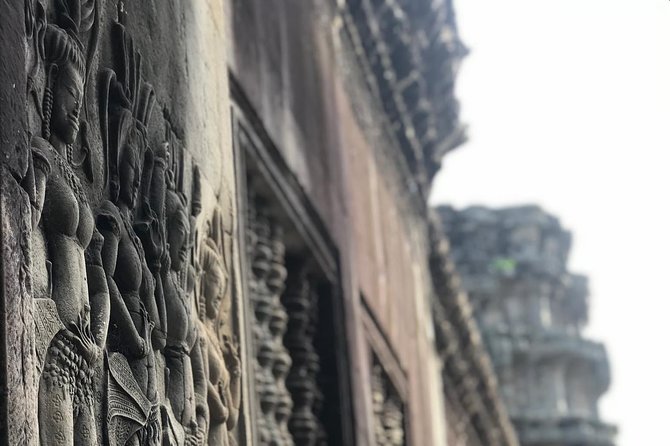
Banteay Kdei follows Angkor Wat, with about an hour for a guided walk and photographs. Its name means Citadel of Chambers, and the temple is associated with late 12th-century Buddhist architecture.
This is the stop I would value most if you prefer atmosphere over fame. Banteay Kdei is less widely known than Angkor Wat or Ta Prohm, and its partly ruined corridors give it a calmer mood. You can look at the carved doorways, enclosed passages, and worn stone without the same pressure to capture one famous movie scene.
The partial ruins are part of the appeal, but they also mean you should not expect a fully restored monument. Broken sections and uneven areas contribute to its mysterious character. Your guide can help explain what you are seeing, since the layout is less instantly clear than Angkor Wat’s broad galleries.
An hour is enough for a useful look, but not for a slow architectural study. Think of Banteay Kdei as a welcome pause between the major headline sites. It adds variety and helps the day feel like more than a checklist of famous photographs.
Ta Prohm shows what jungle and stone can do together
Ta Prohm is the temple many people picture when they think of Angkor’s jungle ruins. Large tree roots grow over sections of the walls, and the temple was left largely unrestored, creating the famous meeting of living trees and old stone.
The scheduled visit lasts about an hour and a half. That gives you more time than at Banteay Kdei, which makes sense because Ta Prohm has more visual drama and more corners to explore. The route includes guided walking and photo stops.
Ta Prohm became widely known after appearing in Tomb Raider, featuring Angelina Jolie. You do not need to have seen the film to enjoy it. The temple works because nature has become part of the structure, with roots pressing against walls and doorways in ways that make the ruins feel unstable and theatrical.
This is also where a big group can be most noticeable. The well-known sections can become crowded, and keeping several dozen people together takes time. Stay near the guide, listen for meeting instructions, and take your own photographs when the path opens up rather than waiting for a completely empty view.
I like the contrast with Angkor Wat. Angkor Wat is ordered, symmetrical, and grand. Ta Prohm is broken, shaded, and full of tangled forms. Seeing both in one morning gives you a better sense of how varied the Angkor Archaeological Park can be.
Same base, a different kind of day out:
- Siem Reap: Angkor Wat: Small-Group Sunrise or Sunset Tour
★ 5.0 · 9,444 reviews - From Siem Reap: Kampong Phluk Floating Village Tour by Boat
★ 4.9 · 6,979 reviews - Sunset tour of Kampong Phluk stilts home village on the Tonle Sap
★ 5.0 · 4,865 reviews - Siem Reap: Angkor Wat 2-Day Tour with Sunrise and Sunset
★ 4.9 · 4,429 reviews
Bayon puts 200-plus stone faces at the center
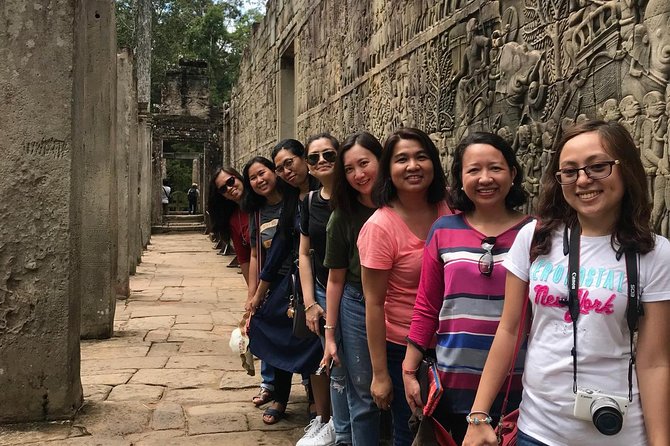
Bayon is in the center of Angkor Thom and receives about an hour and a half on this tour. Its most famous feature is the collection of more than 200 serene stone faces set across 54 towers.
The faces are the reason to look up, around, and behind you. From one narrow passage, a face may appear at eye level. From another angle, several towers seem to watch over the galleries at once. The effect is unusual and very different from Angkor Wat’s long perspective lines.
Bayon also contains carvings showing daily life and battles. These details bring people, animals, markets, and conflict into the stonework. If you only take photographs of the faces, you will miss much of what makes the temple worth a long stop.
The structure can be confusing. Towers, galleries, stairs, and tight passages create a busy route, so a guide is useful for orientation. With a large party, you may hear the explanation in one area and then need to move along quickly to make room for others.
The generous time allocation helps. You have a chance to see the faces, hear the main explanation, and look at some of the carvings before heading to the final stop.
Tonle Om Gate gives you a quick Angkor Thom finale
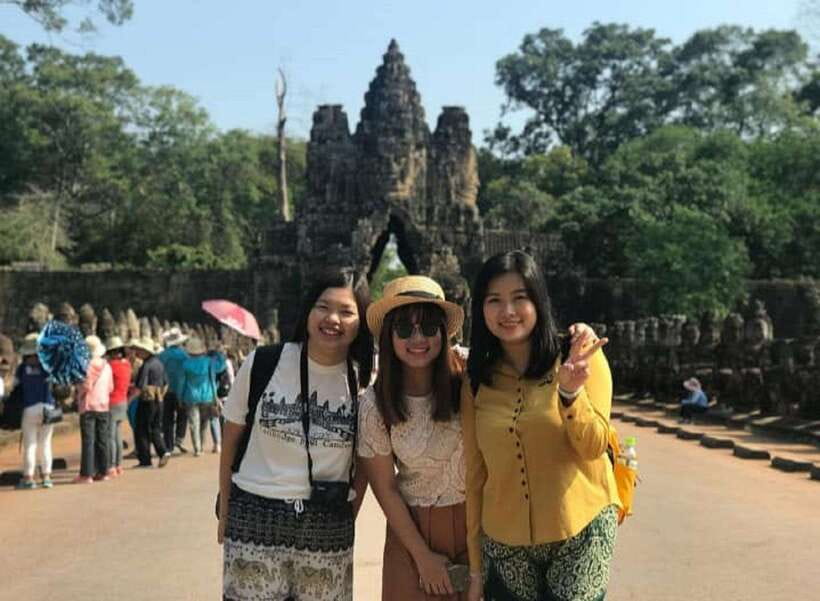
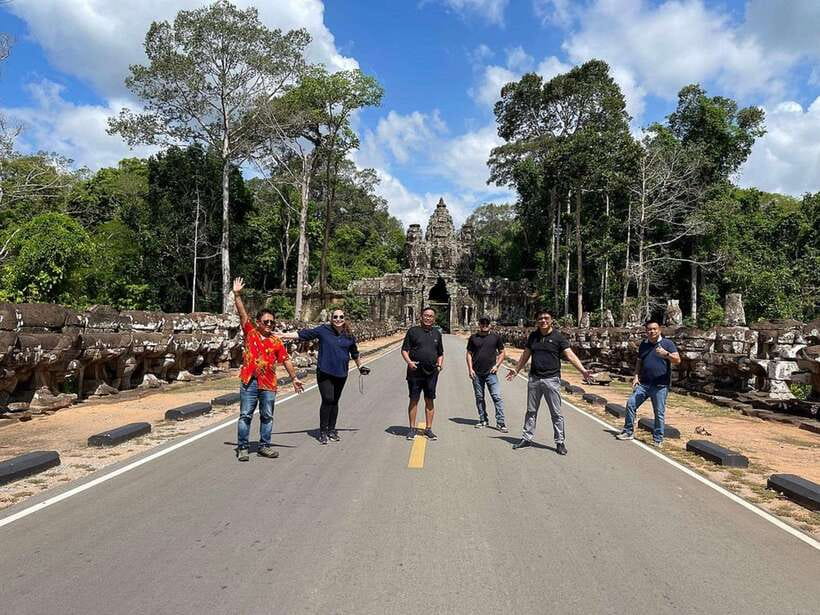
The final temple-area stop is Tonle Om Gate, also known as the Southern Gate of Angkor Thom. The visit lasts about 30 minutes, so this is a short photo and orientation stop rather than a full exploration.
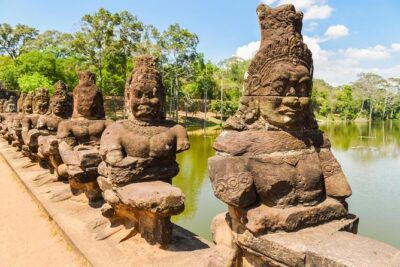
The entrance is approached by a causeway lined with statues of gods and demons. The gate itself is crowned by four large stone faces similar to those at Bayon. That connection makes the stop a useful closing image after your visit to the face towers.
I like the way this stop adds scale. The road, causeway, statues, and gate help you understand that Angkor Thom was not just a collection of isolated temples. It was a planned city area with formal entrances and grand symbolic design.
Thirty minutes is enough for photographs and a guide’s explanation. It is not enough for a slow inspection of every statue, and the group may need to keep moving. Treat it as a final architectural snapshot before the ride back to Siem Reap.
What the $13 price really covers
At $13 per person, this is a budget way to reach several major Angkor sites. The price includes an English-speaking guide, air-conditioned bus transport, hotel pickup and drop-off within Siem Reap City, and drinking water.
It does not include the temple ticket or a meal. That distinction matters because the advertised fare is not your full cost for the day. You need to buy your own entrance ticket, and the schedule does not list a meal stop. Arrange breakfast beforehand or carry something suitable for the early start.
The value is strongest if you would otherwise need to pay separately for transport and a guide. You get a full eight-hour outing and a route that covers the park’s most recognizable names. The price is less attractive if you want a private vehicle, flexible timing, or long one-to-one conversations at every temple.
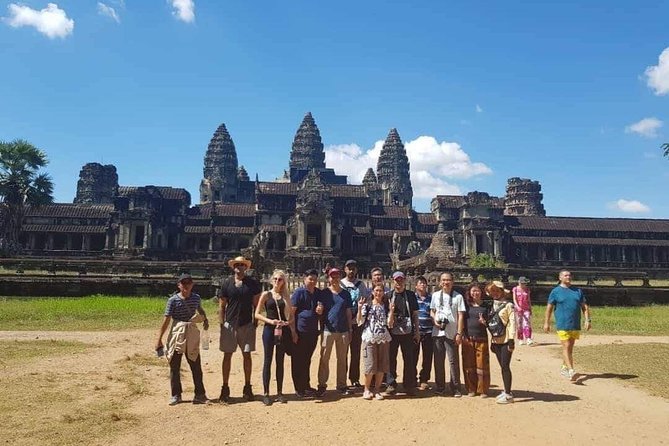
The shared format is the main compromise. A booking party found more than 40 people being handled across two buses, with one guide responsible for keeping everyone together and answering questions. That does not mean every departure will have that exact size, but you should book with the possibility of a sizable group in mind.
The guide can make or break the day
This itinerary covers a lot of ground. The guide has to explain complicated temples, gather people after each walk, manage the schedule, and keep the group moving in the heat. That role is especially important at Bayon and Ta Prohm, where it is easy to lose your sense of direction.
Noun is the clearest name associated with the tour. He has been praised for useful explanations at Angkor Wat, good photo suggestions, and an insightful approach across the day. Several top ratings also single him out by name.
The experience may vary with the guide assigned to your departure. The strongest reports point to friendly drivers and capable guiding, while the main criticism concerns the organizer’s handling of a very large group rather than the people leading it on the ground.
If you have a question, ask it when the guide finishes an explanation rather than while the group is moving. In a large party, the guide may have to repeat information several times, and a little patience helps everyone.
Who will enjoy this Angkor day most
I would recommend this tour to a first-time visitor who wants the major temples in one organized morning and early afternoon. It is also a good fit if you are watching your budget and do not need a private itinerary.
You will get the most from it if you:
- Can handle a pickup before dawn
- Want guided context rather than only transport
- Are happy to walk through large temple compounds
- Prefer a fixed route with several famous stops
- Accept that a shared bus can mean a large group
- Plan to arrange your own temple ticket and food
I would look elsewhere if you want to linger at one temple, photograph every detail without pressure, or avoid group travel. A private guide or smaller tour would offer more freedom, but this option costs far less and covers a lot.
Wear practical walking clothes and prepare for an outdoor morning. The tour description confirms walking at Banteay Kdei, Ta Prohm, Bayon, and Tonle Om Gate, so comfortable footwear matters. Keep your ticket money, water, and any food easy to reach.
My call: book it for breadth and price
Book this tour if you want an inexpensive, well-packed introduction to Angkor Wat and the key temples around Angkor Thom. The route is thoughtfully varied: sunrise and grand galleries at Angkor Wat, quieter ruins at Banteay Kdei, tree roots at Ta Prohm, stone faces at Bayon, and the ceremonial gate at Tonle Om.
The strongest reasons to choose it are the $13 fare, included transport, hotel service, and the chance to have a guide such as Noun explain what you are seeing. The main warning is group size. You are buying a shared sightseeing day, not a private temple study.
If that sounds fair, this is good value. If the thought of following a large group through Ta Prohm makes you sigh before breakfast, spend more for a smaller arrangement.
FAQ
How early is hotel pickup?
Pickup from hotels in Siem Reap City is scheduled between 4:20am and 5:15am. The tour usually ends between noon and 1pm.
How long does the tour last?
The advertised duration is eight hours, including hotel pickup, temple visits, transport between sites, and the return to Siem Reap.
Which temples are included?
The route includes Angkor Wat, Banteay Kdei, Ta Prohm, Bayon Temple, and Tonle Om Gate, also called the Southern Gate of Angkor Thom.
Is the Angkor temple ticket included?
No. You must purchase the temple entrance ticket separately.
Is food included?
No. Meals are not included. Drinking water is provided.
What language does the guide speak?
The live tour guide speaks English.
Is hotel pickup and drop-off included?
Yes. Pickup and drop-off are included for travelers staying in Siem Reap City.
Just added in Siem Reap
- Twilight Tastes of Siem Reap Include Dinner★ 5.0 · 13 reviews
- Ultimate Sunrise to Angkor Wat, Angkor Thom and Bayon Temple★ 5.0 · 3 reviews
- Trekking Tour at Phnom Kulen National Park from Siem Reap★ 5.0 · 3 reviews
- Full-Day Private Tour of Angkor Wat with Pick Up★ 5.0 · 12 reviews
- Private Day Trip to Angkor Temples with Expert Guide★ 5.0 · 4 reviews
- Siem Reap City Tour with War Museum and Killing Field★ 5.0 · 27 reviews
- Waterfall & River of 1000 Siva Linga- Kulen Mountain Private Tour★ 5.0 · 3 reviews
- Unveiling 2 Days Private Angkor Wat/Beyond In Sunrise/Sunset Tour★ 5.0 · 48 reviews
Angkor Wat Sunrise Tours, compared.
Angkor Wat Sunrise or Sunset Tour with Guide from Siem Reap
Read our review →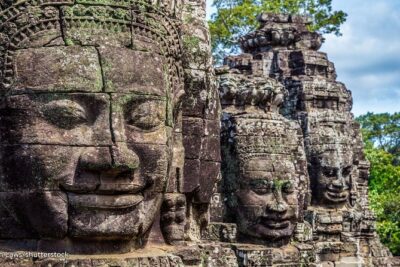
Angkor Wat Sunrise tour with Small – Group and Guide tours
Read our review →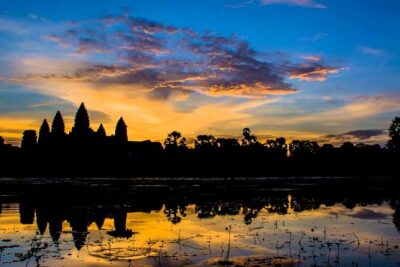
Full-Day Angkor Wat Sunrise Private Tour with Guide from Siem Reap
Read our review →
Angkor Wat Sunrise & 3 Main Temples with Breakfast – Small Group
Read our review →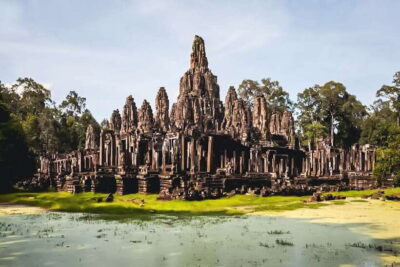
Angkor Wat Sunrise and Full-Day Sightseeing Tour
Read our review →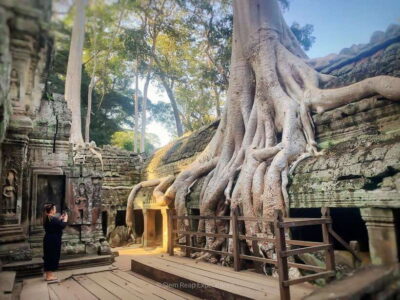
2 Days Exclusive Temple Highlights with Sunset and Sunrise Tour
Read our review →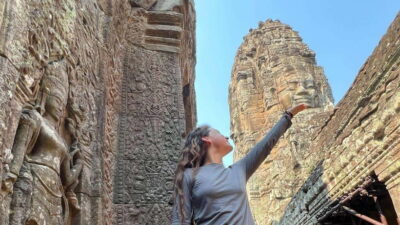
Angkor Sunrise 1- or 2-Day Guided Temples Tour
Read our review →Browse the lists this tour appears in