
Reviewed · TUK TUK TOURS
Angkor National Museum Ticket with Tuk-Tuk Pick-Up
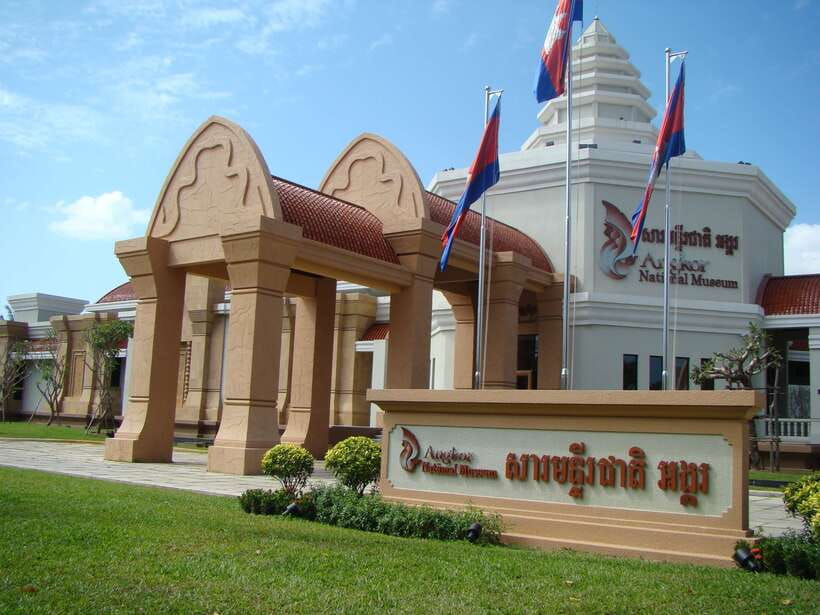
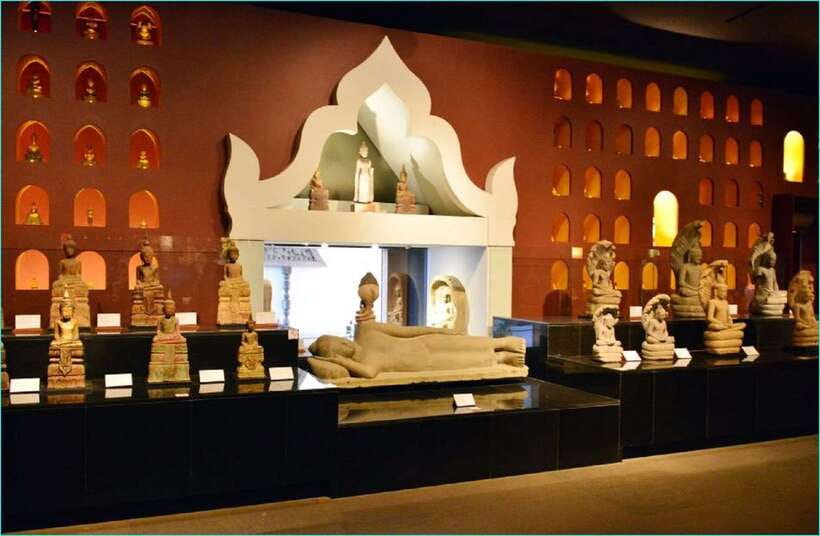
Angkor National Museum’s gallery of 1,000 Buddha statues gives this two-hour visit its strongest moment. It is also a useful primer for the temples, showing how Khmer beliefs, art, and architecture developed before you face the monuments in stone.
I like the simple one-way tuk-tuk pickup and the clear eight-gallery layout. I also like that the museum covers customs and religious ideas, not just dates and kings. The main catch is that the audio guide is not included, and backpacks are not allowed.
Key points
- 1,000 Buddha statues: The museum’s most memorable display brings Khmer Buddhist art together in one room.
- Eight chronological galleries: You follow the story from the early origins of Khmer civilization to its height.
- Useful before Angkor’s temples: The exhibits help you understand the religious symbols and architecture you will see at Angkor Wat and Angkor Thom.
- One-way tuk-tuk pickup: An English-speaking driver collects you at your hotel and takes you to the museum.
- Two-hour visit: Enough time for a focused museum stop, though a careful reader may want longer.
- Audio guide costs extra: Admission and a map are included, but the audio tour set is not.
Why Visit the Museum Before Angkor Wat?
Angkor’s temples are powerful places, but stone carvings do not always explain themselves. A gallery may show a deity, a royal figure, or a familiar symbol without telling you how it fitted into Khmer religious life. The museum gives you that missing frame of reference.
I would place this visit before your temple touring if you are new to Cambodian history. The displays introduce the origins of the Khmer Empire, the development of Khmer beliefs, and the ideas behind major building styles. When you later see Angkor Wat or Angkor Thom, you have a better chance of recognizing what is religious, what is royal, and what reflects daily custom.
You can also visit afterward. In that order, the museum works as a decoder for details you have already seen in stone. If your temple schedule is packed, this stop may feel less urgent, but it still gives structure to a subject that can otherwise become a blur of towers, galleries, and carved figures.
The museum is not a substitute for visiting Angkor. It is a supporting visit. You come here for explanation and context, then go to the temples for scale, setting, and the direct experience of Khmer architecture.
More Tuk Tuk Tours in Siem Reap
- Siem Reap: Angkor Wat Private Tuk-Tuk Tour
★ 4.9 · 2,222 reviews - Siem Reap Countryside Bike Tour / E-Bike or Tuk Tuk
★ 5.0 · 935 reviews - Angkor Sunrise Bike Tour / E-Bike or Tuk Tuk
★ 5.0 · 615 reviews
Starting With a Hotel Pickup by Tuk-Tuk
The practical part is straightforward. An English-speaking tuk-tuk driver picks you up at your accommodation and provides one-way transport to the museum. You must provide the hotel name or location, along with a contactable phone number, so the driver can find you.
Wait in your accommodation’s lobby at the agreed time. This is important because the pickup is not a general city transfer. The driver needs a clear location, and the museum entry ticket comes through the service. If you do not provide the hotel details, the pickup cannot be arranged properly.
The ride is one way only. You will need to arrange your own transport after the museum, so keep that in mind when planning lunch, a temple visit, or your return to the hotel. The included transfer is helpful, but it is not an all-day tuk-tuk arrangement.
The driver is described as English-speaking. That should help with the basic pickup and arrival, but do not treat the transfer as a guided museum tour. The museum visit is self-directed with a map. An audio guide is available for an additional cost, and it is not part of the $26 price.
Using the Map Through Eight Galleries
At the museum, you receive a map to help you move through the galleries. The exhibits are arranged chronologically, so the visit follows a broad story rather than placing unrelated objects side by side.
That order matters. You begin with the early development of Khmer civilization and continue toward its most powerful period. The sequence helps you connect changes in religion, art, customs, and architecture over time.
The galleries are presented with a realistic atmosphere. This means the museum is designed to create more than a plain display of objects in glass cases. You can expect the surroundings to support the historical story and help separate one period from the next.
Do not rush simply because the visit is advertised as two hours. Two hours is a sensible working time for a general visit, but the museum covers a large subject. Use the map to choose your pace. If you want a broad overview, move steadily through all eight galleries. If you prefer to read labels and study objects, you may need to be selective.
The chronological layout also makes this a good stop for families and first-time visitors. You do not need to know the entire story of Cambodia before entering. The museum gradually builds the subject as you move from room to room.
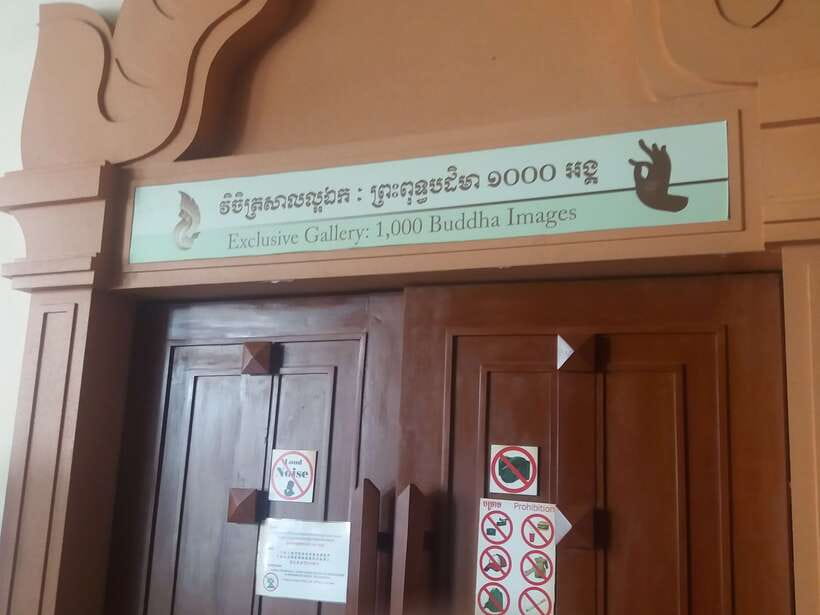
The Gallery of 1,000 Buddha Statues
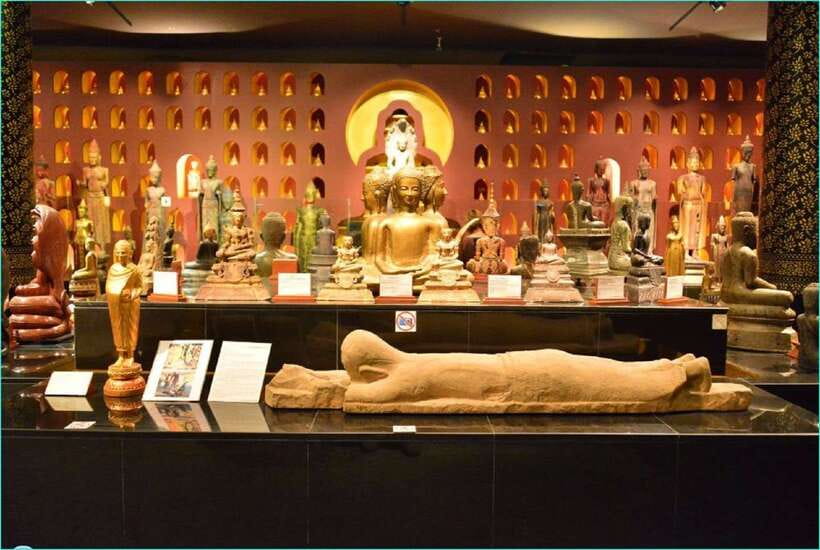
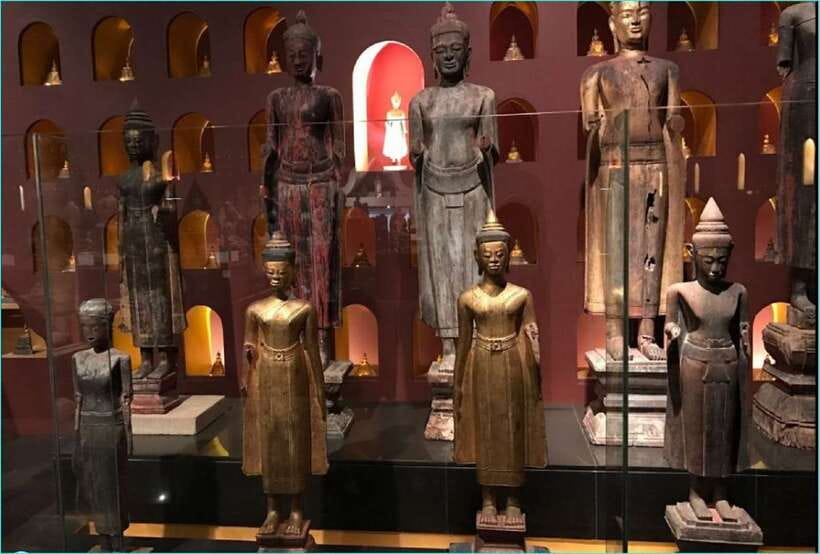
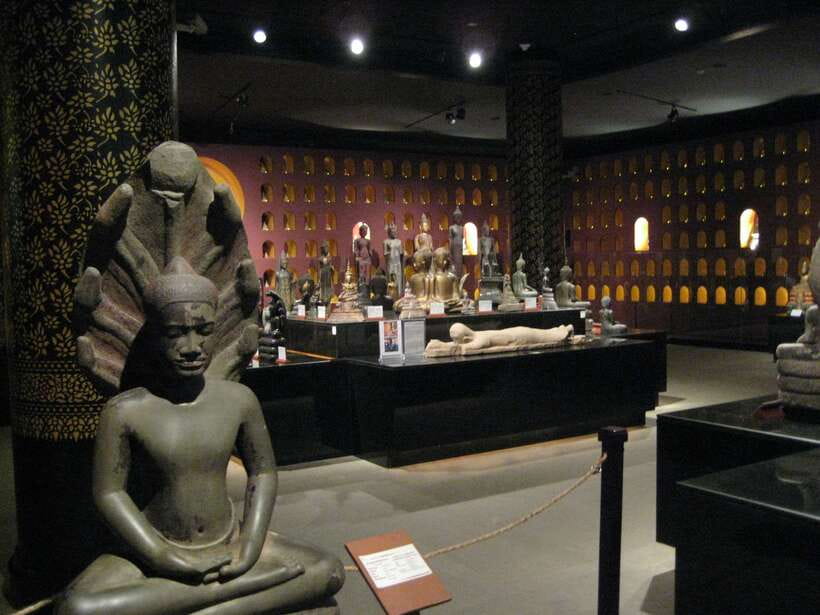
The display of 1,000 Buddha statues is the museum’s clearest visual attraction. A large group of related religious images can make a stronger impression than one isolated object. Here, the repeated forms show how Buddhist imagery became an important part of Khmer art and belief.
You should give this gallery time. Look at the overall effect first, then notice how individual statues differ in posture, expression, and detail. The gallery is not simply a count of objects. It offers a chance to think about repetition, devotion, and the place of religious images in Khmer culture.
This is also where the museum’s focus on belief becomes especially useful. Angkor-era architecture can seem purely monumental when you see it from the outside. The Buddha gallery reminds you that the temples were connected to religious practice and ideas about the sacred.
The exact amount of time you spend here depends on your interests. You might pass through quickly if architecture is your main concern, but that would mean missing one of the museum’s most distinctive rooms.
Other tuk tuk trips around Siem Reap:
- Angkor Wat Private Tuk-Tuk Tour (sunrise Option) & more
★ 5.0 · 439 reviews - Old Siem Reap Sunset Food Tour by Tuk-tuk
★ 5.0 · 311 reviews - Siem Reap: Street Food Experience by Tuk-Tuk
★ 4.9 · 310 reviews - Siem Reap: Apsara Dance Show & Dinner with Tuk-Tuk Transfers
★ 4.4 · 254 reviews
Khmer Beliefs, Customs, and Daily Traditions
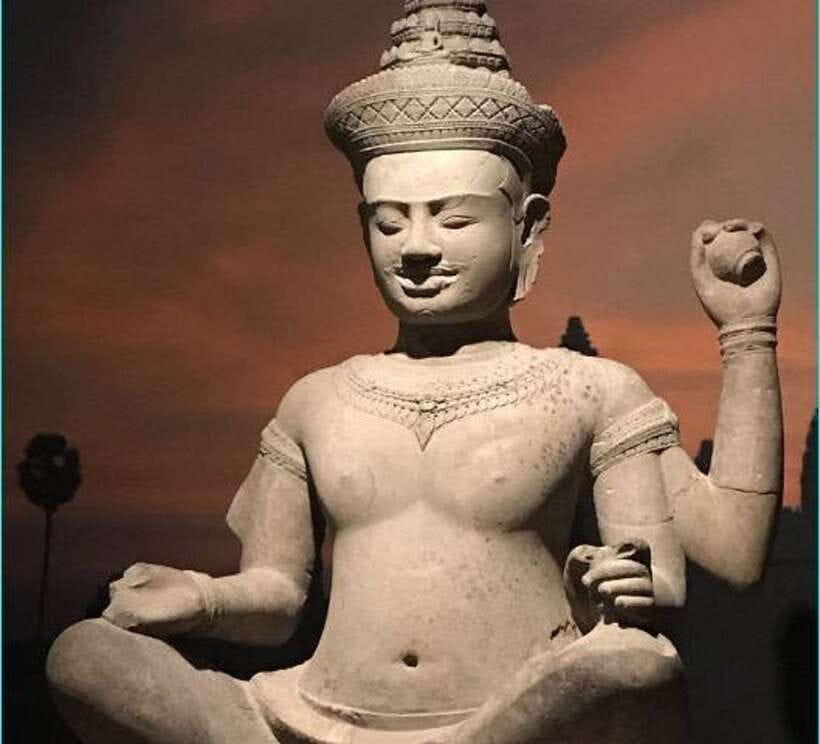
The museum does not focus only on rulers and monuments. It also introduces ancient Khmer customs, traditions, and different beliefs. That wider view gives you a better sense of the society behind the temples.
This is valuable because temple visits often place all attention on stonework. You look at towers, gates, bas-reliefs, and corridors, yet it can be hard to imagine the values that shaped them. The museum connects those physical details to the religious and cultural ideas of the Khmer people.
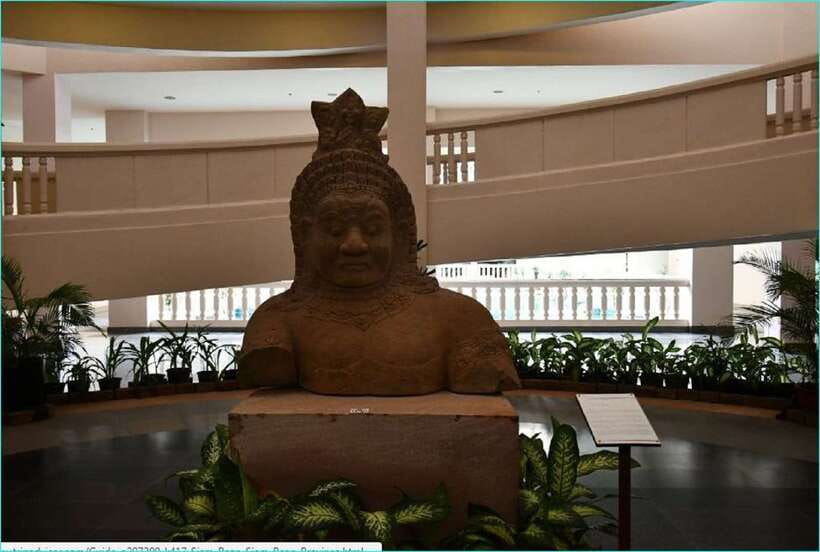
Expect the visit to deal with the development of Khmer civilization as a whole. The supplied information does not name every exhibit or identify each object in detail, so you should use the map and any available labels to decide which displays deserve the most time.
If you want more explanation as you walk, consider adding the audio tour set. It is not included, so factor that extra cost into your plan. Without it, you can still tour the museum with the map, but you will have less continuous commentary as you move from one display to the next.
Understanding Angkor Wat and Angkor Thom Architecture
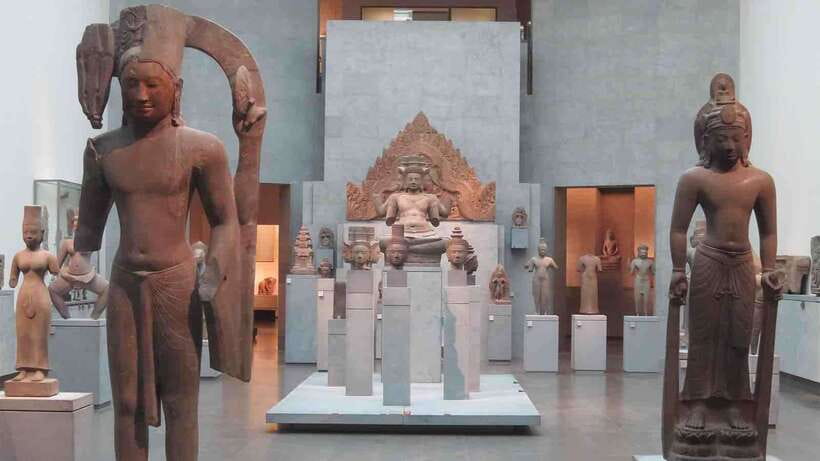
The museum’s treatment of architecture is especially useful before visiting Angkor Wat and Angkor Thom. It introduces the styles and ideas that shaped the buildings during these major periods of Khmer power.
You will not get the full effect of Angkor’s scale indoors. No museum can reproduce the approach to a temple, the changing view of a tower, or the feel of walking through a long stone gallery. What the museum can do is give you a set of questions to carry outside.
Look for connections between the exhibits and the temples you visit later. Notice how religious beliefs influence the design of sacred buildings. Pay attention to how architecture can express power, order, and devotion. The museum’s chronological structure helps you see these features as developments rather than isolated monuments.
This is why I recommend the museum as an early Siem Reap stop. Even a basic introduction can make your temple visits more focused. Instead of seeing Angkor Wat as only a famous photograph, you begin to understand its place in Khmer civilization.
How Much Value Do You Get for $26?
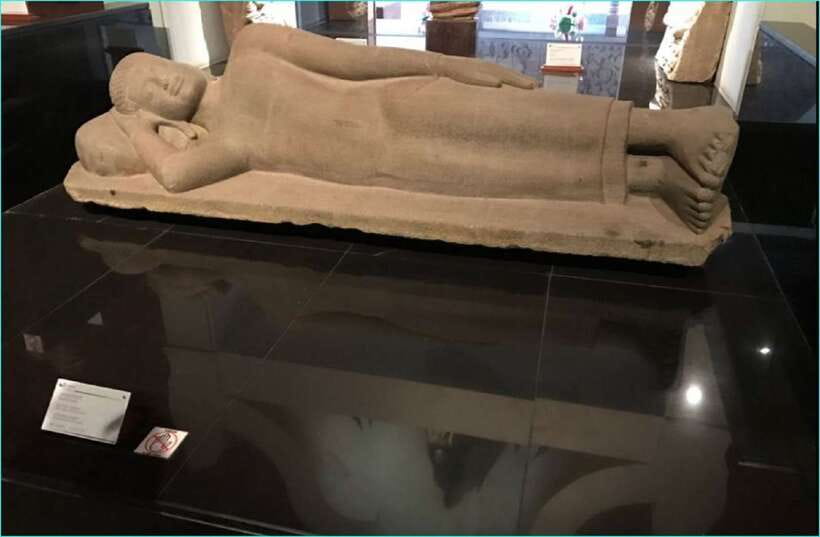
At $26 per person, this is not the cheapest museum visit in Cambodia. The price includes museum admission and one-way hotel pickup, which makes it more useful than a ticket-only purchase if you need transport to the museum.
The value depends on how you would get there. If you already have a tuk-tuk and can easily arrange a separate entrance ticket, the package may be less attractive. If you want a simple transfer and a planned cultural stop, the included pickup removes one small task from your day.
The two-hour duration also helps the value calculation. This is not a full-day activity, so you can combine it with other Siem Reap plans. You might schedule it before an afternoon temple visit, after returning from the temples, or during a lighter day between larger excursions.
The audio guide is the main extra expense to remember. Since it is not included, the advertised price does not cover every possible museum feature. You can use the provided map instead, but those wanting detailed spoken guidance should plan to pay separately.
For me, the price makes the most sense for first-time visitors who want historical context and do not already have local transport arranged. It is less compelling for someone looking only for a quick look at artifacts or for a visitor with a private guide covering the same material elsewhere.
What to Bring and What to Leave Behind
Backpacks are not allowed, so pack lightly. A small personal item may be treated differently, but the supplied rules specifically prohibit backpacks. To avoid a problem at entry, leave your large day bag at your accommodation if possible.
Bring your hotel information and phone. The driver needs your accommodation name or location, and the service asks for a contactable number. Keep the pickup details easy to find rather than buried in your luggage.
You do not need to bring a printed museum map because one is provided for the visit. If you want spoken commentary, ask about the audio tour set, since it is not included with admission.
The experience is presented in English, and the driver speaks English. The museum itself may offer information in other forms, but the supplied details only confirm English for the activity.
Who Will Get the Most From This Visit?
This museum stop suits you if you are visiting Angkor for the first time and want more than a quick series of temple photographs. It is also a good choice if you like museums, religious art, or cultural background before seeing famous monuments.
Families may find the chronological path easier to follow than a more scattered collection. The map gives you a clear route, and the two-hour length is manageable for a short cultural activity.
I would also recommend it to anyone who feels unsure about Khmer religious imagery. The Buddha gallery and the sections on beliefs can make later temple carvings easier to approach.
It is less suitable if you want a fully guided experience from start to finish. The included service provides a driver, entrance, and map, not a named museum guide. If you need detailed spoken explanations at every stage, the extra audio tour is worth considering.
It may also be a poor fit for a very tight schedule. The museum needs about two hours, and the one-way transfer means you must plan your next ride. The visit works best when you give it a proper place in your day rather than squeezing it between fixed appointments.
Planning the Visit Without Stress
Confirm your hotel name, location, pickup time, and phone number before setting out. Contact the provider with your intended visiting time and wait in the lobby for the tuk-tuk driver.
Keep the one-way arrangement in mind from the start. Decide how you will leave the museum before you arrive, especially if you plan to continue to a temple, restaurant, or another part of Siem Reap.
The activity allows free cancellation up to 24 hours in advance for a full refund. You can also reserve now and pay later, which is useful if your temple schedule may change.
The museum visit itself lasts two hours, but transport and any extra time spent reading displays will add to your day. Give yourself room rather than booking the next activity immediately afterward.
Should You Book the Angkor National Museum Ticket?
I would book this if you want a clear introduction to Khmer civilization before visiting Angkor’s temples, especially if you need one-way tuk-tuk transport from your hotel. The 1,000 Buddha gallery, eight chronological rooms, and coverage of customs and architecture make it more than a simple ticket.
Book with realistic expectations. You receive admission, a map, and a pickup, not a personal museum guide. The audio tour costs extra, backpacks are not allowed, and you must arrange your own transport after arrival.
For a first visit to Siem Reap, this is a sensible two-hour investment. Go before Angkor Wat if you want more context, or after the temples if you prefer to use the museum as an explanation of what you have seen. If your schedule is very tight or you already have a guide covering Khmer history, spend your limited time elsewhere.
FAQ
How long does the Angkor National Museum visit last?
The activity lasts two hours. That gives you time to follow the eight galleries with the provided map, though the time you spend in each room depends on your interests.
Is hotel pickup included?
Yes. One-way pickup from your hotel to the museum is included. You must provide your hotel name or location and wait for the English-speaking tuk-tuk driver in your accommodation’s lobby.
Is the return trip included?
No. The included transport is one way, from your hotel to the museum. You need to arrange your own transport after the museum visit.
Is an audio guide included in the ticket?
No. The audio tour set is not included. Admission and a map are included, so you can explore the galleries without purchasing the audio option.
Are backpacks allowed inside?
No. Backpacks are not allowed. Pack lightly and avoid bringing a backpack to the museum.
Can I cancel the booking?
Yes. You can cancel up to 24 hours in advance for a full refund. The activity also offers reserve now and pay later booking.
More museums and collections in Siem Reap
- Bantey Srei, Kbal Spean and Landmine museum Private Tuk-Tuk
★ 4.7 · 30 reviews - Siem Reap City Tour with War Museum and Killing Field
★ 5.0 · 27 reviews - Private Tour: HERO Rats & Angkor National Museum
★ 4.5 · 16 reviews - Kbal Spean Trekking Tour with Banteay Srei and Landmine Museum
★ 5.0 · 14 reviews
Just added in Siem Reap
- Twilight Tastes of Siem Reap Include Dinner★ 5.0 · 13 reviews
- Ultimate Sunrise to Angkor Wat, Angkor Thom and Bayon Temple★ 5.0 · 3 reviews
- Trekking Tour at Phnom Kulen National Park from Siem Reap★ 5.0 · 3 reviews
- Full-Day Private Tour of Angkor Wat with Pick Up★ 5.0 · 12 reviews
- Private Day Trip to Angkor Temples with Expert Guide★ 5.0 · 4 reviews
- Siem Reap City Tour with War Museum and Killing Field★ 5.0 · 27 reviews
- Waterfall & River of 1000 Siva Linga- Kulen Mountain Private Tour★ 5.0 · 3 reviews
- Angkor Wat Experience Temple Pass and Siem Reap Food Tour★ 5.0 · 13 reviews
Tuk Tuk Tours, compared.
Tuk-Tuk, Bamboo Train, Killing/Bat Caves, Sunset
Read our review →
Siem Reap Countryside Bike Tour / E-Bike or Tuk Tuk
Read our review →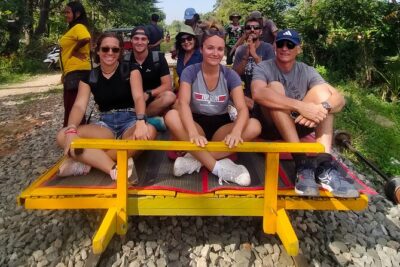
Battambang Tuk Tuk tour: Bambootrain, Killing & Bat Caves,Sunset
Read our review →

Phnom Penh Silk Island Bike Tour/ E-Bike or Tuk Tuk
Read our review →

Ultimate Phnom Penh Food Tour by Tuk Tuk: 20 Tastings and Drinks
Read our review →Browse the lists this tour appears in