
Reviewed · MUSEUMS
Private Tour: HERO Rats & Angkor National Museum
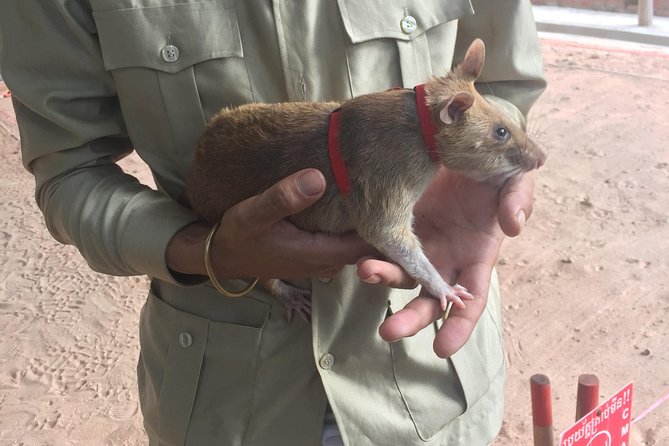
Cambodia’s Hero Rats are the star here. At the APOPO Visitor Center, you’ll watch specially trained rats detect landmines, then connect that practical work to Cambodia’s painful past at Wat Thmei, a small killing-field memorial in Siem Reap.
I like the private format, which gives you your own car, guide, pickup, and the freedom to ask questions. I also like the unusual mix: landmine detection and imperial Khmer art in the same half-day outing. The main drawback is important: Angkor National Museum is currently listed as closed, so the final stop may change.
Key points at a glance
- Hero Rats in action: See trained rats working to help locate landmines and learn why their work matters in Cambodia.
- Wat Thmei memorial: Visit a quiet stupa containing the skulls and bones of people killed during the Khmer Rouge period.
- Private transport: Your group travels by air-conditioned car with an English-speaking guide and hotel pickup.
- Two departure times: Choose an 8:00 a.m. start or a 1:00 p.m. start, with about four hours devoted to the tour.
- Museum plans may change: Angkor National Museum is currently closed according to the tour information, so confirm the day’s route before departure.
- Strong overall rating: The experience is rated 4.6 out of 5, with 94 percent recommending it.
Why this Siem Reap tour feels different
Siem Reap is usually sold through its temples, but Cambodia’s modern story deserves time too. This tour moves from a killing-field memorial to the continuing danger of unexploded landmines, then turns to the art and power of the Khmer Empire.
That contrast is the point. You are not simply looking at old stones or taking a quick museum tour. You are seeing how Cambodia remembers violence, deals with its consequences, and preserves the achievements of an earlier civilization.
The experience lasts about four hours, though the exact timing depends on driving and the condition of the museum itinerary. It is described as a private tour, so only your group participates. That makes it a good choice if you prefer asking direct questions rather than keeping pace with a large coach group.
An English-speaking guide and driver handle the route. One guide named Aaron has been especially praised for explaining the killing fields through personal experience. You cannot count on Aaron being assigned to your departure, but the tour does provide an English-speaking guide.
A few more things to do in Siem Reap worth a look
- Bantey Srei, Kbal Spean and Landmine museum Private Tuk-Tuk
★ 4.7 · 30 reviews - Siem Reap City Tour with War Museum and Killing Field
★ 5.0 · 27 reviews - Kbal Spean Trekking Tour with Banteay Srei and Landmine Museum
★ 5.0 · 14 reviews
Wat Thmei, a small memorial with heavy meaning
The first stop is Wat Thmei, one of Siem Reap’s killing-field memorials. The memorial is modest: a small stupa containing skulls and bones of people killed during the Khmer Rouge period.
You will spend about 30 minutes here. That may sound brief, but the site does not require a long visit to make its point. The small scale can feel more direct than a large museum. You are looking at a place of remembrance within a working religious setting, not a polished historical attraction designed only for sightseeing.
Your guide explains the wider conflict and helps place the memorial in Cambodia’s recent past. This is where the quality of the guide matters most. The subject is painful, and a clear explanation can help you understand what you are seeing without turning the stop into a rushed photo opportunity.
Plan to be respectful. Wat Thmei is a memorial, not just another stop between attractions. A quiet visit, modest clothing, and attention to the guide are appropriate.
The limitation is that 30 minutes leaves little room for extended discussion. If you want a long, detailed study of the Khmer Rouge era, this tour is not a substitute for a dedicated history museum or a longer memorial visit. It offers an introduction that becomes more useful at the next stop, where the subject shifts from past violence to a danger that still affects communities.
APOPO and the remarkable work of the Hero Rats
The APOPO Visitor Center is the most unusual part of the outing. Here you learn how landmines affected Cambodia and why communities still need mine-clearance work.
The trained rats are not sent into minefields to sacrifice themselves. Their role is to detect the chemical scent of explosives. Their light weight means they can move across ground without triggering the mines, and their sharp sense of smell helps trained handlers locate dangerous areas.
The center presents this work in a way that is easy to follow. You learn about the history of conflict, the effect of landmines on local communities, and the people and animals working to make the countryside safer.
Expect about an hour here. The best part is seeing the animals work rather than simply reading a display about them. A clever rat methodically checking an area is an oddly compelling sight, and it gives a human scale to a problem that can otherwise seem distant or technical.
This stop also helps correct a common misunderstanding about Cambodia. The war may be over, but landmines and other explosive remnants can continue to threaten people long after fighting ends. The center shows that recovery is not finished when a conflict stops.
One practical point: the center can be affected by holiday closures or schedule changes. During Cambodia’s New Year, one departure could not visit the Hero Rats center and instead went to the Cambodia Landmine Museum, which was farther out of town. That alternative may be worthwhile, but it can add driving and alter the rhythm of the day.
Ask your guide to confirm the route when you are picked up. If seeing the Hero Rats is the main reason you booked, this is the one part of the itinerary worth checking in advance.
Angkor National Museum and the Khmer imperial collection
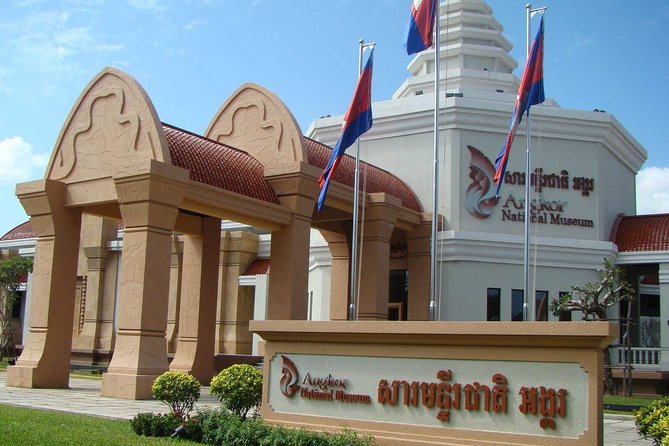
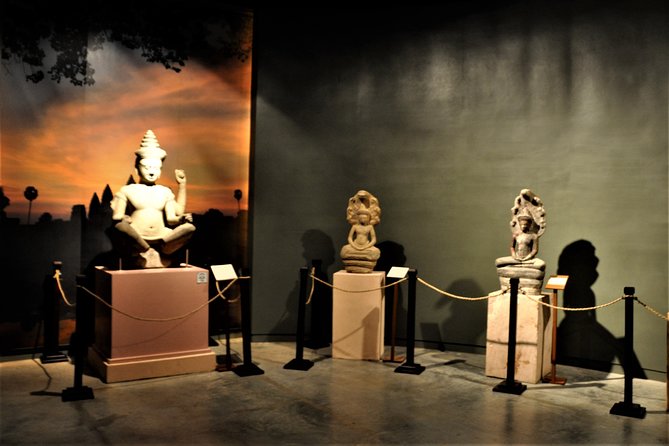
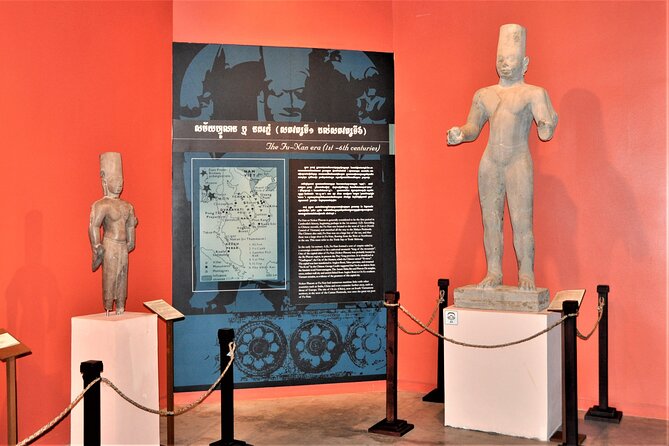
The planned final stop is Angkor National Museum, with about 90 minutes allocated for the visit. The museum is dedicated to the collection, preservation, and presentation of Angkorian artifacts, mainly from the ninth through fourteenth centuries.
After the first two stops, the museum changes the focus from modern conflict to the civilization that built the great Khmer temples. You can expect displays connected with imperial Khmer art, sculpture, religious imagery, and the culture behind the Angkor period.
The museum is described as large. That matters because 90 minutes gives you enough time for a useful introduction, but not necessarily enough time to study every gallery. I would treat this as a structured overview rather than a complete museum visit.
If you have already spent several days at Angkor’s temples, the museum can help you make sense of the sculpture and religious ideas you have seen outdoors. If the museum is your main interest, you may want more time than the tour provides.
The major issue is the current closure notice. The tour information says Angkor National Museum is currently closed and that the itinerary may be amended. An alternative may be offered, but the exact replacement is not specified. Do not book this outing solely for the museum without confirming that it will be open on your date.
One past itinerary change sent the group to the Cambodia Landmine Museum instead. That is a very different experience from Angkor National Museum, so ask what is planned before you set out.
Same base, a different kind of day out:
- Angkor Wat Sunrise or Sunset Tour with Guide from Siem Reap
★ 5.0 · 12,109 reviews - Siem Reap: Angkor Wat: Small-Group Sunrise or Sunset Tour
★ 5.0 · 9,444 reviews - From Siem Reap: Kampong Phluk Floating Village Tour by Boat
★ 4.9 · 6,979 reviews - Sunset tour of Kampong Phluk stilts home village on the Tonle Sap
★ 5.0 · 4,865 reviews
How the private car and schedule affect the day
Pickup is offered, and transport is by private, air-conditioned car. In Siem Reap’s heat, this is more than a small comfort. You can cool down between stops, carry water, and avoid organizing several separate rides.
The tour offers two start times:
- 8:00 a.m.
- 1:00 p.m.
The morning departure gives you a cooler start and leaves the rest of your day available. It is the better choice if you want to combine this outing with another activity later.
The afternoon departure may suit you if you want a slower morning or have temple plans earlier in the day. Since the route includes a memorial and a serious discussion of conflict, some people may prefer not to squeeze it between sunrise sightseeing and a busy evening.
The advertised duration is about four hours. The listed stops add up to roughly three hours, leaving time for pickup, driving, and transitions. The alternative Cambodia Landmine Museum route can require more time on the road because it is out of town.
One bottle of water per guest is included. Meals, extra drinks, personal spending, tips, and travel insurance are not included. Eat before you go or plan a meal afterward, since no meal is part of the tour.
Is $85 a fair price for a private half-day?
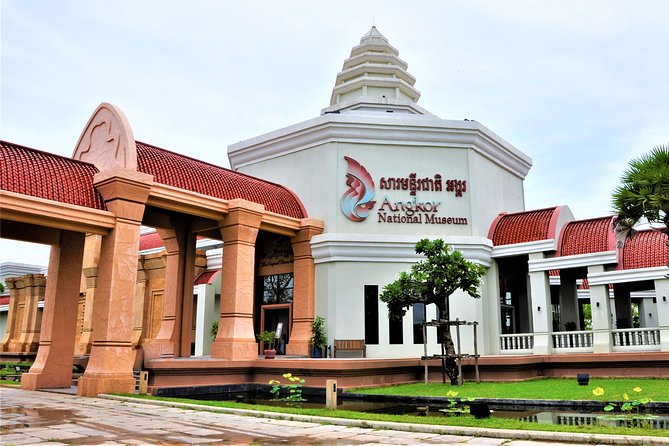
At $85 per person, this is not the cheapest way to visit the individual sites. The price covers a private air-conditioned car, an English-speaking guide, admissions, pickup, and water. For a couple or small group, that convenience can make the price reasonable.
The value improves if you want context rather than simple transportation. The guide connects Wat Thmei, landmines, Cambodian communities, and Khmer art into one story. You are paying for the route, but also for the explanations and the ease of moving between places.
A solo visitor will feel the price more sharply because private-tour costs are not spread across a group. For two or more people, the arrangement becomes easier to justify, especially if you value hotel pickup and a private vehicle.
The tour is also an efficient use of time. You can visit three different types of attraction in one organized outing without arranging separate tuk-tuks or negotiating the route yourself. The tradeoff is flexibility: if you want to linger at one stop, the fixed schedule may feel tight.
The experience is often booked well ahead, with an average booking time of 33 days in advance. That suggests planning early if your dates are fixed, especially if you need a private departure at a particular time.
What the strongest feedback tells you
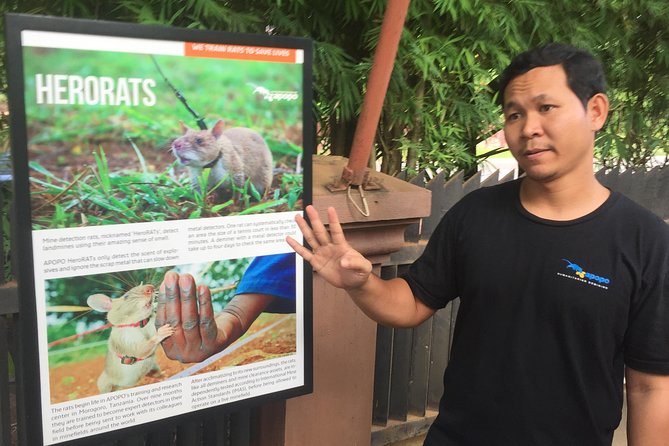
The most praised part is the Hero Rats visit. The animals are memorable, but the real value is the practical lesson about landmine detection and the continuing work needed to make Cambodia safer.
The second strong point is the guide’s handling of difficult history. Aaron was singled out for sharing personal experiences connected with the killing fields. That kind of first-person explanation can make Wat Thmei more meaningful, though guide assignments are not guaranteed.
The tour also receives credit for combining subjects that are often treated separately. The killing-field memorial explains the human cost of Cambodia’s recent past. APOPO shows one present-day response to that past. The museum, when open, brings you back to the country’s earlier artistic and political achievements.
The main complaints are practical rather than fundamental. Closures can remove the Hero Rats center or the museum from the schedule. One visitor found the National War Museum alternative good but noted too much time standing in the hot sun. That is a useful warning for anyone sensitive to heat.
If your day changes because of a closure, ask your guide what the replacement involves, how far away it is, and how long you will be outside. The private format should make that conversation easier.
Who should book this experience?
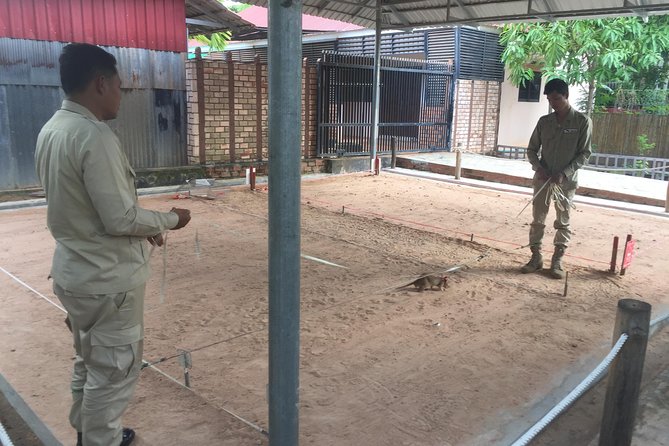
I would recommend this tour to you if you want more than temple sightseeing. It suits people interested in Cambodian history, humanitarian work, unusual animal training, and the connection between past conflict and present-day recovery.
It is also a good fit for first-time visitors who want an organized introduction to subjects they might not tackle alone. The route is varied, and the private guide gives you room to ask questions.
Families with older children may find the Hero Rats especially engaging, although the killing-field memorial requires a serious approach. The tour is also suitable for most participants, according to the supplied information.
You may want to skip it if your main goal is a long day at Angkor’s temples, a relaxed museum visit, or a detailed study of the Khmer Rouge period. Four hours provides a useful overview, not an exhaustive history lesson.
Confirm the museum and APOPO opening status before booking. Free cancellation is available up to 24 hours before the start time, while cancellations or changes made within 24 hours are not refunded or accepted.
Should you book the HERO Rats and Angkor National Museum tour?
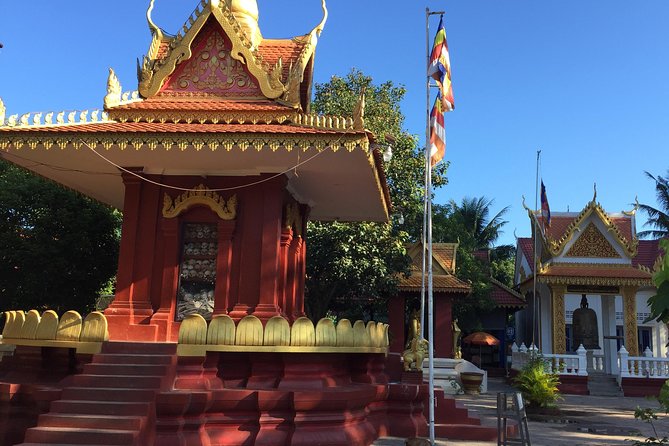
Book it if you want a thoughtful change of pace from Siem Reap’s temples and like the idea of seeing Cambodia through three different windows: remembrance at Wat Thmei, mine clearance at APOPO, and Khmer art at the museum.
The strongest version of the tour includes the Hero Rats center and an open Angkor National Museum. If either stop is closed, the experience can still be worthwhile, but it becomes a different outing. Confirm the day’s route, choose the morning departure if you want cooler conditions, and expect a serious, informative half-day rather than a light sightseeing loop.
FAQ
How long does the private tour last?
The tour lasts approximately four hours, including travel between the stops.
What start times are available?
You can choose an 8:00 a.m. morning departure or a 1:00 p.m. afternoon departure.
Is transportation included?
Yes. The tour includes pickup and private air-conditioned car transportation.
Is an English-speaking guide included?
Yes. An English-speaking tour guide is included.
Is Angkor National Museum open for this tour?
The tour information says the museum is currently closed and that the itinerary may be amended. Confirm the planned replacement or opening status before departure.
What happens if I need to cancel?
You can cancel for a full refund up to 24 hours before the experience starts. Cancellations or changes made less than 24 hours before the start time are not accepted for a refund.
Just added in Siem Reap
- Twilight Tastes of Siem Reap Include Dinner★ 5.0 · 13 reviews
- Ultimate Sunrise to Angkor Wat, Angkor Thom and Bayon Temple★ 5.0 · 3 reviews
- Trekking Tour at Phnom Kulen National Park from Siem Reap★ 5.0 · 3 reviews
- Full-Day Private Tour of Angkor Wat with Pick Up★ 5.0 · 12 reviews
- Private Day Trip to Angkor Temples with Expert Guide★ 5.0 · 4 reviews
- Siem Reap City Tour with War Museum and Killing Field★ 5.0 · 27 reviews
- Waterfall & River of 1000 Siva Linga- Kulen Mountain Private Tour★ 5.0 · 3 reviews
- Angkor Wat Experience Temple Pass and Siem Reap Food Tour★ 5.0 · 13 reviews
Museums, compared.
Killing field and Toul Sleng genocide museum Tour
Read our review →
Private Half Day To Killing Field & S21 Genocidal Museum in Phnom Penh
Read our review →
Tuol Sleng Genocide Museum (S-21) and Choeung Ek Killing Fields Tour
Read our review →
Phnom Penh City Tour, Silver Pagoda, Genocide Museum, Killing Fields
Read our review →
Bantey Srei, Kbal Spean and Landmine museum Private Tuk-Tuk
Read our review →
Siem Reap City Tour with War Museum and Killing Field
Read our review →
Khmer Rouge, genocide museum &killing field tour
Read our review →
War Museum, Killing Field and Floating village ( Chong Kneas) Tour
Read our review →Browse the lists this tour appears in