
Reviewed · ANGKOR TEMPLE TOURS
Angkor Temples Highlights Tour: 2 Days with Sunrise
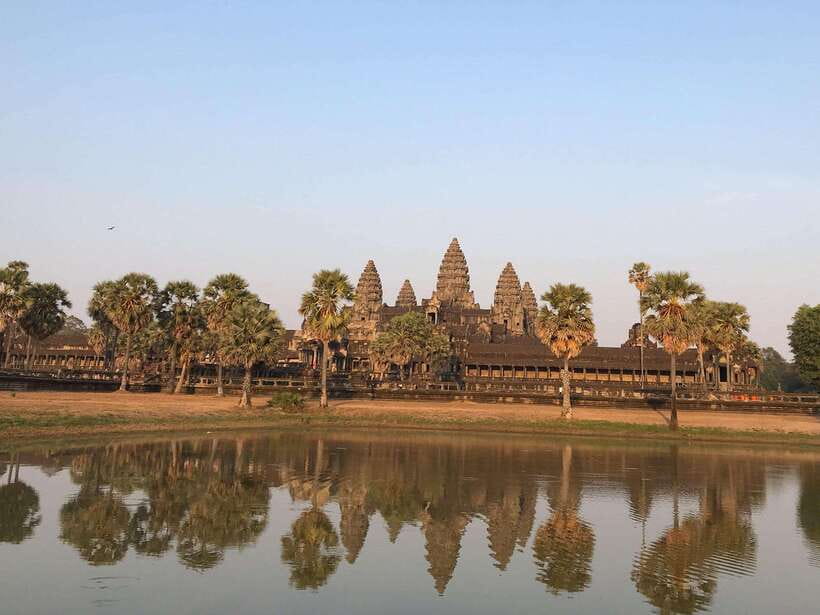
Angkor Wat at first light is the main event here. You leave your Siem Reap hotel around 4:00 AM, reach the temple before sunrise, and watch the sky brighten behind its towers and reflection pool. The early alarm is painful, but the cool air and soft light make the effort worthwhile.
I like the two-day pace, which gives you time for major temples and quieter corners without trying to swallow Angkor in one hot morning. I also like the private or small-group setup, since guides such as Sam, Leang and Tida have been praised for flexible timing, clear English and strong knowledge of the temples.
The main catch is cost clarity. The advertised $39 covers the tour, but your 2 or 3-day Angkor Pass costs another $62, and meals are extra. Also confirm the sunrise arrangement: the tour plan describes sunrise, while the practical notes say an early sunrise start may carry an extra charge.
Key points to know before booking
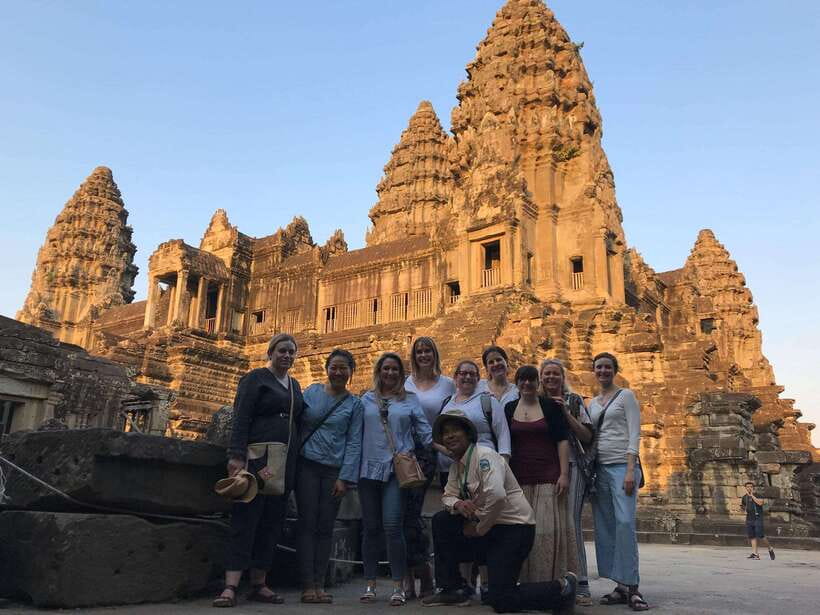
- 4:00 AM starts are part of the appeal: Angkor Wat is at its most atmospheric before the heat and crowds build.
- Two days cover a lot: You see the major temples plus Grand Circuit sites and farther stops such as Banteay Srei and Beng Mealea.
- Private touring gives you control: You can spend longer at a favorite temple or cut short a stop that does not suit you.
- The $39 headline price is not the final cost: Add the required Angkor Pass and your meals.
- Banteay Srei is the detail specialist: Its pink sandstone carvings reward slow looking more than quick photographs.
- Guide quality matters here: Requesting a preferred guide, such as Leang, Sam or Tida, may be worth asking about.
A strong first morning at Angkor Wat
The first day begins before dawn, with pickup from your hotel lobby in Krong Siem Reap. Be ready five minutes early. The listed start is around 4:00 AM, though you should confirm the exact sunrise arrangement when booking because the activity notes treat the early start as something that can be arranged on request, sometimes for an added fee.
Angkor Wat is planned as a two-hour guided visit. The classic view looks across the water toward the temple towers as the sky changes from dark blue to gold. It is a popular moment, so do not expect solitude. The value of the early start is not silence so much as cooler temperatures, better light and the chance to see the temple before the middle of the day.
Inside, a guide gives the stone galleries and towers some order. Without help, it is easy to admire the carvings while missing how the temple was designed and used. Guides named Leang, Sam, Steve and Tida have received especially strong praise for explaining religious ideas, local history and the meaning behind what you are seeing.
The two-hour slot sounds generous, but Angkor Wat is enormous. You will not examine every carving. I would ask your guide to balance the famous views with a few details that are easy to walk past, especially if this is your first visit.
More temples within reach of Siem Reap:
- Siem Reap Tour: Angkor Wat Sunrise, Bayon, Ta Prohm, Banteay Srei
★ 5.0 · 931 reviews - Siem Reap: Bike the Angkor Temples – Full-Day 30km Tour
★ 5.0 · 463 reviews - Preah Vihear: Full-Day Preah Vihear and Koh Ker Temple Tour
★ 4.9 · 263 reviews
Ta Prohm, Ta Keo and the Bayon face
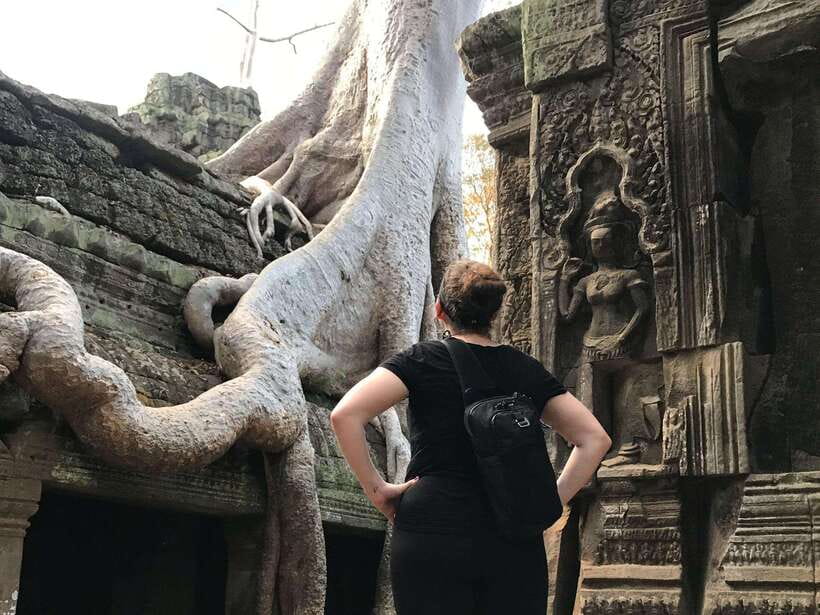
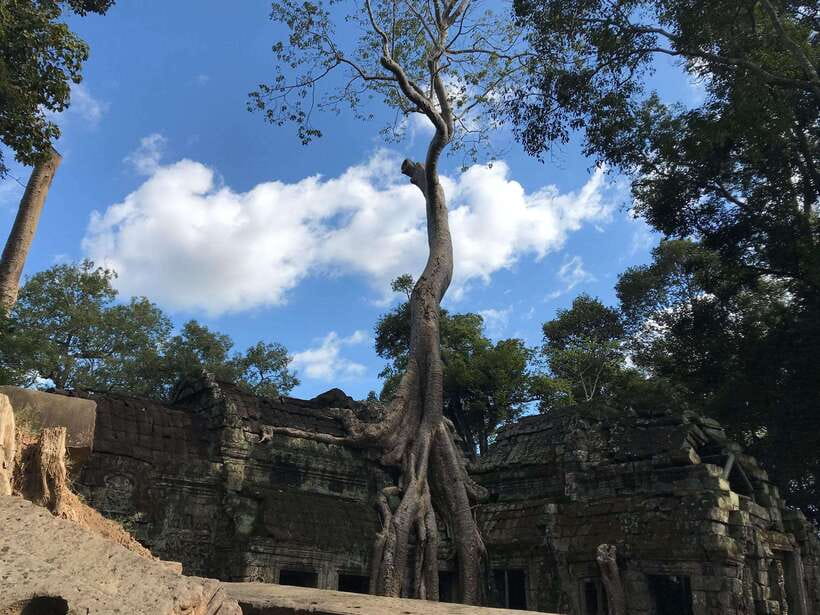
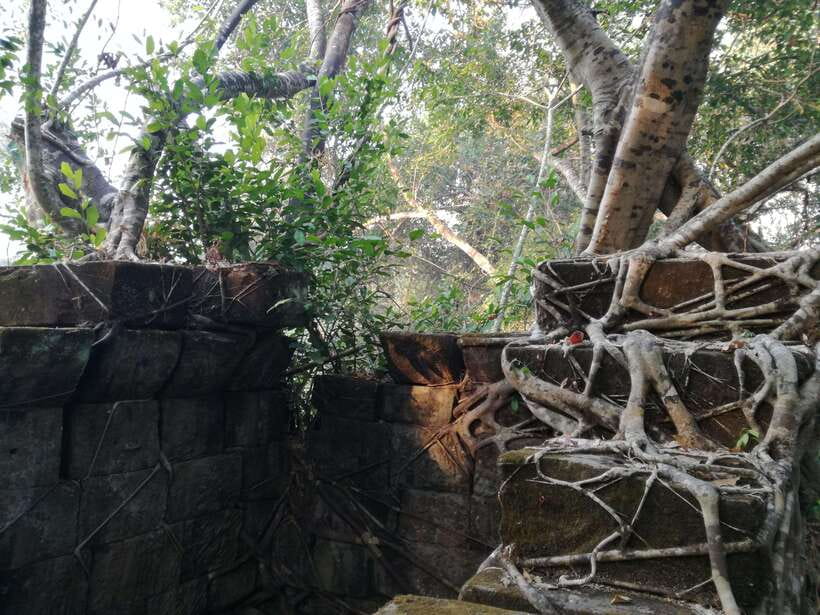
Ta Prohm follows, with about an hour set aside for the visit. This is the temple most associated with giant roots gripping the old stone. The trees are not simply decoration. They are part of what makes Ta Prohm feel unstable, mysterious and different from the more ordered Angkor Wat.
The famous tree area can be crowded, particularly at popular times. One guide was praised for knowing good photo positions, but another account noted that the first temple visit felt rushed around the well-known tree. That is useful advice: ask for enough time to see more than the one postcard view.
The supplied route also includes Ta Keo, another hour-long stop. Its large, plain stone form gives you a useful contrast with Ta Prohm’s tangled appearance. Ta Keo is about scale and strong lines rather than delicate decoration. If you dislike steep or strenuous temple access, ask your guide what parts are practical before setting off, since the information provided does not describe access conditions in detail.
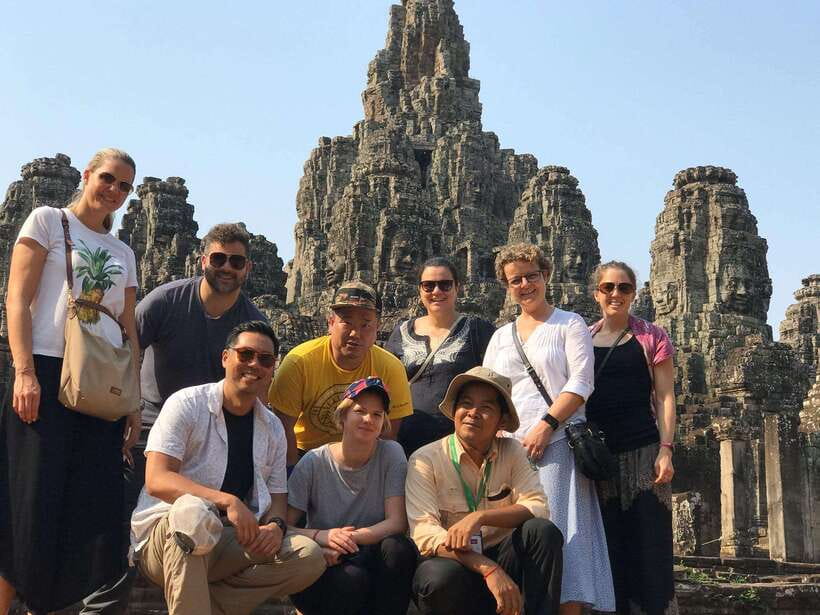
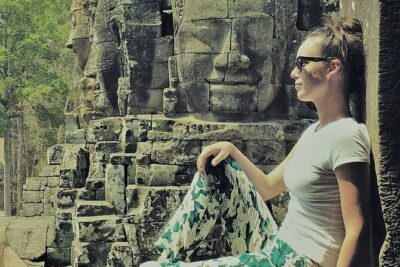
Angkor Thom comes next. This was the last capital of the Khmer Empire, a vast walled city entered through grand gates. The one-hour plan centers on the Bayon, where serene stone faces look out from the towers. The faces are the reason most people remember the temple, but you should also look at the crowded arrangement of galleries and carvings.
The first day works best when you accept that the temples have different moods. Angkor Wat is formal and monumental. Ta Prohm is tangled and theatrical. Bayon is strange, intimate and full of watching faces. A good guide helps you see those contrasts instead of treating every ruin as another pile of stones.
A sensible break after an early start
Returning to your hotel after the first day is a real advantage. The early alarm, heat and walking can catch up with you quickly. The schedule allows time to rest and refresh before the next day, rather than forcing two full temple circuits back to back.
The transport choice is either a private air-conditioned car or a small-group bus. Private transport is the better match if you want to set the pace, travel with children or take breaks without negotiating with a larger group. A small group can keep the price attractive, but confirm the group size if personal attention matters to you.
Cold drinking water and a cold towel are included. That sounds minor until you have spent a few hours on exposed stone paths. Meals are not included, so plan to pay separately and tell the guide if you need a proper break rather than a quick stop.
The experience is rated 4.2 from 43 bookings, which suggests a generally strong but not flawless result. The most consistent praise concerns punctual pickup, polite service, flexible guides and clear explanations. The weaker points are practical: heat, crowds, occasional rushing and the need to clarify the sunrise supplement.
Preah Khan and the quieter Grand Circuit
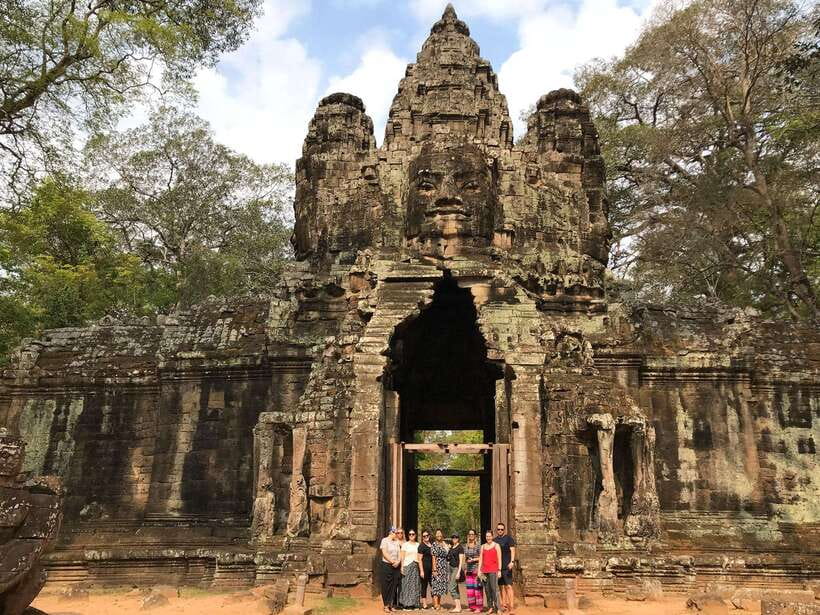
Day two follows the Grand Circuit, a route that moves beyond the busiest headline temples. It begins with Preah Khan, a broad complex filled with corridors, carvings and partial walls. You get a sense of how large these temple compounds were, not just how impressive one central tower looks.
Preah Khan rewards a slower pace. Give yourself time to notice the changes in stonework and the way vegetation has returned around the structure. The one-hour plan is enough for a guided look, but not for every passage. If you are especially interested in architecture or carving, tell your guide early so the visit does not become a quick walk from entrance to exit.
Neak Pean is a very different stop. It sits on an island and has spiritual significance, with water forming much of the setting. The approach and the small central structure make it feel unlike the larger temple compounds. It is more about the arrangement of water, paths and symbolism than about wandering through a huge ruin.
Ta Som brings you another smaller temple with its own character. The scale is easier to take in than Angkor Wat, and the setting gives you a break from the largest crowds. East Mebon adds another change of mood, with a more open, monument-like arrangement. These stops matter because they prevent the second day from becoming a repeat of the first.
I would not treat the Grand Circuit as filler. It shows you how varied Angkor is. Some sites impress through enormous scale, while others work through a doorway, a carving, a tree root or the way a small temple sits in its setting.
A few more things to do in Siem Reap worth a look
- Siem Reap: Angkor Wat 2-Day Tour with Sunrise and Sunset
★ 4.9 · 4,429 reviews - Angkor 2-Day Sunset & Sunrise Small-Group Tour
★ 5.0 · 2,567 reviews - 2 Days Exclusive Temple Highlights with Sunset and Sunrise Tour
★ 5.0 · 1,157 reviews - Siem Reap: Angkor Sunrise 1- or 2-Day Guided Temples Tour
★ 4.9 · 1,132 reviews
Banteay Srei rewards a slower eye
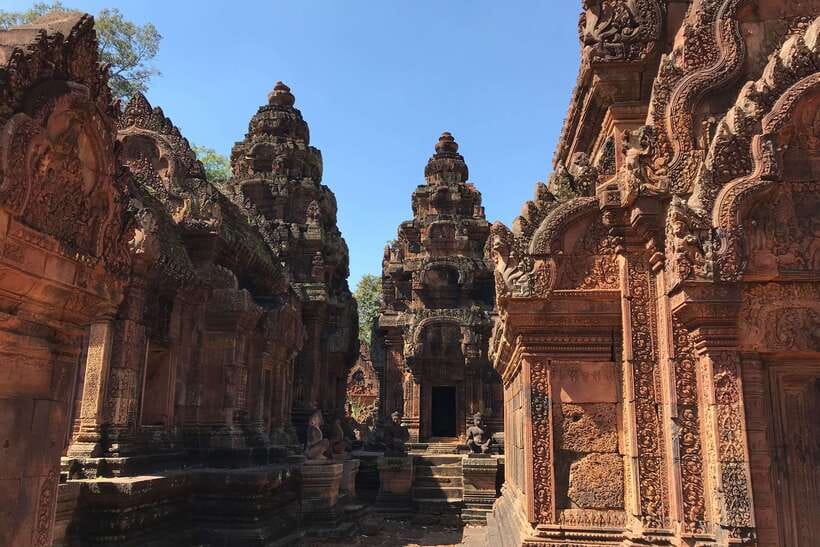
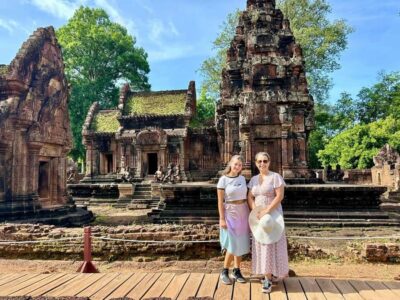
Banteay Srei is the day’s visual high point for many people. Known as the Citadel of Women, it is famous for pink sandstone and fine, closely worked carvings. The temple is smaller than Angkor Wat, but its decoration is unusually detailed.
This is the place to slow down. Stand close enough to see the figures and patterns, but follow any instructions about where you may walk. A rushed visit misses the reason Banteay Srei is included. It is not there to compete with Angkor Wat in size. It succeeds through precision.
The one-hour schedule gives you a solid introduction, though you may want to ask how much time is allowed for photographs and close looking. The route places Banteay Srei near the end, so fatigue could affect your attention. Bring the energy to study the carvings, not just take a quick picture and move on.
The tour description calls Banteay Srei one of the most beautiful and intricate temples in the area. That claim is easy to understand once you compare it with the larger sites. Its reddish and pink tones, fine relief work and compact plan give it a more personal feel.
Beng Mealea adds distance and rougher ruins
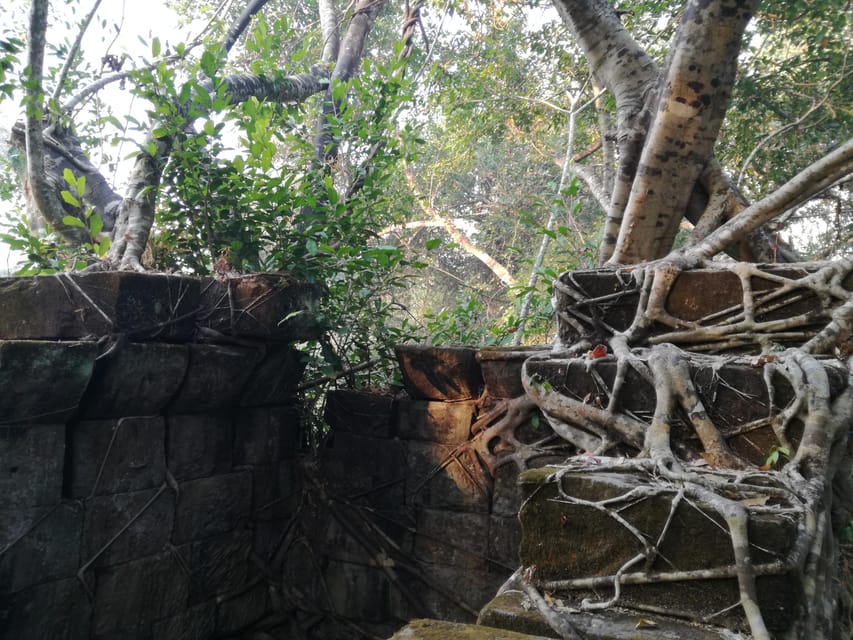
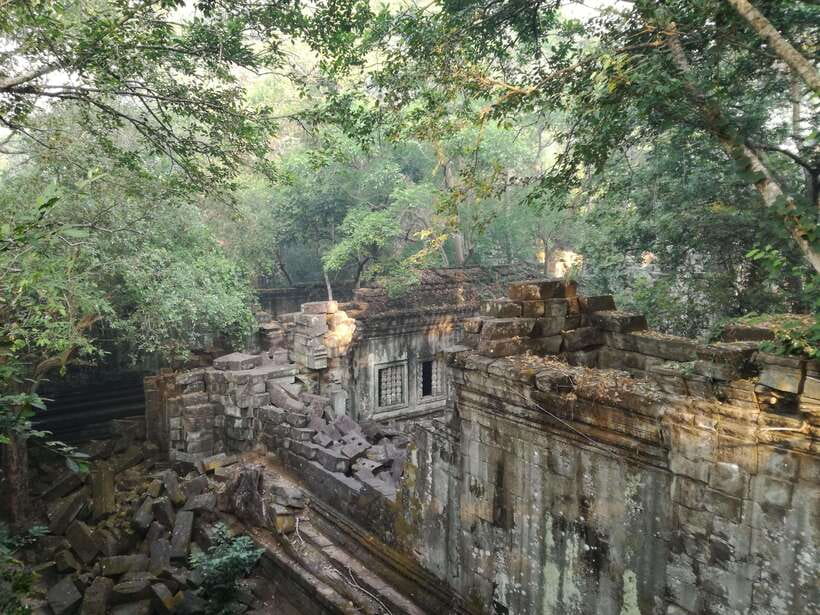
Beng Mealea appears in the stated itinerary, with roughly an hour for guided sightseeing. It is farther out than the core Angkor sites and gives you another view of temple ruins, with a rougher, less orderly feel.
Because Beng Mealea is included in the route but not explained in the day-by-day outline, confirm when it will be visited and how long the transfer takes. This is a useful question before you pay, especially if you prefer more time at Banteay Srei or the Grand Circuit temples.
The inclusion makes the tour more appealing to someone who has two full days and wants variety. If you want only the famous central temples, the extra stop may make the schedule feel packed. If you like comparing major monuments with less polished ruins, it adds a worthwhile change of pace.
What $39 really buys you
At $39 per person, the tour price is attractive for two days of transport, a professional English-speaking guide, hotel pickup, drinking water and cold towels. The private option makes that price look especially good, but you need to confirm whether your selected transport and group type change the rate.
The major extra cost is the 2 or 3-day Angkor Temple Pass at $62 per person. Meals are also outside the price. Add those items before comparing this tour with another package. The advertised tour rate is not an all-in temple holiday.
The value improves if you want a guide. Angkor is large, and a local guide can explain why a temple looks the way it does instead of leaving you to identify names and dates from a map. Several guides, including Leang, Chennai, Khleang Thyda, Sam, Steve and Tida, have been praised for good English, patience and flexibility. Names may change with availability, so request a preferred guide rather than assuming one is guaranteed.
The tour also offers free cancellation up to 24 hours before departure and reserve-now, pay-later booking. Keep in mind that the sunrise wording needs clarification. The main description builds around sunrise, while the additional information says an early start can be arranged on request with an extra charge. Ask for the exact total before booking.
Who will get the most from these two days
This suits you if you want the major Angkor sights but do not want to race through them in one day. Families can benefit from the private format, since one account describes changing the pace around three children and taking a hotel break during the hottest part of the day.
It is also a good fit for first-time visitors who want context. You see Angkor Wat, Bayon, Ta Prohm and Angkor Thom, then add the Grand Circuit, Banteay Srei and Beng Mealea. That gives you a broad introduction rather than a single famous temple and a quick exit.
The tour is less suitable if you dislike early mornings, hot weather or a full schedule. April can be extremely hot, according to one account, while the early start and many temple stops demand stamina in any month. If you prefer a slow, deeply focused visit to three or four sites, ask for a custom route instead.
The private option is worth considering if you care about pace. You can stay longer at a favorite temple, shorten a stop that does not interest you and request a sunset extension at no extra charge. That flexibility was particularly useful for families and for people who wanted to avoid the busiest periods.
Practical advice for a smoother temple visit
- Confirm the exact pickup time and whether sunrise carries an added fee.
- Ask for a private car if you want hotel breaks or control over the pace.
- Request a preferred guide by name, but treat the request as a preference, not a guarantee.
- Budget $62 per person for the required 2 or 3-day Angkor Pass.
- Carry money for meals, since food is not included.
- Use the cold water and towel, especially during the hotter months.
- Tell the guide if Banteay Srei carvings or Beng Mealea matter more to you than a quick stop at every site.
- Wear practical clothing suitable for temple visits and walking, though the supplied information does not specify a formal dress code.
Should you book this Angkor tour?
I would book it if you want a well-priced, guide-led introduction to Angkor with sunrise, the major temples and a broad second day. The strongest reasons are the two-day structure, flexible private touring and the range of sites, from formal Angkor Wat to tree-covered Ta Prohm and finely carved Banteay Srei.
I would not book without first confirming the sunrise fee, transport type, group size and exact place of Beng Mealea in the schedule. Once the $62 temple pass and meals are added, compare the full cost with other two-day options.
For most first visits, the tour offers good value. Ask for a guide with strong English and a flexible style, start prepared for heat, and allow yourself to rest after the 4:00 AM morning. You will see much more than the standard Angkor Wat photograph.
FAQ
Is the Angkor Temple Highlights Tour private or shared?
You can choose private transport or a small-group bus tour. Confirm the available group type and price when booking.
Is hotel pickup included?
Yes. Pickup is provided from your hotel lobby in Krong Siem Reap. You should be ready five minutes before the scheduled start.
Is the Angkor Temple Pass included in the $39 price?
No. The 2 or 3-day Angkor Temple Pass costs $62 per person and must be purchased separately.
Are meals included?
No. Meals are not included in the tour price.
Does the tour include sunrise at Angkor Wat?
The main plan is built around an early visit to Angkor Wat for sunrise. The additional information says an early sunrise start can be arranged on request and may involve an extra charge, so confirm this before booking.
What language does the guide speak?
The live guide speaks English. The tour includes an English-speaking professional guide.
Just added in Siem Reap
- Twilight Tastes of Siem Reap Include Dinner★ 5.0 · 13 reviews
- Ultimate Sunrise to Angkor Wat, Angkor Thom and Bayon Temple★ 5.0 · 3 reviews
- Trekking Tour at Phnom Kulen National Park from Siem Reap★ 5.0 · 3 reviews
- Full-Day Private Tour of Angkor Wat with Pick Up★ 5.0 · 12 reviews
- Private Day Trip to Angkor Temples with Expert Guide★ 5.0 · 4 reviews
- Siem Reap City Tour with War Museum and Killing Field★ 5.0 · 27 reviews
- Waterfall & River of 1000 Siva Linga- Kulen Mountain Private Tour★ 5.0 · 3 reviews
- Angkor Wat Experience Temple Pass and Siem Reap Food Tour★ 5.0 · 13 reviews
Angkor Temple Tours, compared.
Siem Reap Tour: Angkor Wat Sunrise, Bayon, Ta Prohm, Banteay Srei
Read our review →
Angkor Wat one Day Private Tour for All Highlight Angkor Temples
Read our review →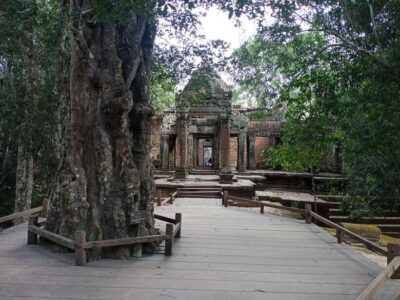
1-Day private Angkor Temple Tour from Siem Reap
Read our review →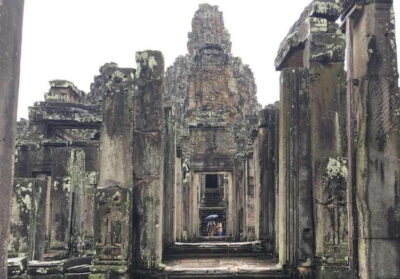

Private one-day tuktuk ‘small tour’ of the oldest Angkor temples
Read our review →Browse the lists this tour appears in