
Reviewed · ANGKOR WAT SUNRISE TOURS
Private Guided Tours-Sunrise Angkor Wat, Ta Prohm, Bayon and more
Angkor Wat at sunrise is the main event here, but the real strength of this private full-day tour is how much ground you cover afterward. You begin at 4:30 am, visit Ta Prohm while the day is still young, then work through Angkor Thom before finishing at Bayon.
I like the private vehicle and guide, since you avoid the stop-and-go rhythm of a large group. I also like the practical touches: cool water, cold towels, and a local breakfast stop. The drawback is simple: this is a long day with plenty of walking, and the $78 price does not include the $37 Angkor entry pass or meals.
Key points at a glance
- Sunrise begins at 4:30 am: You reach Angkor Wat early, then have breakfast in the Angkor area.
- Seven major stops: The route includes Angkor Wat, Ta Prohm, the Victory Gate, the Terrace of the Elephants, Phimeanakas, Baphuon, and Bayon.
- Private touring: Only your group takes part, with an English-speaking guide and air-conditioned vehicle.
- The main extra cost is the temple pass: Add $37 per person for a one-day Angkor pass. Longer passes are available at the entrance.
- A full physical day: The schedule runs about eight to nine hours and includes stairs, temple paths, and outdoor walking.
- Dress matters: Cover your shoulders and wear clothing that falls below the knees, especially for sites with stricter rules.
Why the 4:30 am start is worth it

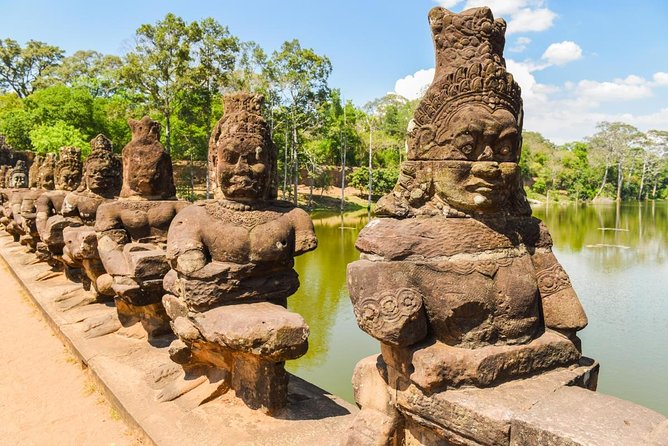
The day begins before dawn, which is not a small commitment. You will need to be ready for pickup at 4:30 am, and the early hour can feel severe after a late arrival in Siem Reap. Still, sunrise gives this tour its strongest opening.
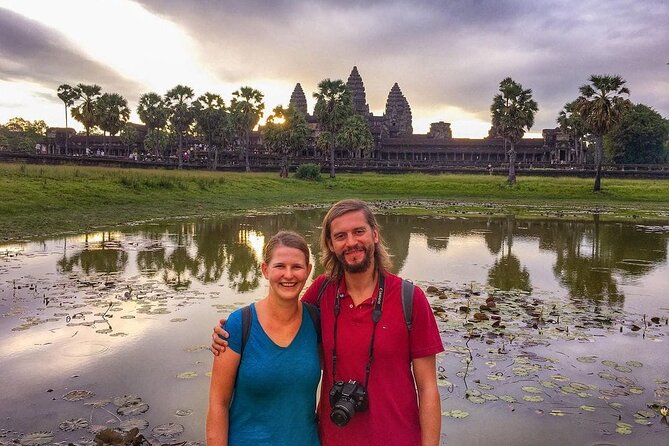
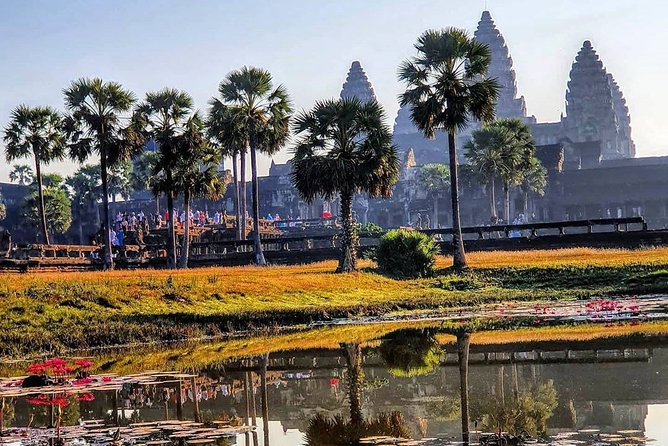
Angkor Wat is most famous for the reflection of its towers in the front pools, with the sky changing behind the temple. The early start also puts you inside the park before the heat builds. That matters in Cambodia, where a long afternoon of walking can quickly drain your energy.
The sunrise portion lasts about four hours, including time at Angkor Wat and breakfast at a local restaurant in the Angkor area. Breakfast is not included in the tour price, so carry some cash in US dollars. The exact sunrise conditions depend on weather, and clouds may soften or partly block the view. If poor weather forces cancellation, you can take another date or receive a full refund.
Do not expect a quiet, private view of Angkor Wat simply because you have a private guide. Sunrise is one of the busiest moments at the park. What private touring gives you is control over your guide, transport, pace, and questions, not exclusive access to the temple.
Other early starts at the temples from Siem Reap:
- Angkor Wat Sunrise or Sunset Tour with Guide from Siem Reap
★ 5.0 · 12,109 reviews - Angkor Wat Sunrise tour with Small – Group and Guide tours
★ 5.0 · 3,655 reviews - Full-Day Angkor Wat Sunrise Private Tour with Guide from Siem Reap
★ 5.0 · 2,920 reviews
Angkor Wat deserves the first long stop
Angkor Wat is not a quick photo stop. The schedule allows about four hours for the first part of the morning, which gives you time to see the temple complex rather than only its famous front view.
Your guide can help explain the temple layout, religious purpose, and carved details as you move through the site. The practical benefit is clear: Angkor Wat can feel confusing at first, with galleries, courtyards, towers, and long approaches all competing for your attention. A guide helps give the visit a shape.
You should wear sturdy walking shoes. Even without a strenuous hike, you will cover a lot of ground on uneven paths and stone surfaces. Bring a small bag with sun protection, water, and a phone or camera protected from dust and moisture. The operator places responsibility for protecting electronic equipment on you.
The four-hour block can also feel long if you are mainly interested in photographs. Tell your guide early if you prefer architecture, carvings, religious history, or photo time. A private tour has more room for that adjustment than a fixed group outing.
Ta Prohm and the appeal of half-cleared ruins
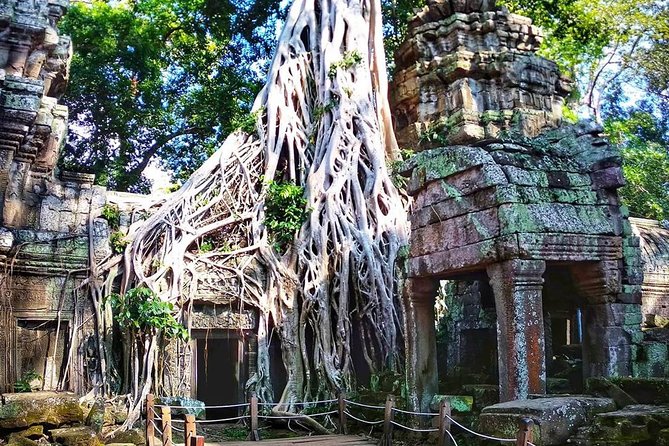
After Angkor Wat, the route continues to Ta Prohm for about an hour. This is the temple most associated with enormous trees growing over stone walls and galleries.
Ta Prohm feels different from Angkor Wat. Angkor Wat is ordered and monumental, while Ta Prohm is quieter in character, with jungle growth still pressing into parts of the monastic complex. The appeal comes from the tension between built stone and living trees. It is also one of the strongest photo stops in the Angkor area.
The tradeoff is that Ta Prohm can be crowded, especially around the most recognizable tree-and-temple views. Your guide can help you move through the complex without wasting the whole hour in one place. The visit is short enough to keep the day moving, but long enough to see why this ruin has such a strong place in the Angkor circuit.
At this point, the early start may begin to catch up with you. Drink the supplied water and use the cool towel. The midday section still includes several sites, so save some energy rather than treating Ta Prohm as the end of the morning.
Crossing into Angkor Thom through the Victory Gate
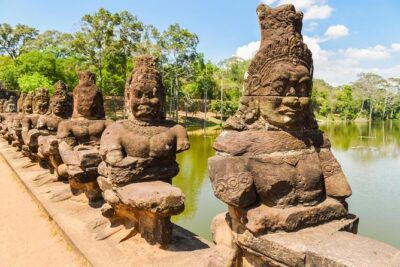
After lunch, the tour enters Angkor Thom through the Victory Gate. The stop is planned for about 30 minutes.
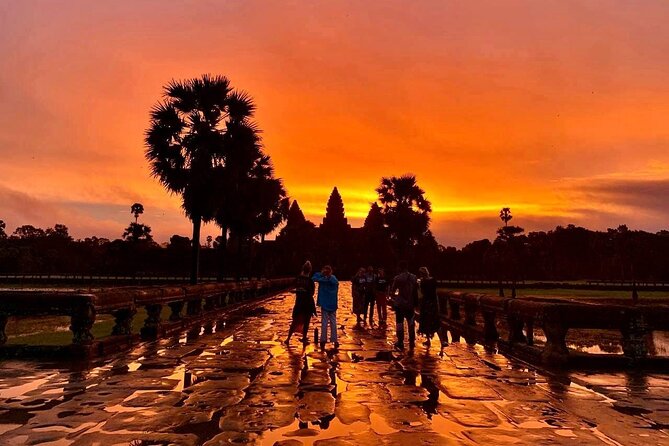
The Victory Gate is one of five gates guarding the old city. It is less preserved than the South Gate, which makes it a useful contrast if you have seen photographs of the more polished entrance. The guide can place the gate within the defensive and ceremonial plan of Angkor Thom rather than treating it as another isolated monument.
This part of the route also changes the rhythm of the day. Instead of spending hours inside one major temple, you make a series of shorter visits across the ancient city. The private vehicle helps here, since you are not waiting for a large group to board or negotiating several unrelated pickup points.
Lunch is not included. The tour description places it between the morning temples and the afternoon visit to Angkor Thom, but you should confirm the restaurant plan and carry money for food and drinks. Personal expenses are your responsibility.
More temples within reach of Siem Reap:
- Siem Reap Tour: Angkor Wat Sunrise, Bayon, Ta Prohm, Banteay Srei
★ 5.0 · 931 reviews - Siem Reap: Bike the Angkor Temples – Full-Day 30km Tour
★ 5.0 · 463 reviews - Preah Vihear: Full-Day Preah Vihear and Koh Ker Temple Tour
★ 4.9 · 263 reviews - From Siem Reap: Banteay Srei Temple & Grand 5 Temple Tour
★ 4.8 · 262 reviews
The Terrace of the Elephants gives the afternoon a royal setting
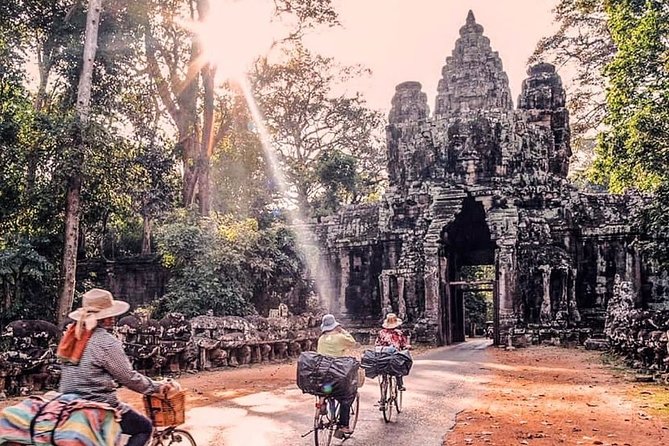
The Terrace of the Elephants receives about 30 minutes. It was used by Angkor’s King Jayavarman VII as a platform from which to view events and activity in front of the royal area.
This is not the kind of stop where you enter a complete temple and spend an hour examining every room. Its value comes from the long carved terrace, its setting within Angkor Thom, and the way it helps you understand how the city functioned. Look closely at the elephant imagery and the stone decoration along the platform.
The stop is easy to combine with the nearby monuments, but you should not confuse easy access with no walking. The afternoon route includes open paths and exposed stone, so sun protection and sensible clothing matter. A hat and covered shoulders are useful for comfort as well as for temple rules.
Phimeanakas shows a different side of Angkor Thom
The walk past Phimeanakas takes about 30 minutes. The name means celestial temple, and the structure sits within the old Royal Palace area.
Phimeanakas is less instantly familiar than Angkor Wat, Ta Prohm, or Bayon. That is part of its value. The stop adds context to Angkor Thom by showing that the city was not only a collection of temples. It included royal spaces, platforms, gates, and ceremonial routes.
The itinerary describes this as a walk past the temple, so do not expect the same extended exploration provided at Angkor Wat. The site works best as part of the larger afternoon story. If you want extra time here, ask your guide before the day gets too far ahead of schedule.
Temple access and clothing rules can be strict at some Angkor sites. Wear a shirt that covers your shoulders and trousers or a skirt that falls below the knees. Avoid brightly colored clothing and shirts with offensive or disrespectful images, since entry may be refused.
Baphuon brings stairs and a high viewpoint
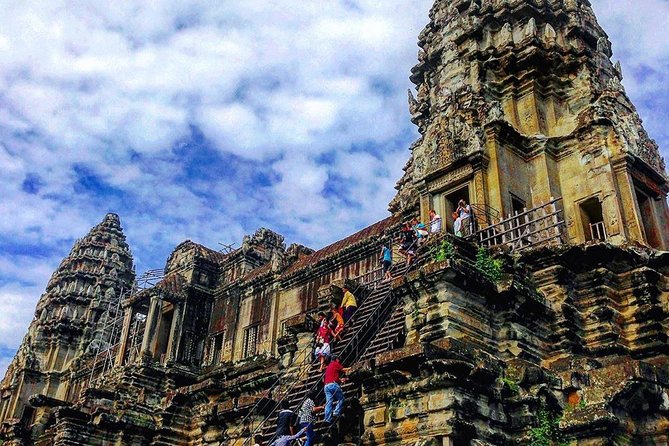
Baphuon is another 30-minute stop near Phimeanakas. This 11th-century temple-mountain has steep stairs leading to a terrace with views across the surrounding area.
This is one of the more physically demanding sections of the day. The height gives you a better sense of the temple design, but the stairs require care, especially after several hours in the heat. If your knees, balance, or stamina are limited, tell the guide. The tour is described as suitable for most people, but that does not remove the need for caution on steep stone steps.
Baphuon also makes clear why the private format matters. You can ask for a slower pace, a short rest, or more explanation without holding up a busload of people. At the same time, the schedule is still planned, so this is not a fully free-form day.
Bayon is the right final stop
The day ends at Bayon for about an hour. Its carved stone faces are among the most recognizable sights in the Angkor Archaeological Park.
Finishing here works well. After the broad approach and formal scale of Angkor Wat, Bayon offers a more enclosed and intricate experience. Towers, galleries, and carved faces create a busy visual field, and your guide can help you notice details that are easy to miss when you are focused only on the famous faces.
One hour is enough for a focused visit, though not for every corner. If Bayon matters most to you, say so at the beginning of the day. The guide may be able to adjust the pace at earlier stops, but the overall route still needs to fit into roughly eight to nine hours.
By the time you reach Bayon, you may be tired. That is not a flaw in the temple or the guide. It is the natural result of beginning before sunrise and walking through major ruins all day. The final stop rewards attention, but it may not be the moment when you have the most energy.
What the $78 price really covers
The listed price is $78 per person. You also need to budget $37 per person for the Angkor Archaeological Site pass, bringing the basic combined cost to $115 per person before food, drinks, shopping, insurance, or other personal expenses.
For that price, you receive a full private day with an English-speaking guide, an air-conditioned vehicle with a professional driver, cool water, cool wet towels, and taxes and service charges. You are paying for private transport and a guide’s time as much as for the sightseeing route.
The value is strongest for two or more people who want flexibility and comfort without arranging every transfer themselves. A solo visitor should check whether a single supplement applies. The pass is a separate charge because it covers the wider Angkor area, not just the temples on this route.
Children under 12 enter the Angkor site free with a valid passport presented at the ticket booth. Without proof of age, the normal price may apply. The pass is charged in US dollars and must remain visible while you are in the park.
Private touring, transport, and practical comfort
Only your group takes part, which changes the feel of the day. You can ask questions, spend longer at a carving, or move on when a stop has given you enough. The guide can also explain how much walking remains, a small detail that becomes important late in the afternoon.
The air-conditioned vehicle is especially useful between sites. Angkor is spread out, and walking between every stop would make an already long day much harder. The driver handles the transfers while you cool down and refill your attention.
Pickup is offered, but you must provide correct hotel information. Accommodation changes made within 24 hours are handled only on request, so check your pickup details carefully before the final day. The tour operates in English. Other languages may be requested, subject to availability and extra charges.
The experience has a perfect 5 rating from 21 submitted ratings, and the strongest practical praise is easy to understand: the day covers a long list of major sights, while the guide, water, and cold towels help make the effort manageable. Keep that praise in perspective. You still need to be ready for a very early start and a lot of walking.
Who should book this Angkor day
I would choose this tour if you have one full day for Angkor and want to see the major highlights in a sensible order. It suits first-time visitors who want a guide’s explanation, private transport, and a route that covers both Angkor Wat and Angkor Thom.
It also fits couples, families, and small groups who value control over the pace. Families with children should weigh the 4:30 am start and long day carefully, even though children under 12 receive free temple admission with a passport.
You may want a different plan if you dislike early mornings, prefer slow photography, or want to spend an entire day at only one or two temples. This route is broad rather than leisurely. It checks many major sights, but the shorter afternoon stops leave limited time for lingering.
Book this tour if your priority is efficient coverage with private support. Skip it if you want a late start or a highly specialized archaeological visit. Either way, add the $37 pass to your budget, bring proper clothing, protect your camera and phone, and treat the day as a physical outing rather than a casual sightseeing ride.
FAQ
What time does the tour start?
The meeting and pickup time is 4:30 am.
How long does the experience last?
The tour lasts approximately eight to nine hours.
Is the Angkor Archaeological Site pass included?
No. The pass costs $37 per person for the one-day entry option. Passes covering one to seven days are available, and fees are charged in US dollars.
Are meals included?
No. Meals and drinks are not included. The schedule includes a breakfast stop at a local restaurant in the Angkor area, and lunch takes place after the morning temple visits, but you pay for your own food and drinks.
What should I wear?
Wear clothing that covers your shoulders and falls below your knees. Some sites, including Baphuon, enforce strict dress rules. Clothing with offensive or disrespectful images and brightly colored clothing may lead to refused entry.
Is the tour private?
Yes. Only your group participates. The tour includes an English-speaking guide, an air-conditioned vehicle, and a professional driver. Other languages can be requested, subject to availability and additional charges.
Just added in Siem Reap
- Twilight Tastes of Siem Reap Include Dinner★ 5.0 · 13 reviews
- Ultimate Sunrise to Angkor Wat, Angkor Thom and Bayon Temple★ 5.0 · 3 reviews
- Trekking Tour at Phnom Kulen National Park from Siem Reap★ 5.0 · 3 reviews
- Full-Day Private Tour of Angkor Wat with Pick Up★ 5.0 · 12 reviews
- Private Day Trip to Angkor Temples with Expert Guide★ 5.0 · 4 reviews
- Siem Reap City Tour with War Museum and Killing Field★ 5.0 · 27 reviews
- Waterfall & River of 1000 Siva Linga- Kulen Mountain Private Tour★ 5.0 · 3 reviews
- Angkor Wat Experience Temple Pass and Siem Reap Food Tour★ 5.0 · 13 reviews
Angkor Wat Sunrise Tours, compared.
Angkor Wat Sunrise or Sunset Tour with Guide from Siem Reap
Read our review →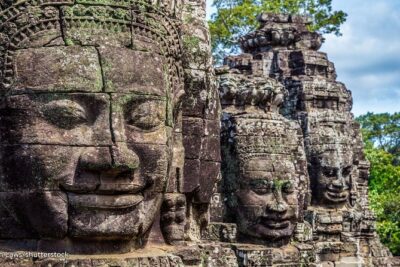
Angkor Wat Sunrise tour with Small – Group and Guide tours
Read our review →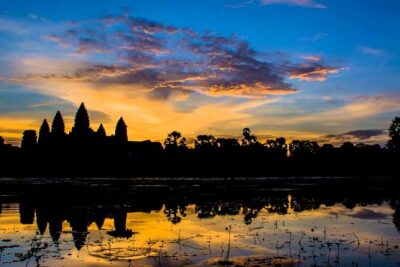
Full-Day Angkor Wat Sunrise Private Tour with Guide from Siem Reap
Read our review →
Angkor Wat Sunrise & 3 Main Temples with Breakfast – Small Group
Read our review →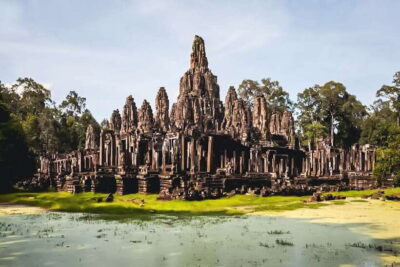
Angkor Wat Sunrise and Full-Day Sightseeing Tour
Read our review →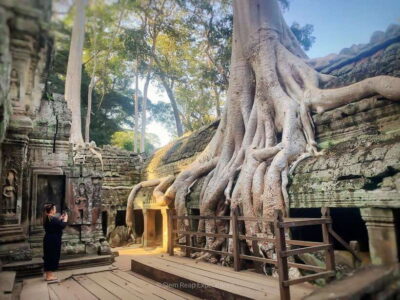
2 Days Exclusive Temple Highlights with Sunset and Sunrise Tour
Read our review →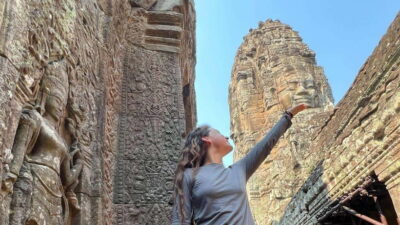
Angkor Sunrise 1- or 2-Day Guided Temples Tour
Read our review →Browse the lists this tour appears in