Reviewed · TOURS IN SIEM REAP
Private Siem Reap 3 Day Tour Discover All Highlight Angkor Temple
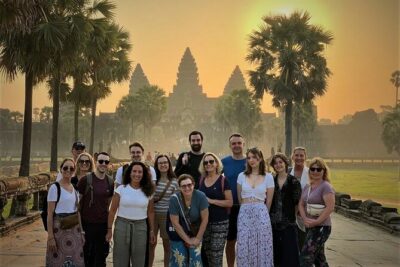
Angkor Wat at sunrise is only the beginning here. This private three-day tour takes you from the early Khmer temples at Roluos to the stone faces of Bayon, the tree-covered ruins of Ta Prohm, Banteay Srei’s fine carvings, and life on Tonle Sap. It gives you a broad look at Siem Reap instead of leaving you with one famous temple and a hurried photo stop.
I like the private vehicle and flexible pace, especially with an air-conditioned car, cold water, and iced towels waiting between sites. I also like the mix of temples and daily life: Wat Bo, Cambodian handicrafts, palm sugar, and the floating village keep the trip from becoming three straight days of sandstone.
The main caution is the schedule. Several listed stop times appear incorrect or too long, and the tour names both Kampong Phluk and Kampong Khleang. Confirm the exact route and daily timing before you pay, particularly if you want a calm visit rather than a temple marathon.
Key points to know before booking
- Sunrise at Angkor Wat: You begin early, see the temple in morning light, then return to your hotel for breakfast before continuing.
- A genuinely private setup: Only your group participates, with private hotel pickup, an English-speaking licensed guide, and private air-conditioned transport.
- More than temples: Tonle Sap, Wat Bo, Satcha craft studios, and palm sugar production add present-day Cambodia to the ancient sites.
- Three useful days: The plan reaches Roluos, Angkor Thom, Ta Prohm, Banteay Srei, Preah Khan, and several lesser-known monuments.
- Extra costs matter: The Angkor Pass, meals, and tips are not included. Lunch dishes generally cost $3 to $10.
- Confirm the water village: The schedule names Kampong Phluk, while the overview refers to Kampong Khleang. These are not the same place.
Why three private days work well in Siem Reap
Siem Reap’s temples spread across a large area, and the sites are not all alike. A private car saves you from arranging separate rides for each cluster. You can move from the Roluos group east of town to Tonle Sap, then spend the next morning inside Angkor Thom without wasting time finding transport.
The private format matters most on the second day. Angkor Wat, Bayon, Baphuon, the terraces, Ta Prohm, Banteay Kdei, and Ta Nei can make a crowded, tiring day. With your own vehicle, you can ask for a pause, return to the hotel after sunrise, or shorten a stop if the heat gets to you.
The listed price is $253.65 per person. That is a reasonable value if you are traveling with enough people to make the private transport and guide useful, especially since the tour covers three full days and includes a private Tonle Sap cruise. It is less attractive for a solo visitor once you add the Angkor Pass, food, and tips.
The Angkor Pass is not included. Your guide assists with buying it at the Angkor Park entrance, but you should budget for that separately. Lunch is also extra, with local restaurants offering vegetarian and non-vegetarian dishes at menu prices of about $3 to $10 per dish.
A few more things to do in Siem Reap worth a look
- From Siem Reap: Angkor Wat and Floating Village 3-Day Trip
★ 5.0 · 100 reviews - 3-Day Angkor Wat with All Interesting Major Temples, Banteay Srei & Beng Mealea
★ 5.0 · 70 reviews - 3-Day Angkor Wat & All Interesting Major Temples & Kulen Mount Waterfall
★ 5.0 · 63 reviews
Day one: Roluos temples, Tonle Sap, and local crafts
The first day begins with the Roluos group, an older temple area that helps you see how Khmer temple design developed before the grand Angkor monuments. Preah Ko, meaning Sacred Bull, is a compact stop of about 30 minutes. Look for its position within the old capital of Hariharalaya and the carved bulls associated with the temple’s name.
Bakong receives about an hour and deserves that extra time. Built in 881 under King Indravarman I, it became an early model for the Khmer temple mountain, with a pyramid form rising above its surroundings. If you have already seen Angkor Wat, Bakong helps explain the earlier stages of that architectural idea.
Lolei is smaller and less visually dramatic than Bakong, with about 30 minutes scheduled. It is still useful as part of the Roluos sequence. You are not simply checking off another ruin. You are seeing three related temples from an earlier period and comparing their scale, layout, and condition.
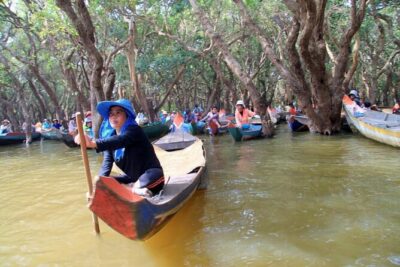
The afternoon moves to the water at Tonle Sap. The schedule specifies a three-hour visit to Kampong Phluk Floating Village and a private cruise. The overview uses the name Kampong Khleang, so confirm which community you will visit. Both names refer to Tonle Sap communities, but the distinction matters if you are choosing the tour for one particular village.
This part of the day gives the ancient stones some human context. Tonle Sap supports more than three million people and supplies much of Cambodia’s inland fish catch. You will see a way of life shaped by the lake’s seasonal water levels, rather than just another viewpoint from a temple terrace.
The water excursion is included, but conditions can affect what you see. The tour description does not promise a particular boat style, water level, or exact route, so ask for those details in advance. A private cruise should make it easier to ask questions and spend time observing, though the village visit will not feel like a museum exhibit. It is a working community.
Back in Siem Reap, Wat Bo offers a very different stop. This old town temple is known for late-19th-century wall paintings. Give the hour here to the paintings rather than treating the temple as a quick photo stop. The visit adds Buddhist art and local religious life to a day otherwise split between early Khmer ruins and the lake.
Satcha, the Cambodian Handicraft Center, focuses on local artisans and traditional skills presented in a modern workshop setting. The idea is not simply to buy a souvenir. You can see how Cambodian craft traditions are being supported and reshaped. Purchases are optional, and you should feel free to ask how items are made before deciding what, if anything, to take home.
Day two: sunrise, Angkor Thom, and the jungle temple
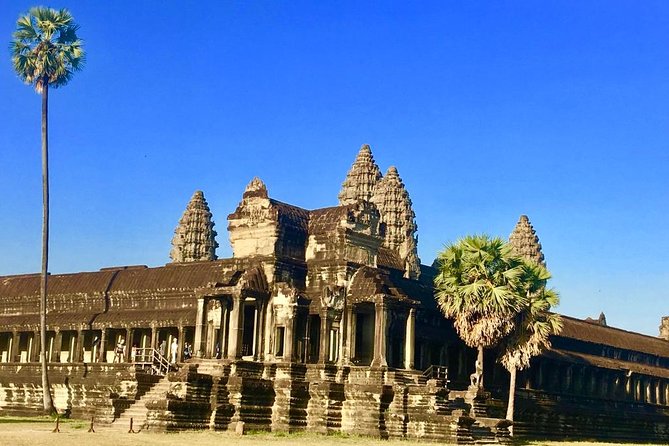
Day two starts early at Angkor Wat. You watch sunrise, explore the temple complex for about three hours, and then return to your hotel for breakfast. That break is practical. Angkor Wat is much easier to appreciate when you are not trying to carry the entire day’s heat and fatigue into the next set of monuments.
Sunrise is also the busiest part of the day, and the exact view depends on conditions and crowd placement. The point is not to expect a perfect reflection every morning. Go for the atmosphere, the changing light, and the chance to enter one of the world’s great temple complexes before the day becomes hot.
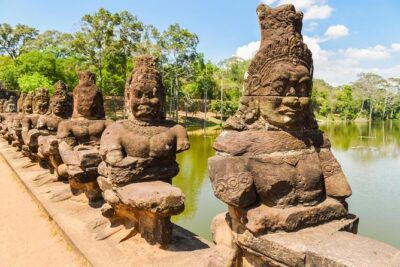
After breakfast, the route enters Angkor Thom through the South Gate. The gate is lined with sculpted figures pulling a serpent, a scene linked to the famous Khmer creation story. The half-hour stop is short, but it gives you a good visual introduction to the walled city before you reach the Bayon.
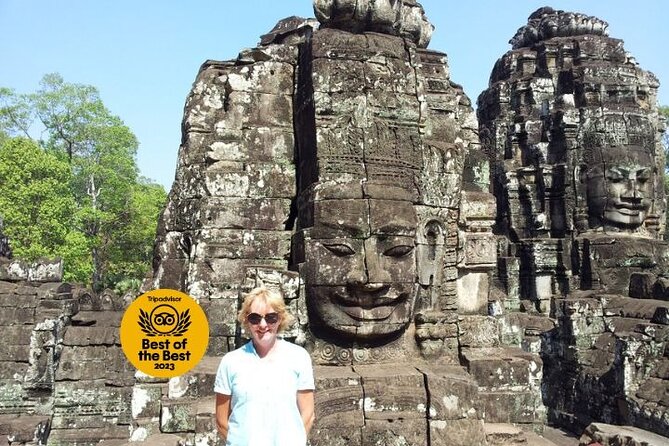
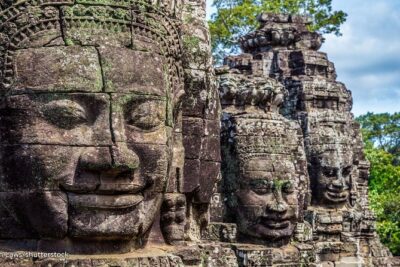
Bayon is the main event inside Angkor Thom for many people. Its towers carry the enigmatic stone faces associated with King Jayavarman VII’s reign. Allow an hour to walk among the faces and examine the bas-reliefs rather than looking only for the best selfie angle. The close, crowded plan makes Bayon feel very different from the open scale of Angkor Wat.
Baphuon follows with another hour. This large temple mountain was completed around 1060 and was dedicated to Shiva. Its long approach and steep form show a different period of Khmer building, while its position near the old royal area reminds you that Angkor Thom was more than a collection of isolated temples.
Phimeanakas is a shorter 30-minute stop. Built mainly from laterite, it sits near the former Royal Palace area. It is less immediately striking than Bayon, but it helps you picture the ceremonial center of the city and the layers of construction added by different kings.
The Terrace of the Elephants and the Terrace of the Leper King are open-air monuments along the Royal Square. The first is known for its elephant carvings and long platform. The second has detailed reliefs that reward close study. Forty-five minutes at each is generous enough to walk, photograph, and examine the carved surfaces without rushing.
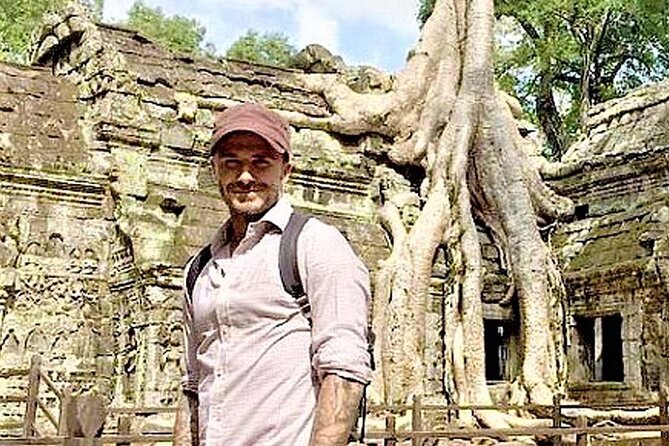
Ta Prohm brings the day’s strongest contrast. Here, trees grow around and over the stone, giving the temple its familiar jungle character. The site is large, and one hour will let you see its most important paths, though not every corner. Bring patience. Narrow passages and popular photo points can slow your progress.
Banteay Kdei is scheduled after Ta Prohm. It is a major Buddhist temple built under Jayavarman VII and is often quieter in feel than the most famous sites nearby. The stated duration of seven hours and 30 minutes is almost certainly a timing error, since it would consume most of the day. Ask the operator to confirm the intended visit length.
Ta Nei is a smaller late-12th-century temple dedicated to the Buddha. Its position near the East Baray and its lower profile make it a useful counterpoint to Bayon and Ta Prohm. Forty minutes is enough for a focused visit, particularly if you prefer atmosphere and stonework over another large complex.
This is the busiest and most physically demanding day. Wear practical clothing that covers shoulders and knees for temple visits, use the provided water, and treat the private car as a place to recover between walks. The tour does not include meals, so plan to pay for lunch and carry enough small expenses for the day.
Day three: Banteay Srei and the outer temple circuit
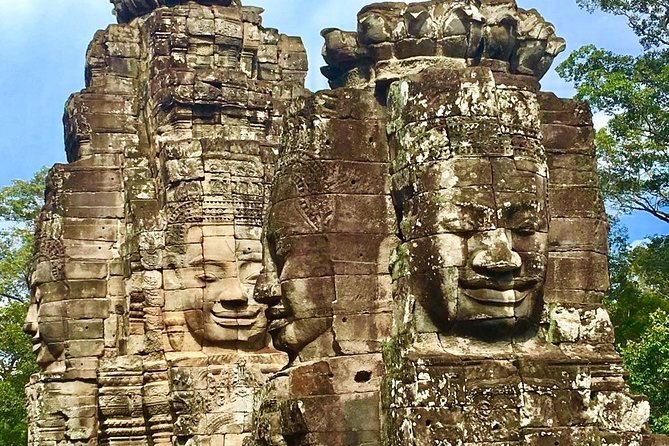
Banteay Srei is the jewel of the third morning, though I would avoid rushing it. The temple is smaller than Angkor Wat, but its pink sandstone carvings are unusually fine and detailed. Two hours gives you time to look closely at the lintels, doorways, and decorative figures instead of judging the site only by its size.
Its distance from the central Angkor group is part of the reason to include it in a private tour. A driver and guide make the long reach north more manageable, and the quieter, more intimate scale changes the rhythm of your temple days.
Banteay Samre follows with about an hour. Built in the 12th century during the reigns of Suryavarman II and Yasovarman II, it is a Hindu temple with a compact, fortress-like arrangement. Compare its enclosed feel with the broad ceremonial spaces at Angkor Wat and the face towers at Bayon.
The palm sugar producer stop offers a look at a local product and its labor. The schedule gives an unusually long duration of one day and six hours, which is clearly not realistic for a stop on this route. Expect a shorter demonstration, and confirm the planned time. You can watch the production process and browse goods from local sellers, but do not confuse this with a full-day cultural workshop unless the operator explains otherwise.
Preah Khan is one of the major temples connected with Jayavarman VII. The listed two-minute duration is plainly too short to represent a meaningful visit. Confirm this before booking, because Preah Khan deserves more than a drive-by. Its long corridors, carved doorways, and mixture of religious and architectural details reward a steady walk.
Neak Pean is unusual in layout. It was built on an artificial island within a large reservoir, and its central arrangement differs from the more familiar temple mountains. One hour is a sensible amount of time, especially if you want to understand the water symbolism and the way the site fits into the wider hydraulic planning of Angkor.
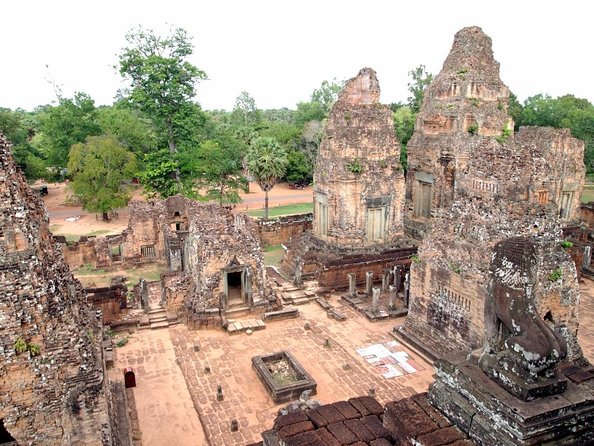
Pre Rup is another temple mountain, founded in 961 under Rajendravarman II. Its upper levels and laterite construction give it a strong, weathered appearance. An hour allows you to compare it with Bakong, the older pyramid temple from day one.
East Mebon completes the circuit with a 10th-century temple that once sat on an artificial island in the now-dry East Baray. The reservoir is gone, but the temple’s original setting explains why its design and placement matter. Fifty minutes is enough for a final look at the towers, carvings, and surrounding space.
Same base, a different kind of day out:
- Angkor Wat Sunrise or Sunset Tour with Guide from Siem Reap
★ 5.0 · 12,109 reviews - Siem Reap: Angkor Wat: Small-Group Sunrise or Sunset Tour
★ 5.0 · 9,444 reviews - From Siem Reap: Kampong Phluk Floating Village Tour by Boat
★ 4.9 · 6,979 reviews - Sunset tour of Kampong Phluk stilts home village on the Tonle Sap
★ 5.0 · 4,865 reviews
Transport, guide support, and small comforts
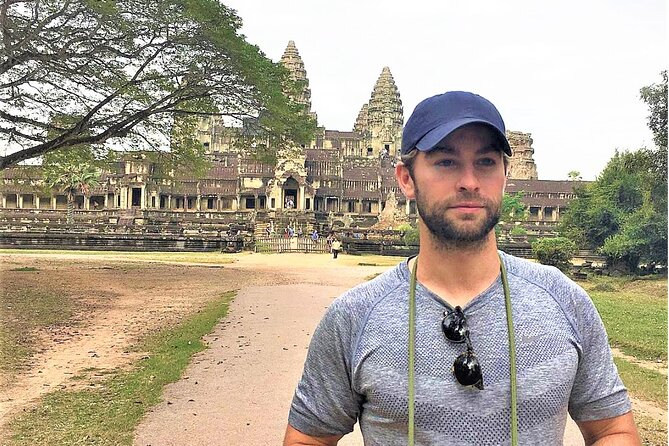
Private hotel pickup and drop-off are included, and you need to provide your Siem Reap hotel name. The vehicle is air-conditioned, which is important when you are moving between exposed temple grounds. Cold bottled water and cool fresh towels are provided throughout the trip.
One specific detail from the available feedback is worth noting: Ree served as a private driver in a clean Toyota Highlander, with air conditioning, iced towels, and cold water. That suggests the vehicle service can be a real strength, although your assigned driver may differ.
A professional English-speaking licensed guide is included. The guide assists with the Angkor Pass purchase and should help connect the monuments to Khmer rulers, religious changes, and architectural styles. Since the tour is private, ask questions and request a slower look at the sites that interest you most.
The tour is described as suitable for most people and near public transportation, but the program still involves repeated walking, steps, heat, and early starts. The private vehicle reduces the strain between sites, not inside them.
Free cancellation is available if you cancel at least 24 hours before the start time. Changes or cancellations inside that window are not accepted for a refund.
Is this three-day tour worth booking?
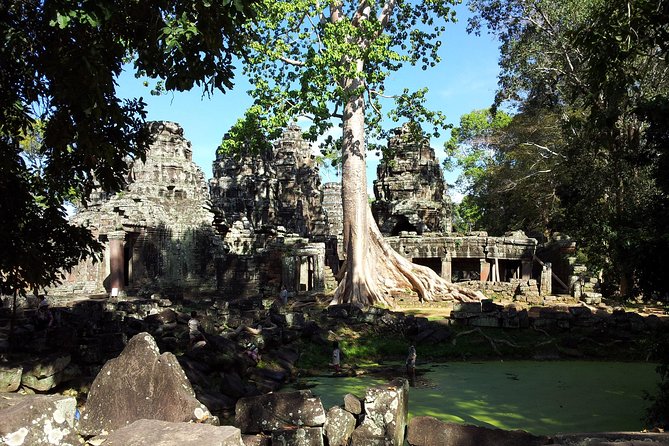
Book it if you want one private arrangement that combines the essential Angkor temples with Roluos, Banteay Srei, Tonle Sap, Wat Bo, and Cambodian craft production. It is especially suited to couples, families, and small groups who value a car, guide, and flexible pacing over joining a larger coach.
I would not book it without first confirming the odd timings and the floating-village name. Ask how much time is really planned for Banteay Kdei, Preah Khan, and the palm sugar stop. Once those details are corrected, the $253.65 price can offer solid value for three days of private transport, guiding, and a private lake cruise, with only the Angkor Pass, meals, and tips added separately.
FAQ
Is this a private tour?
Yes. Only your group participates, with private hotel pickup and drop-off, a private air-conditioned vehicle, and a professional English-speaking licensed guide.
Is the Angkor Pass included?
No. The Angkor Pass is purchased separately and covers the temples in the itinerary. The guide assists you with buying it at the Angkor Park entrance.
Are meals included?
No. Lunch is at your own expense. Local restaurants offer vegetarian and non-vegetarian dishes, with menu prices generally ranging from $3 to $10 per dish.
Does the tour include Tonle Sap?
Yes. The tour includes a private cruise to visit a floating village on Tonle Sap Lake. The schedule names Kampong Phluk, while the overview names Kampong Khleang, so confirm the exact village before booking.
What is provided during the tour?
The tour provides private transportation, hotel pickup and drop-off, an English-speaking licensed guide, cold bottled water, and cool fresh towels. A private Tonle Sap cruise is also included.
Can I cancel for a refund?
You can receive a full refund if you cancel at least 24 hours before the experience start time. Cancellations or changes made less than 24 hours in advance are not refunded.
Just added in Siem Reap
- Twilight Tastes of Siem Reap Include Dinner★ 5.0 · 13 reviews
- Ultimate Sunrise to Angkor Wat, Angkor Thom and Bayon Temple★ 5.0 · 3 reviews
- Trekking Tour at Phnom Kulen National Park from Siem Reap★ 5.0 · 3 reviews
- Full-Day Private Tour of Angkor Wat with Pick Up★ 5.0 · 12 reviews
- Private Day Trip to Angkor Temples with Expert Guide★ 5.0 · 4 reviews
- Siem Reap City Tour with War Museum and Killing Field★ 5.0 · 27 reviews
- Waterfall & River of 1000 Siva Linga- Kulen Mountain Private Tour★ 5.0 · 3 reviews
- Professional Photo Shoot in Angkor Archaeological Park, Siem Reap★ 5.0 · 42 reviews
Tours in Siem Reap, compared.
Angkor Wat Sunrise or Sunset Tour with Guide from Siem Reap
Read our review →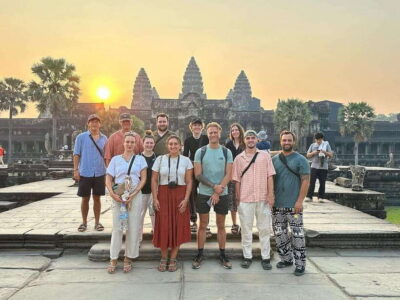
Angkor Wat: Small-Group Sunrise or Sunset Tour
Read our review →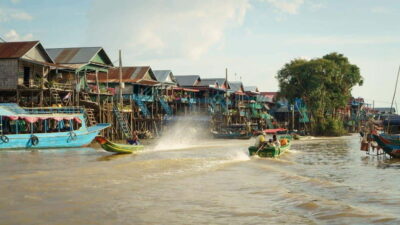
Sunset tour of Kampong Phluk stilts home village on the Tonle Sap
Read our review →
Angkor Wat 2-Day Tour with Sunrise and Sunset
Read our review →
Angkor Wat Sunrise tour with Small – Group and Guide tours
Read our review →