
Reviewed · ANGKOR TEMPLE TOURS
Siem Reap: 2-Day Private Angkor Wat & Angkor Temples Tour
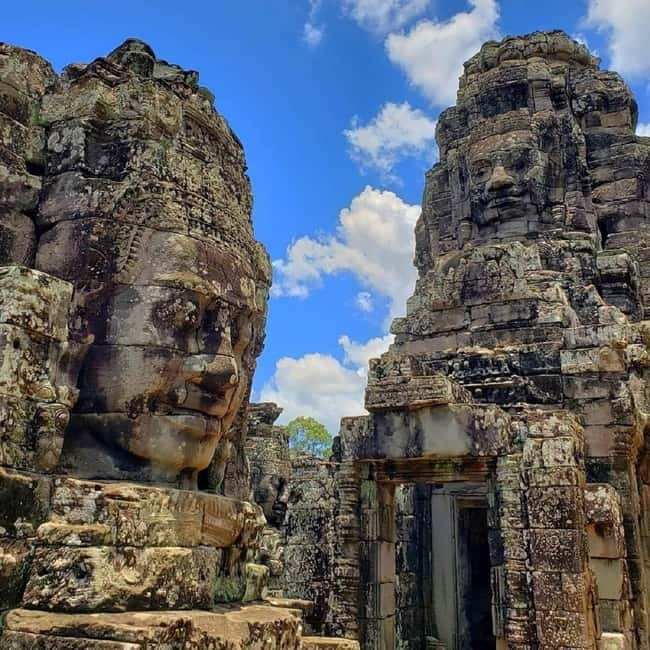
Angkor is too large for a quick temple hop, and this two-day private tour gives you time to see the famous places without reducing the whole park to one rushed morning. You will visit the smiling towers of Bayon, tree-covered Ta Prohm, Angkor Wat, and the finely carved Banteay Srei.
I like the private format, since your guide can adjust the pace and explain what you are looking at instead of sending you through a fixed group schedule. I also like the practical touches: hotel pickup, cold water, chilled towels, and a mix of tuk tuk and car transport. The main drawback is the extra cost of the Angkor pass, plus lunch and drinks, so the advertised price is not your total cost.
Key points to know before booking
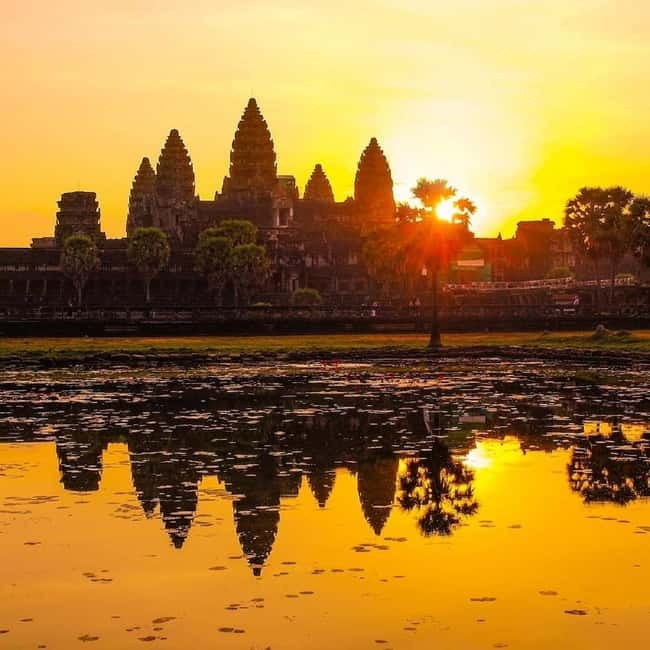
- Angkor Wat comes after Angkor Thom and Ta Prohm on Day 1, giving you the main temples in a sensible order.
- Day 2 reaches the outer temples, including Preah Khan, Neak Pean, Ta Som, East Mebon, Pre Rup, and Banteay Srei.
- The sunrise option starts at 5:00 AM, but it shortens Day 2 to about noon.
- Transport changes with group size: one or two people use a tuk tuk on Day 1 and a private car on Day 2; larger groups use an air-conditioned van or bus.
- Guiding is available in seven languages, including English, Spanish, Portuguese, Italian, French, German, and Japanese.
- The $62 Angkor pass is extra, but it covers two or three days and children under 12 do not need one with passport proof.
Why two days makes sense at Angkor
The Angkor Archaeological Park is not one temple with a few side ruins. It is a wide collection of monuments spread around Siem Reap, with different periods, layouts, and styles. Trying to see the main sites in one day can leave you with a stack of photographs and little idea of how the pieces fit together.
This tour splits the visit into two useful sections. Day 1 covers the Small Circuit and the best-known temples. Day 2 takes you farther out, where the crowds and scale change and the monuments feel more remote.
The private setup matters here. You are not tied to strangers who want to rush ahead or stop for every photograph. You can ask your guide to explain a carving, pause for water, or spend more time at a temple that catches your interest.
The price is $245 for a group of up to two people. That is a fair arrangement if you are traveling as a couple or with a friend and want a guide and vehicle without paying for a large shared group. For three or more people, compare the group price carefully, since the transport becomes an air-conditioned van or bus.
Remember to add the Angkor pass. It costs $62 per person for two or three days. That is a significant extra charge, but it is the required park admission and is separate from the guiding service.
More temples within reach of Siem Reap:
- Siem Reap Tour: Angkor Wat Sunrise, Bayon, Ta Prohm, Banteay Srei
★ 5.0 · 931 reviews - Siem Reap: Bike the Angkor Temples – Full-Day 30km Tour
★ 5.0 · 463 reviews - Preah Vihear: Full-Day Preah Vihear and Koh Ker Temple Tour
★ 4.9 · 263 reviews
Day 1: giant faces, tree roots, and Angkor Wat
Pickup is at your hotel lobby at 8:30 AM. You should be ready about 15 minutes early, since the guide and driver will be looking for you there. You can buy the temple pass at the ticket booth with help from the guide, or purchase it online before the visit.
The first stop is the South Gate of Angkor Thom. The approach is part of the experience: a broad causeway leads toward a gate topped by enormous carved faces. It is an impressive first look at the scale of the old city, and your guide can help you understand the figures and symbolism along the route.
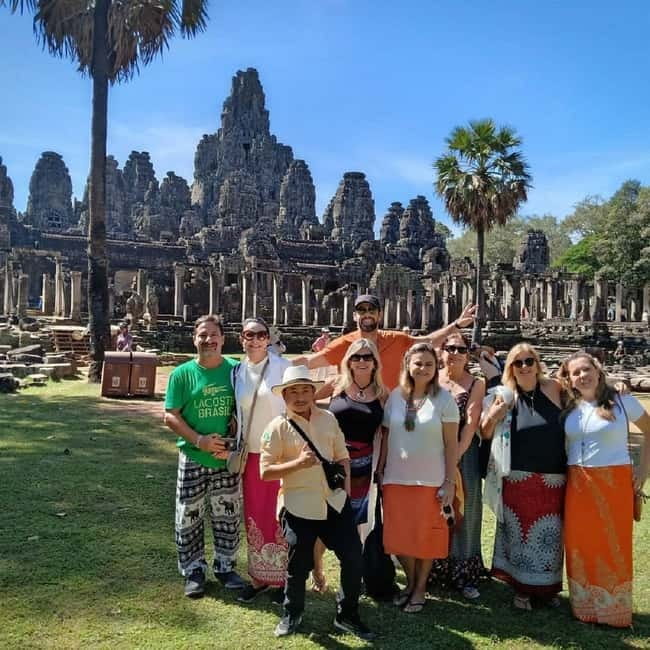
Inside Angkor Thom, you visit Bayon. Its towers carry calm stone faces that seem to watch from every direction. Bayon is not a quick photo stop. The passages can feel confusing, so a guide is useful for pointing out how the towers, galleries, and carved scenes relate to one another.
Next come the Terrace of the Elephants and the Terrace of the Leper King. These are more open than Bayon, giving you a chance to walk, look closely at the reliefs, and get a sense of how public spaces once worked within Angkor Thom.
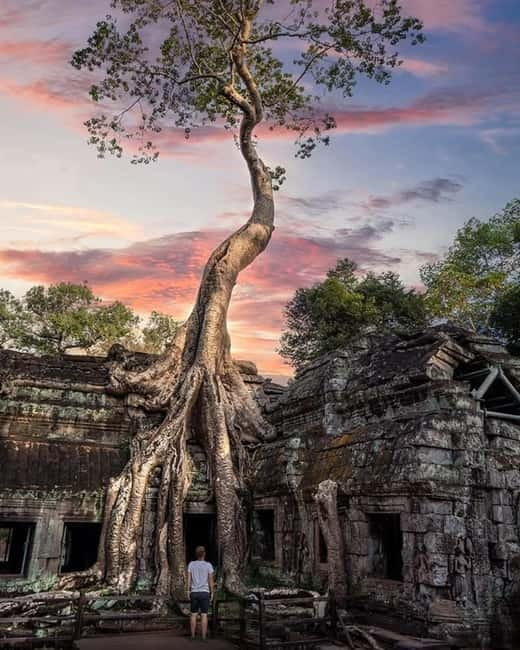
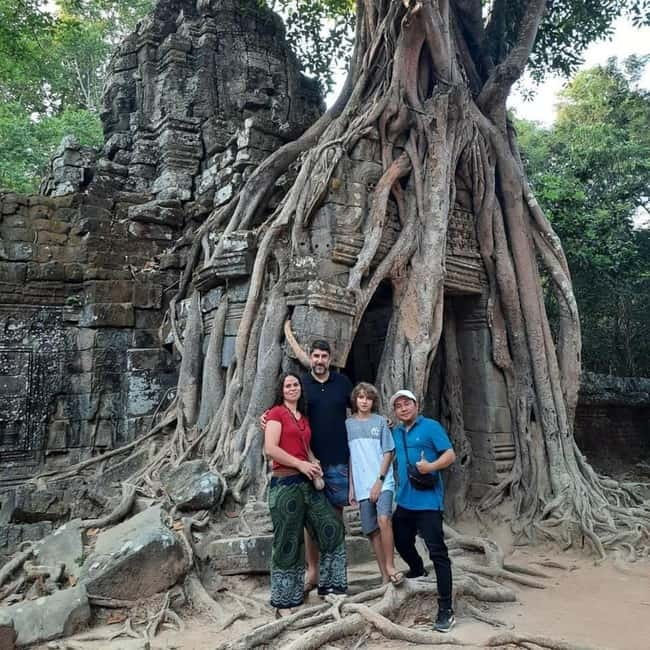
After lunch at a nearby Cambodian restaurant, the tour continues to Ta Prohm. This is one of Angkor’s most memorable places because large tree roots press across the stone walls and doorways. The trees are not a decoration added for effect. They are part of the reason Ta Prohm feels so unusual, though they also make some passages tight and uneven.
Ta Prohm is popular, so do not expect solitude. The private tour helps you move at your own pace, but it cannot remove the other people who come to see the famous root-covered corridors. Wear shoes with a firm sole, especially if you want to explore beyond the easiest paths.
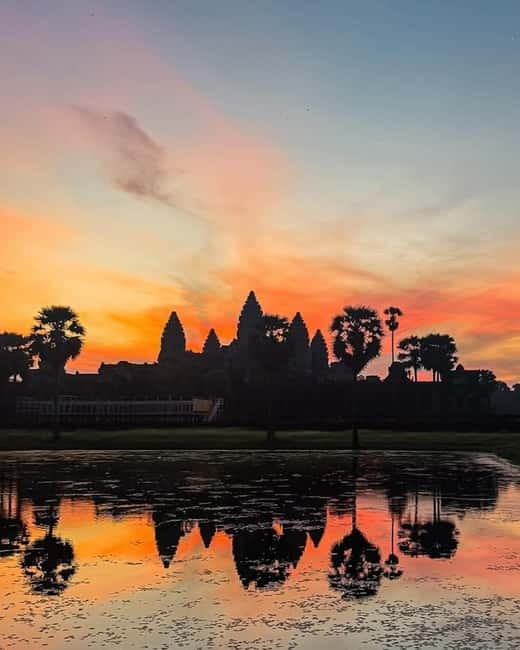
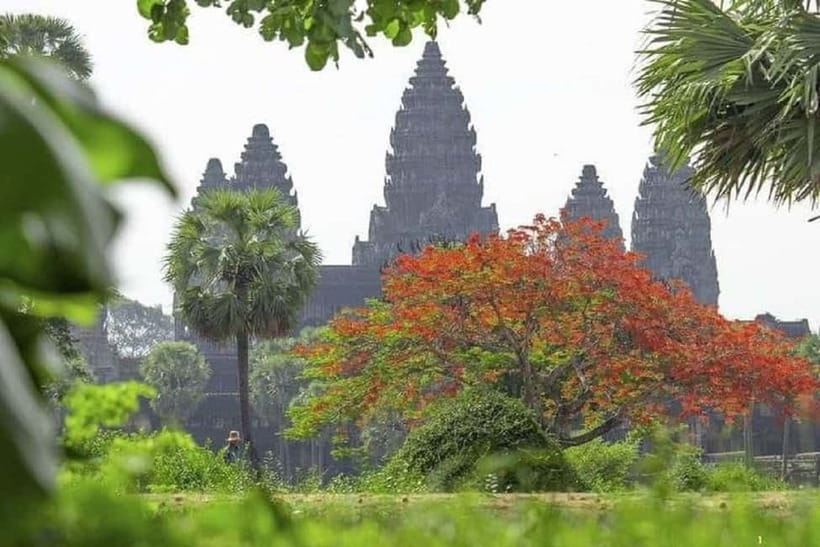
The afternoon is reserved for Angkor Wat, the largest religious monument in the world. This is the day’s major stop, and the timing gives you room to appreciate more than the front view.
Your guide can explain the temple’s art, design, history, and symbolism as you move through its galleries and courtyards. Angkor Wat rewards patience. Look at the long carved walls, the repeated architectural patterns, and the way the towers frame the central structure.
The tour ends around 5:00 PM, with a ride back to your hotel. That is a full day, but the stops are varied enough to keep it from feeling like four versions of the same temple.
Day 2: quieter temples on the Grand Circuit
The regular second-day schedule begins with hotel pickup at 8:30 AM and ends around 4:00 PM. If you choose the sunrise option, pickup begins at 5:00 AM and the tour finishes around noon. This is not simply an earlier version of the same day. The sunrise choice cuts the number of hours available for the outer temples, so choose it because you value the early start, not because you expect a longer visit.
Preah Khan begins the Grand Circuit. It is a large former monastic complex with long corridors, carved doorways, and a more spread-out feel than Angkor Wat. You will spend time moving through layers of stone rather than viewing one single central tower.
This is a good place to have a guide explain how the complex was used. Without context, a series of galleries can blur together. With an explanation, the layout and carvings become easier to read.
Neak Pean is a smaller and more unusual stop. It sits within a system of pools, and the water gives the site a calmer mood than the larger temple compounds. The approach and viewing area make it different from the enclosed corridors of Preah Khan and Ta Prohm.
Ta Som follows, known for the tree-covered gate. It has some of the visual appeal of Ta Prohm on a smaller scale. You will not need as much time here, but it is worth slowing down at the gate and looking at the way roots and stone share the same space.
After lunch, the route continues to East Mebon. This temple once stood on an island in an ancient reservoir, a reminder that Angkor was shaped by a large and sophisticated water system. The site is more open, so you can see its structure clearly and move around the towers without the same enclosed feeling found at Bayon.
Pre Rup is the final major stop before Banteay Srei. Its mountain-style design involves steep levels and strong vertical lines. The climb can be tiring in heat, and you should take it at your own pace. The reward is a broad view over the Cambodian countryside, along with a clear sense of how Angkorian builders created height without modern machinery.
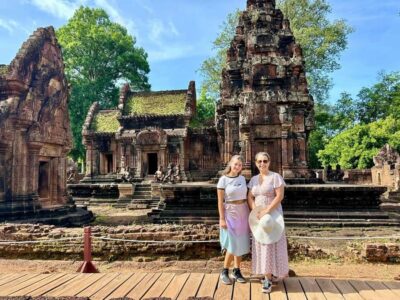
The day concludes at Banteay Srei, often called the Citadel of Women. Its pink sandstone carvings are unusually fine, with detailed figures and decorative patterns that reward close inspection. It is farther from the central temples, but the extra drive is worthwhile if you care about carving and smaller-scale design.
Banteay Srei is also a useful contrast to Angkor Wat. Angkor Wat impresses through scale and symmetry. Banteay Srei impresses through precision. You get both on this route.
Guides, languages, and the value of a private group
The tour offers guides in English, Spanish, Portuguese, Italian, French, German, and Japanese. That can make a major difference at Angkor, where the monuments are full of visual details that are easy to miss without explanation.
The guide names associated with this service include Visla, Vincent Bross, Rat, Raf, and Sovuth. Assignments can vary, so you should not book expecting one specific person unless the operator confirms that in advance. What you can request is a guide in your preferred language.
The private format is best for people who like questions answered as they come up. You can ask why a temple was built, what a carved scene means, or how one monument differs from the next. You can also ask for help with photographs. Sovuth, for example, is specifically noted for taking strong photos as well as giving lively explanations.
A private tour does not mean you avoid every practical limit. Temple paths can be uneven, the heat can be draining, and popular areas can be busy. The guide can adjust timing, but not change the weather or the size of Angkor.
A few more things to do in Siem Reap worth a look
- Siem Reap: Angkor Wat 2-Day Tour with Sunrise and Sunset
★ 4.9 · 4,429 reviews - Angkor 2-Day Sunset & Sunrise Small-Group Tour
★ 5.0 · 2,567 reviews - 2 Days Exclusive Temple Highlights with Sunset and Sunrise Tour
★ 5.0 · 1,157 reviews - Siem Reap: Angkor Sunrise 1- or 2-Day Guided Temples Tour
★ 4.9 · 1,132 reviews
Transport, heat, clothing, and meals
For one or two people, Day 1 uses a tuk tuk and Day 2 uses a private car. The tuk tuk gives you an open-air feel and makes short rides between central temples pleasant, though you will be more exposed to sun, dust, and heat. The car on Day 2 is a useful comfort upgrade because the outer circuit involves more time on the road.
Groups of three or more use an air-conditioned van or bus on both days. A group of five has enough room in the van, according to the stated transport arrangement, and the air conditioning can matter during Cambodia’s hot and humid conditions.
Cold water and towels are included. Those sound like small extras until you are several hours into a temple walk. The towels are intended to cool you down, and regular water breaks are a practical reason to choose a guided tour rather than planning every detail yourself.
Lunch is not included. You eat at a nearby Cambodian restaurant, but you should budget separately for food and any drinks. Cash is worth carrying for these costs and for other purchases during the day.
Dress is important. Shorts, short skirts, sleeveless shirts, tank tops, and other revealing clothes are not allowed at the temples. A scarf may cover your knees and shoulders at many sites, but the rules are stricter at Angkor Wat, where pants or a skirt covering the knees and a shirt covering the shoulders are required.
Bring comfortable shoes, a hat, sunglasses, insect repellent, a camera, and cash. Comfortable clothing matters more than fashion here. You will walk, climb steps, and move between bright open areas and shaded stone corridors.
Who will get the most from this tour
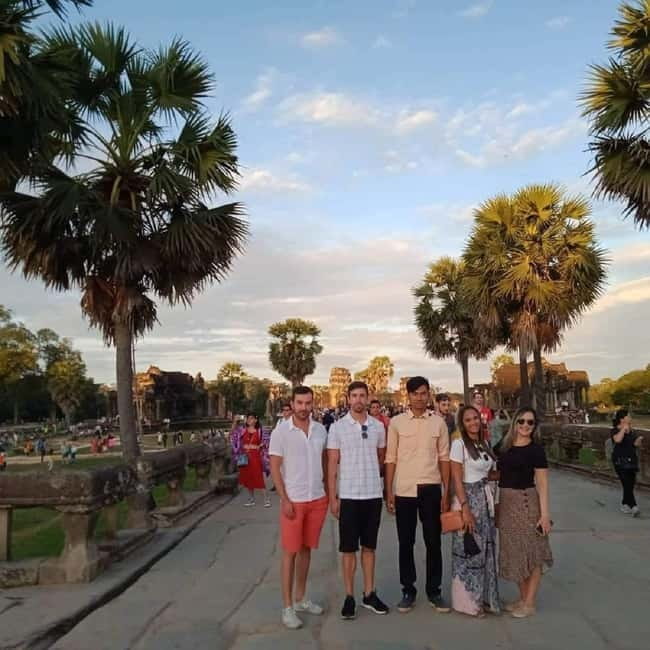
I would choose this tour if you want Angkor explained rather than simply photographed. It suits couples, friends, and small families who prefer their own vehicle and schedule.
It is also a strong choice if language matters. Having a guide in Spanish, French, German, Japanese, Italian, or Portuguese can make the visit more useful than relying on a short printed description.
Families should note that children under 12 can join free of charge, and they do not need an entrance ticket if you show a passport as proof of age. The days are long, so families should still consider how much walking and heat younger children can handle.
The tour is not suitable for wheelchair users, babies under one year, or people over 95. The listed restrictions also make it less suitable if you cannot manage uneven temple paths or steps.
Booking details and the total cost
The base price is $245 per group of up to two. Add $124 for two adult Angkor passes, plus lunch and drinks, and you have a clearer picture of the real cost for a couple.
That total buys two days of private guiding, hotel transfers, transport, language support, water, and towels. The value is strongest when you would otherwise pay separately for a guide and transport or when you want someone to organize the route.
The activity allows cancellation up to 24 hours before the start for a full refund, and you can reserve now and pay later. The entrance pass is not included, so make that cost part of your decision from the start rather than treating it as a surprise at the ticket booth.
Should you book it?
Book this tour if you want the main Angkor temples plus several outer sites, and you value having a guide who can explain the carvings and keep the day organized. The two-day plan is far more satisfying than trying to squeeze Angkor into one rushed visit.
Choose the standard second day if you want the fullest schedule. Choose the 5:00 AM sunrise option if an early start matters more than seeing every listed stop in a long afternoon.
I would skip it only if you prefer to explore alone, dislike fixed pickup times, or want to keep your total cost as low as possible. For everyone else, the combination of private transport, multilingual guiding, practical cooling supplies, and a well-spread route makes this a sensible way to see Angkor.
FAQ
Is the Angkor entrance ticket included?
No. The Angkor complex pass costs $62 per person for two or three days. Children under 12 do not need a ticket when a passport is shown as proof of age.
What time does the tour start?
The regular pickup time is 8:30 AM from your hotel lobby. The optional sunrise version of Day 2 starts at 5:00 AM and finishes around noon.
Which temples are visited on Day 1?
Day 1 includes the South Gate of Angkor Thom, Bayon, the Terrace of the Elephants, the Terrace of the Leper King, Ta Prohm, and Angkor Wat.
Which temples are visited on Day 2?
Day 2 includes Preah Khan, Neak Pean, Ta Som, East Mebon, Pre Rup, and Banteay Srei.
What languages are available for the guide?
Guides are available in English, Spanish, Portuguese, Italian, French, German, and Japanese.
Is transport included?
Yes. One or two people use a tuk tuk on Day 1 and a private car on Day 2. Groups of three or more use an air-conditioned van or bus for both days.
Are meals included?
No. Lunch and drinks are not included, though the tour stops at nearby Cambodian restaurants for meals.
Just added in Siem Reap
- Twilight Tastes of Siem Reap Include Dinner★ 5.0 · 13 reviews
- Ultimate Sunrise to Angkor Wat, Angkor Thom and Bayon Temple★ 5.0 · 3 reviews
- Trekking Tour at Phnom Kulen National Park from Siem Reap★ 5.0 · 3 reviews
- Full-Day Private Tour of Angkor Wat with Pick Up★ 5.0 · 12 reviews
- Private Day Trip to Angkor Temples with Expert Guide★ 5.0 · 4 reviews
- Siem Reap City Tour with War Museum and Killing Field★ 5.0 · 27 reviews
- Waterfall & River of 1000 Siva Linga- Kulen Mountain Private Tour★ 5.0 · 3 reviews
- Unveiling 2 Days Private Angkor Wat/Beyond In Sunrise/Sunset Tour★ 5.0 · 48 reviews
Angkor Temple Tours, compared.
Siem Reap Tour: Angkor Wat Sunrise, Bayon, Ta Prohm, Banteay Srei
Read our review →
Angkor Wat one Day Private Tour for All Highlight Angkor Temples
Read our review →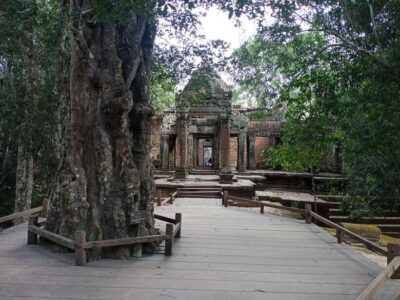
1-Day private Angkor Temple Tour from Siem Reap
Read our review →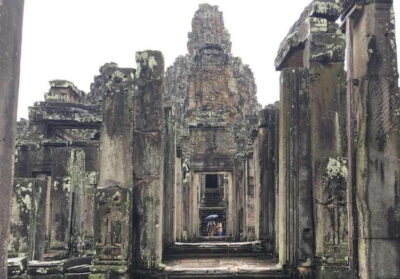
Private one-day tuktuk ‘small tour’ of the oldest Angkor temples
Read our review →Browse the lists this tour appears in