
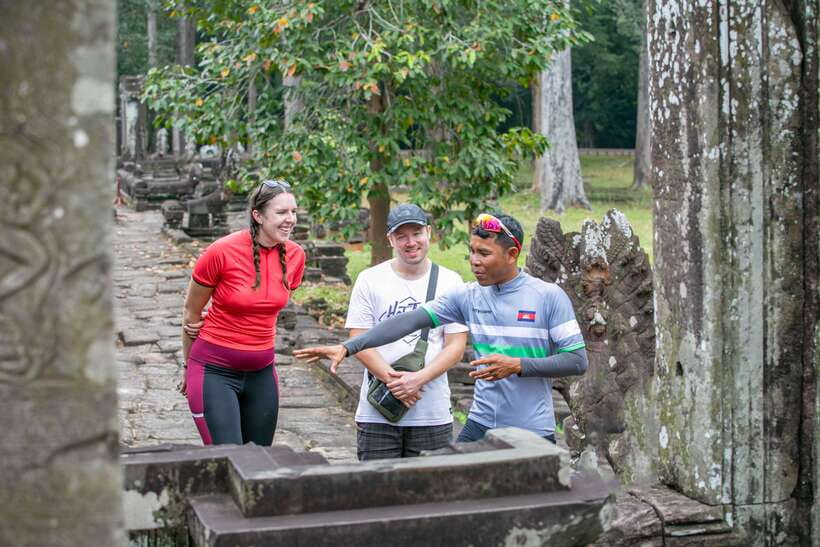
Reviewed · ANGKOR WAT SUNRISE TOURS
Siem Reap: Angkor Sunrise 2 Days Guided Bike Tour
Angkor Wat is at its best before the heat and tour buses arrive. This two-day ride gets you there for sunrise, then sends you along shaded tracks and village roads instead of keeping you on the main circuit. You will see the famous temples, but you will also pass rice fields, farms, and small communities where daily life continues beyond the monuments.
I like the quiet cycling routes and the chance to reach several major temples without spending both days in a vehicle. I also like the second day, when fruit, snacks, markets, lotus farms, and rice-making show you a side of Cambodia that a temple-only visit misses.
The main catch is fitness. Sandy temple tracks, heat, and several hours on a bicycle are not ideal for an occasional cyclist, even though the bikes are well maintained. The tour costs $95, but you must also budget $37 per day for temple entry.
Key points to know before booking
- Sunrise starts very early: Hotel pickup is at 5:00am on day one, so expect a full morning before most visitors have reached the temples.
- Sandy trails require bike control: The temple route is mostly manageable, but loose surfaces can feel awkward if you rarely ride off pavement.
- The major Angkor sights are covered: Angkor Wat, Angkor Thom, Bayon, Preah Khan, and Ta Prohm are all part of the first day.
- Day two is slower and more rural: Ride through villages, farms, rice fields, markets, mushroom and lotus farms, and rice-wine production areas.
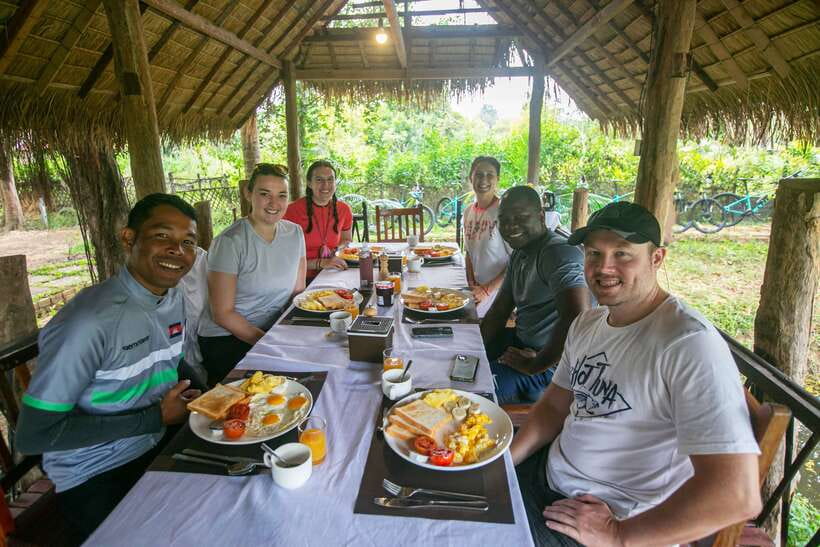
- Food and drinks are included: You receive breakfast, lunch, daily water, fruit, and local snacks.
- The guide matters: English-speaking guides such as Thy, Bob, Mony, and Tida have led this experience, with Mony praised for temple explanations and good photo stops.
Why a bicycle is a smart way to see Angkor
Angkor is huge. The temples are not arranged in a compact row, and the broad roads between them can make a temple visit feel like a series of vehicle transfers. A bicycle changes the pace. You hear the tires on the track, the jungle around you, and the small sounds of village life.
The first day uses trails behind Angkor Wat and routes through the central complex. This gives you a break from the main roads and lets you approach the ruins at a more human speed. You still cover a lot of ground, so the bike is not simply a pleasant extra. It is the way the day works.
The route is best for someone with moderate cycling fitness. You do not need to be a racer, but you should be comfortable braking, turning, and keeping your balance on sandy or uneven ground. One important detail: the tour description presents the cycling as suitable for occasional riders, but the actual temple route can demand more skill than a normal city ride.
The bikes are described as well maintained mountain bikes, and helmets are provided. Water support is included, which matters in Cambodia’s heat. Bring sunglasses, sunscreen, and a camera, and wear clothing that covers your shoulders and knees at the temples.
More Bike Tours in Siem Reap
- Siem Reap Countryside Bike Tour / E-Bike or Tuk Tuk
★ 5.0 · 935 reviews - Angkor Sunrise Bike Tour / E-Bike or Tuk Tuk
★ 5.0 · 615 reviews - Siem Reap: Bike the Angkor Temples – Full-Day 30km Tour
★ 5.0 · 463 reviews
Day one: Angkor Wat before breakfast
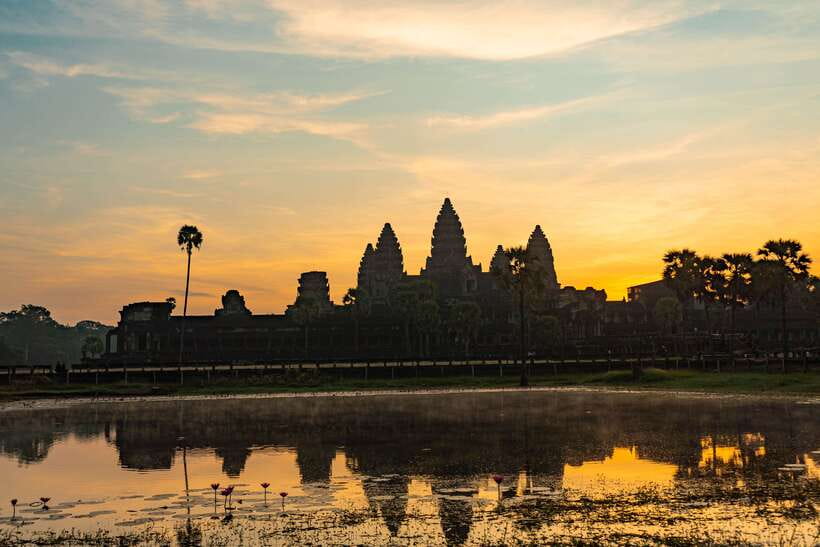
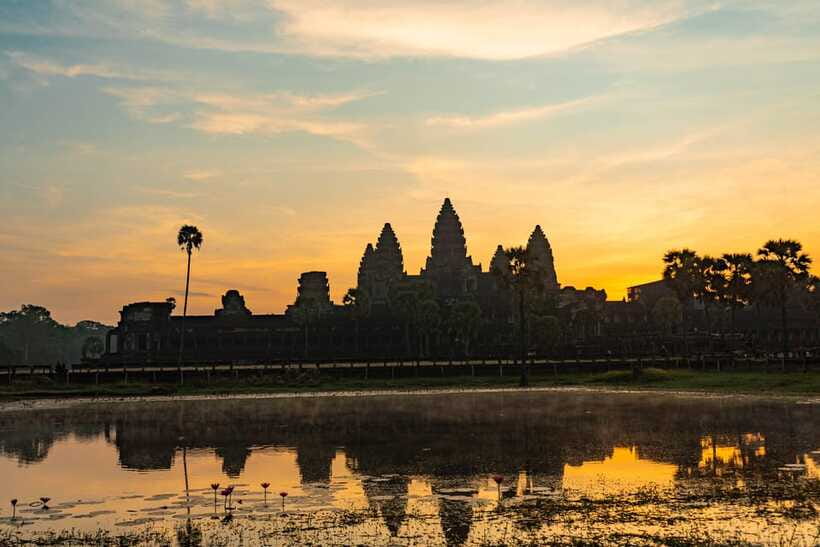
Pickup begins at 5:00am from your hotel. That is early, but it is the right hour for Angkor Wat. The sunrise is the opening scene, and the cooler air makes the first cycling easier than a later start would be.
Your guide takes you to the best viewing spots around Angkor Wat. The temple’s towers and reflection pool are the focus, but sunrise conditions vary. Clouds can soften the colors or hide the sun, so think of this as a good chance to see the temple in calm morning light, not a guaranteed postcard.
After sunrise, you explore the central complex with the guide. This is where the tour’s value depends most on the person leading it. Guides including Mony have been praised for explaining the history and symbolism and for pointing out strong photo positions. Other guide experiences have been less detailed, especially on the artistic and architectural side, and some English accents may take concentration.
A useful tip is to ask your guide early to show you the route on a map. That helps you understand where you are within the enormous Angkor area and what you will see next. If architectural detail matters greatly to you, ask specific questions about carvings, temple layout, and religious symbolism rather than relying only on the standard explanation.
Breakfast follows the Angkor Wat visit. It is included, and the meal setting has been described as local and appealing. The exact food is not specified, so you should expect Cambodian fare rather than a familiar hotel breakfast.
Behind Angkor Wat and through the jungle tracks
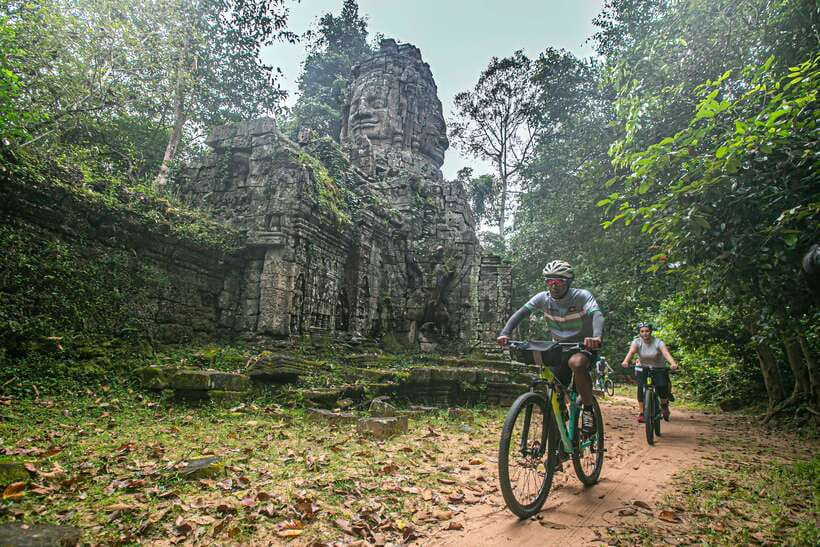
After breakfast, you leave the most direct route and follow tracks behind Angkor Wat. This is one of the strongest parts of the experience. You pass through small villages within the Angkor area and see people going about ordinary routines instead of only seeing the monument zone.
The trails are shaded in places, which helps with the heat. They are not described as highly technical mountain-bike routes, but loose sand can make steering less predictable. If you ride regularly, you will likely find the route enjoyable. If your cycling is limited to smooth roads, you may spend more time managing the bike than looking around.
The route continues to Angkor Thom, the former city area, and Bayon Temple. Bayon is known for its large carved faces, which give it a different mood from Angkor Wat’s long galleries and towers. The ride lets you connect the sites physically, rather than treating each one as an isolated stop.
Preah Khan is also included. Its corridors, courtyards, and partly overgrown stonework reward a slower look. Then comes Ta Prohm, often called the Tomb Raider temple. Its trees and roots crossing the ruins have made it one of the most recognizable places in Cambodia.
The fame of Ta Prohm means it can be busy. Arriving by bicycle does not remove the crowds, but the trail-based approach can make the journey feel less like a standard coach circuit. You also have the pleasure of riding between the sites rather than sitting in traffic or climbing in and out of a tuk-tuk.
Lunch, local food, and a needed rest
Lunch is a traditional Cambodian meal with a broad spread of local dishes. Food is included, along with water and snacks, so you do not need to carry a full day’s supply.
The quality may vary. Some people have found the lunch tasty and the setting pleasantly local, while one experience found the meal below expectations. Keep that in mind if food is a major reason you are booking. The strength of the tour is the whole day, not a carefully designed restaurant meal.
A short siesta follows lunch. This is practical rather than decorative. After an early start, temple visits, and cycling in the heat, a break gives you a chance to recover before returning to your hotel.
The first day is a substantial outing. You begin before dawn and cover several famous sites, so do not plan an exhausting evening afterward. The schedule suits you if you want to see a lot in one day and prefer active sightseeing to a slow, air-conditioned circuit.
Other early starts at the temples from Siem Reap:
- Angkor Wat Sunrise or Sunset Tour with Guide from Siem Reap
★ 5.0 · 12,109 reviews - Angkor Wat Sunrise tour with Small – Group and Guide tours
★ 5.0 · 3,655 reviews - Full-Day Angkor Wat Sunrise Private Tour with Guide from Siem Reap
★ 5.0 · 2,920 reviews - Angkor Wat Sunrise & 3 Main Temples with Breakfast – Small Group
★ 5.0 · 2,857 reviews
Day two: rice fields, village roads, and local production
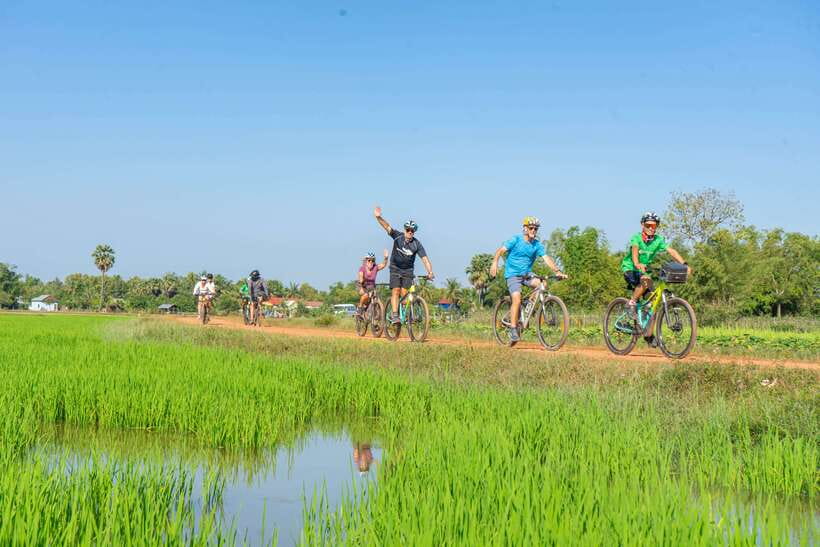
Pickup on day two is at 7:30am. You are taken to the cycling shop, get back on a bicycle, and leave the temple zone for Siem Reap’s countryside.
This day is more relaxed than the first. The route follows backroads, dirt farm roads, rice fields, and small villages. There are no major monuments to tick off. Instead, the interest comes from seeing how food is grown, processed, and sold.
Stops can include a local market, mushroom farms, lotus farms, and places where rice wine is distilled. You may taste local fruit and snacks along the way. The tour also includes village handicrafts and Buddhist temples, adding cultural stops without turning the morning into a formal museum visit.
The countryside route is mainly on dirt roads and is not described as particularly demanding for a regular cyclist. Still, Cambodia’s heat remains a factor, and you should use the water provided. The easier pace also means you have more time to ask questions and notice details.
This is the day I would especially recommend if you want contact with everyday rural Cambodia. It does not replace a temple tour, and it is not a performance or staged cultural show. You ride through working communities and see farms, roads, and local production as part of the morning.
You return to the bike shop around midday and are dropped back at your hotel. That early finish leaves time for a rest or another activity, assuming you still have energy after two days of riding.
Guides, language, and the value of the human side
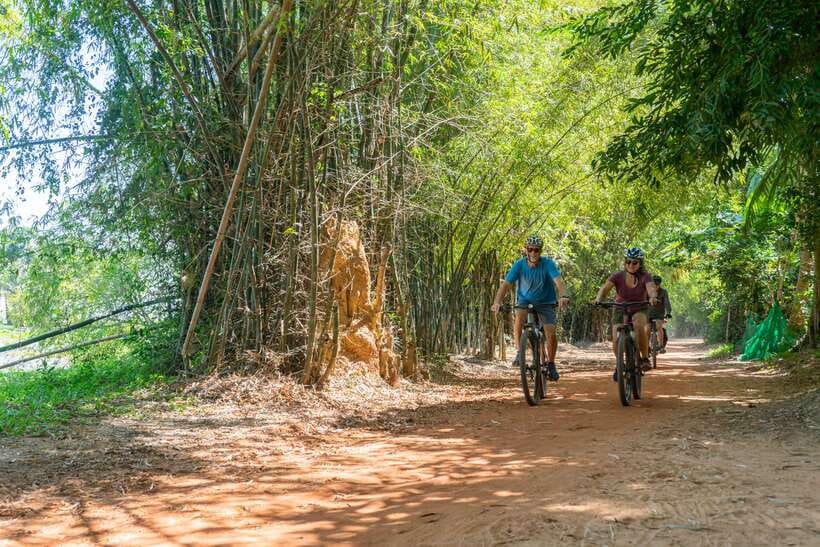
The tour is led in English. Guide quality can shape the experience, especially at Angkor, where a good explanation helps you understand why the buildings look and function as they do.
Several guides have been associated with this route, including Thy, Bob, Mony, and Tida. Thy and Bob have been praised for friendly, capable guiding and smooth organization. Mony has received particularly strong praise for temple knowledge, explanations, and photo stops. Tida has also been described as a strong guide.
That does not mean every guide will explain the temples in the same way. If you want more than dates and basic stories, tell the guide what interests you. Ask for the religious meaning of the temples, the purpose of different spaces, and details in the carvings. A clear request can turn a general tour into a more useful one.
The experience is not designed as a private academic lecture. It works better as an active day with guidance, practical help, and a local point of view. You get the most from it by asking questions while riding and during the stops.
What $95 really gets you
The price is $95 per person for two days. Included are hotel pickup and drop-off, an English-speaking guide, bicycles, helmets, daily water, breakfast on day one, lunch on day one, and local fruit and snacks.
That is a fair package for two guided cycling days, particularly because transport, equipment, food, and drinks are covered. The price also saves you from arranging separate transport between several Angkor sites and from finding your own countryside route.
Temple entry is extra at $37 per day. Since the temple sightseeing is concentrated on day one, check how the ticket is handled when you book and budget for the required temple pass. Personal expenses are also extra.
The best value comes if you plan to visit Angkor anyway and want a more active way to connect the major temples. If you only want sunrise photos and a quick look at Angkor Wat, a shorter tour may suit you better. Here, you are paying for two different mornings and the second day’s rural access.
The tour has a 4.9 rating from nine reviews, with especially strong praise for the organization, bicycle quality, guides, food stops, and routes away from crowds. The more useful takeaway is that the experience delivers most for people who are comfortable riding and who value local contact over a polished luxury format.
Who should book this two-day ride?
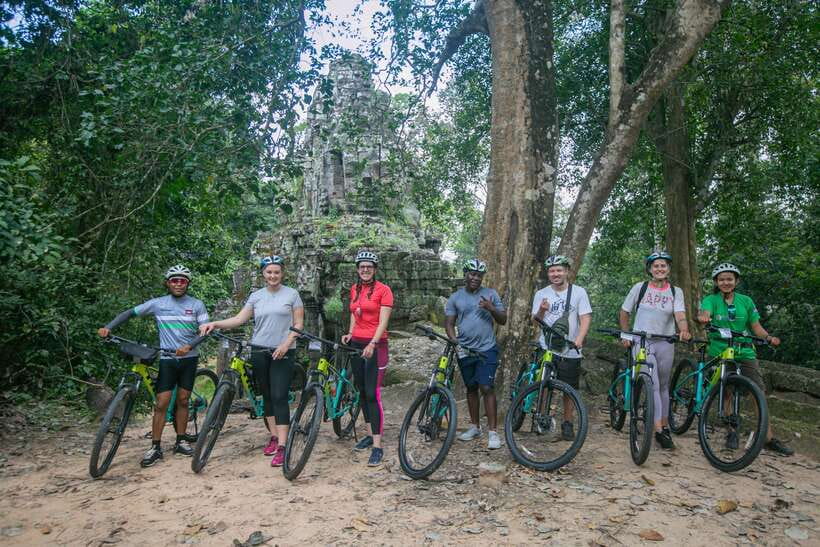
Book it if you like starting early, riding several hours, and mixing famous sights with ordinary village life. It is a strong fit for couples, friends, and active solo visitors who want Angkor to feel like a place rather than a row of photo stops.
You should be reasonably comfortable on a bicycle before booking. You do not need advanced mountain-bike skills, but you should know how to handle changing surfaces. Pregnant women are advised not to take this tour.
It is less suitable if you want a slow, fully vehicle-based temple visit, detailed art-history instruction, or complete control over the schedule. The day covers many places, and the guide’s style can affect how much architectural detail you receive.
The tour runs rain or shine. Wear suitable temple clothing, bring sunscreen and sunglasses, and expect dust, heat, and changing trail conditions. Smoking indoors is not allowed.
Should you book it?
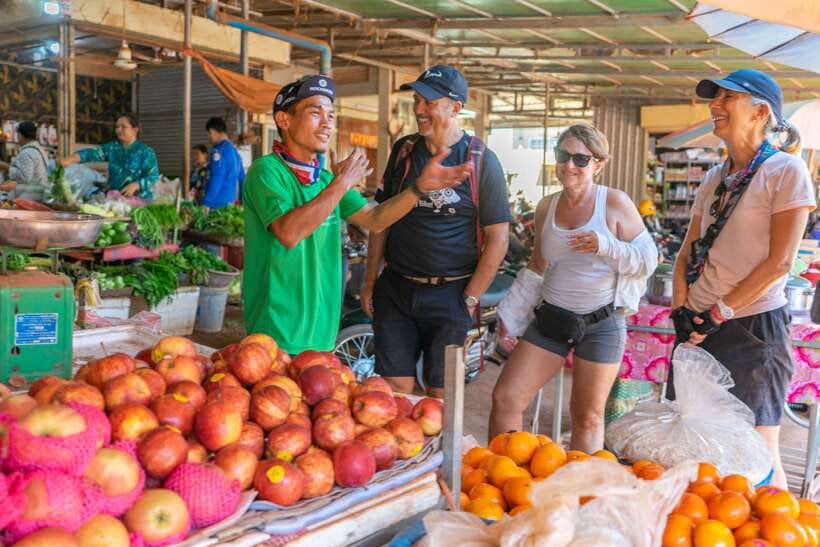
I would choose this tour if you want both sides of Siem Reap: the grand stone temples at sunrise and the working countryside beyond them. The first day is busy and physically demanding, but it covers the major Angkor highlights in a memorable way. The second day is the quieter reward, with farms, villages, snacks, and local production.
Book with realistic expectations about the cycling. The main question is not whether Angkor is worth seeing by bike. It is whether you will enjoy sandy tracks and early starts. If the answer is yes, the $95 package offers a useful mix of temples, food, local life, equipment, and guiding that is hard to match with a simple transport-only tour.
FAQ
What time does the Angkor cycling tour begin?
Day one begins with hotel pickup at 5:00am for sunrise at Angkor Wat. Day two begins with hotel pickup at 7:30am.
Is hotel pickup and drop-off included?
Yes. Hotel pickup and drop-off are included on both days. You should wait in the hotel lobby 15 minutes before the scheduled pickup time.
Is temple entry included in the $95 price?
No. Temple entry is not included. The stated cost is $37 per day, and personal expenses are also excluded.
What food and drinks are included?
Breakfast and lunch are included on day one. Daily water, local fruit, and snacks are also provided.
What temples will I visit?
The first day includes Angkor Wat, Angkor Thom, Bayon Temple, Preah Khan, and Ta Prohm, also known as the Tomb Raider temple.
Do I need to be an experienced cyclist?
You need moderate fitness and should be comfortable riding on different surfaces. Some temple trails are sandy, so the route may be difficult for someone who only rides occasionally on smooth roads.
What should I wear and bring?
Wear clothing covering your shoulders and knees when visiting the temples. Bring sunglasses, a camera, and sunscreen. The tour takes place rain or shine.
More 2-Day Experiences in Siem Reap
- Siem Reap: Angkor Wat 2-Day Tour with Sunrise and Sunset
★ 4.9 · 4,429 reviews - Angkor 2-Day Sunset & Sunrise Small-Group Tour
★ 5.0 · 2,567 reviews - 2 Days Exclusive Temple Highlights with Sunset and Sunrise Tour
★ 5.0 · 1,157 reviews - Siem Reap: Angkor Sunrise 1- or 2-Day Guided Temples Tour
★ 4.9 · 1,132 reviews
More countryside bike tours from Siem Reap
- Siem Reap: Angkor Wat Sunrise Bike Tour & Jungle Breakfast
★ 5.0 · 415 reviews - Siem Reap: Guided Countryside Bike Tour
★ 4.9 · 294 reviews - Siem Reap Countryside Sunset Bike Tour / E-Bike or Tuk Tuk
★ 5.0 · 173 reviews - Siem Reap: Bike the Angkor Temples – Full-Day 30km Tour
★ 4.9 · 159 reviews
Just added in Siem Reap
- Twilight Tastes of Siem Reap Include Dinner★ 5.0 · 13 reviews
- Ultimate Sunrise to Angkor Wat, Angkor Thom and Bayon Temple★ 5.0 · 3 reviews
- Trekking Tour at Phnom Kulen National Park from Siem Reap★ 5.0 · 3 reviews
- Full-Day Private Tour of Angkor Wat with Pick Up★ 5.0 · 12 reviews
- Private Day Trip to Angkor Temples with Expert Guide★ 5.0 · 4 reviews
- Siem Reap City Tour with War Museum and Killing Field★ 5.0 · 27 reviews
- Waterfall & River of 1000 Siva Linga- Kulen Mountain Private Tour★ 5.0 · 3 reviews
- Angkor Wat Experience Temple Pass and Siem Reap Food Tour★ 5.0 · 13 reviews
Angkor Wat Sunrise Tours, compared.
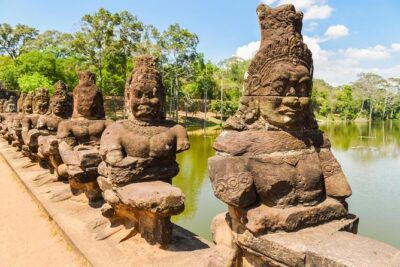
Angkor Wat Sunrise or Sunset Tour with Guide from Siem Reap
Read our review →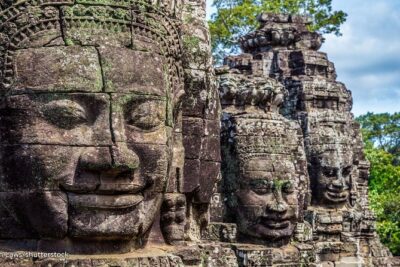
Angkor Wat Sunrise tour with Small – Group and Guide tours
Read our review →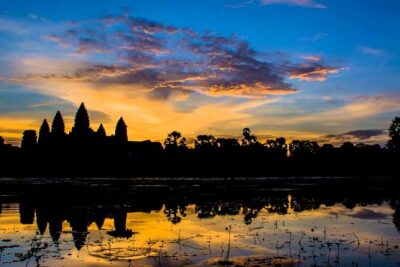
Full-Day Angkor Wat Sunrise Private Tour with Guide from Siem Reap
Read our review →
Angkor Wat Sunrise & 3 Main Temples with Breakfast – Small Group
Read our review →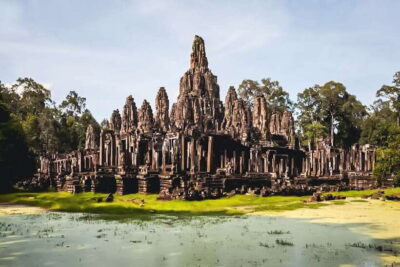
Angkor Wat Sunrise and Full-Day Sightseeing Tour
Read our review →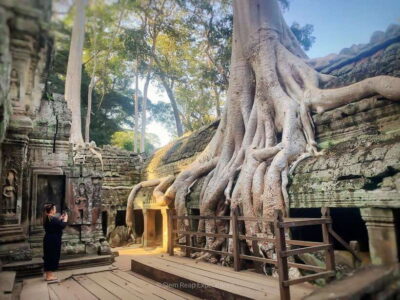
2 Days Exclusive Temple Highlights with Sunset and Sunrise Tour
Read our review →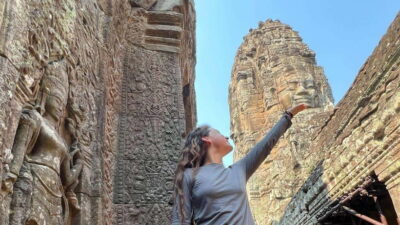
Angkor Sunrise 1- or 2-Day Guided Temples Tour
Read our review →Browse the lists this tour appears in