
Reviewed · ANGKOR WAT SUNRISE TOURS
Siem Reap: Personalized Angkor Wat Sunrise/Set by TukTuk/Car
Angkor Wat at sunrise is the headline here, but the real strength is the freedom to shape the day. You can focus on Angkor Wat and Ta Prohm in three hours, or give six to eight hours to the main small circuit, including Bayon and Angkor Thom. I like the private guide setup and the practical care from the driver, with cold water and, in several cases, cold towels waiting after temple visits.
I also like the flexible pace. Guides such as Naga, John, Seyha, Ra, and Mr Long have been praised for explaining carvings, religion, Khmer history, and good photo spots without rushing people away. The main drawback is that sunrise is not guaranteed to produce color, and the early start can feel wasteful if clouds cover the sky. Some stairs are steep, too, and the temple pass costs extra.
Key points at a glance
- Sunrise or sunset by choice: The shorter format works well for a special light-and-temple outing, though weather controls the view.
- Three major temples in one day: The 6 to 8-hour plan covers Angkor Wat, Bayon, and Ta Prohm at a sensible pace.
- Private guiding: You can ask questions, change the order, spend longer on photos, or add a lesser-known stop.
- Helpful local guides: Naga, John, Seyha, Ra, and Mr Long have been praised for temple stories and photography help.
- Easy transport: Hotel pickup, drop-off, and a round-trip tuk-tuk are included, with an air-conditioned car or van available as an add-on.
- Plan for temple rules: Bring sun protection and a charged phone, and wear clothing that covers shoulders and knees.
Why a private Angkor tour can be worth the cost
At $59 per person, this tour is not the cheapest way to get around Angkor, especially since your temple pass, meals, and personal spending are not included. But the price covers a private guide, hotel transfers, a driver, and the ability to set the pace. For a first visit, that can be money well spent.
Angkor is not one temple beside a parking lot. The main sights are spread across a large archaeological park, and the meaning of what you see is easy to miss without context. A guide can point out the difference between Hindu and Buddhist imagery, explain how a temple was used, and help you read scenes carved into stone instead of treating the ruins as a series of impressive walls.
The private format matters most when you are traveling with a partner, family, or small group with mixed energy levels. You can stop for photos without holding up strangers. You can also ask for more explanation at Angkor Wat, less time at a smaller stop, or a different temple order if the heat and crowds make the original plan less appealing.
You should still think about the added costs. The temple pass is not included, and food and drinks beyond the supplied water are your responsibility. If you are sensitive to heat, the air-conditioned car or van option may be worth considering over the open-sided tuk-tuk, especially for a longer day.
More Tuk Tuk Tours in Siem Reap
- Siem Reap: Angkor Wat Private Tuk-Tuk Tour
★ 4.9 · 2,222 reviews - Siem Reap Countryside Bike Tour / E-Bike or Tuk Tuk
★ 5.0 · 935 reviews - Angkor Sunrise Bike Tour / E-Bike or Tuk Tuk
★ 5.0 · 615 reviews
The 3 to 4-hour express option
The shorter tour is a good fit if you have only one free morning or afternoon in Siem Reap. It is also useful if you want one carefully chosen experience rather than a full day of temple touring.
You can make Angkor Wat the main event, pair it with Ta Prohm, or visit Angkor Wat and Bayon. The exact start time is flexible, so you can plan around sunrise, sunset, hotel breakfast, or a busy travel schedule. A three-hour outing can also work well for people who know they will tire after a few hours of stairs, heat, and uneven stone.
One example of the shorter format begins at Ta Prohm in the afternoon, when the temple is hot but the visit still leaves time for Angkor Wat. A guide can help you focus on the most striking areas, explain the carved details, and take photos without turning the stop into a rushed walk-through.
The tradeoff is simple: you will see less. Angkor Wat, Ta Prohm, and Bayon each deserve time, and adding all three to a short visit can leave you with more transport time and less time among the ruins. If this is your only Angkor outing, I would choose the longer plan unless your schedule or stamina says otherwise.
Sunrise at Angkor Wat, with one honest warning
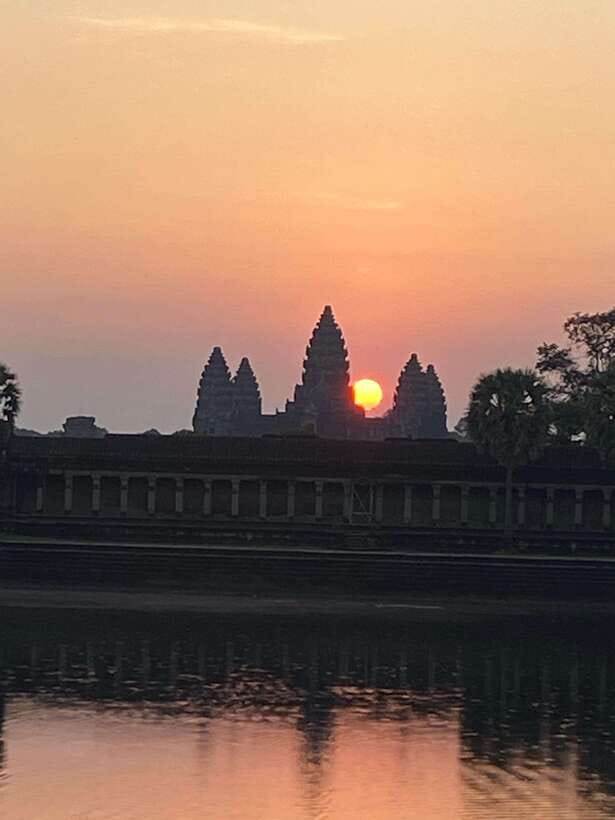
The sunrise departure often begins around 5 a.m., depending on your hotel and chosen start time. A driver and guide come to your accommodation, then the tuk-tuk ride to Angkor Wat takes about 20 minutes.
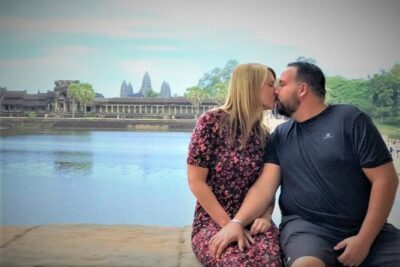
Arriving before dawn gives you a memorable first look at the temple silhouette and reflecting pools. You will have time to settle into the morning atmosphere before exploring the galleries and central structure. The quiet light is a major reason people choose this version of the tour.
But do not book sunrise only for a guaranteed red-and-gold sky. Cloud cover can flatten the colors, even in the dry season. The early morning can still feel special, but if the forecast looks poor, you may prefer a later departure that avoids the biggest early crowd and gives you better rest.
The guide can also turn sunrise into more than a photo stop. At Angkor Wat, ask about the temple’s layout, the galleries, the carved scenes, and the mix of religious ideas represented in the complex. The best guides do not just point at a wall. They explain what you are looking at and why it was built.
Several guides are also good with phones and cameras. Naga, Tom, Ra, Mr Long, John, and others have been praised for finding useful angles and taking pictures for couples and solo visitors. This is not a formal photography session, but it can save you from returning home with only selfies and distant group shots.
Angkor Wat: allow time for the scale
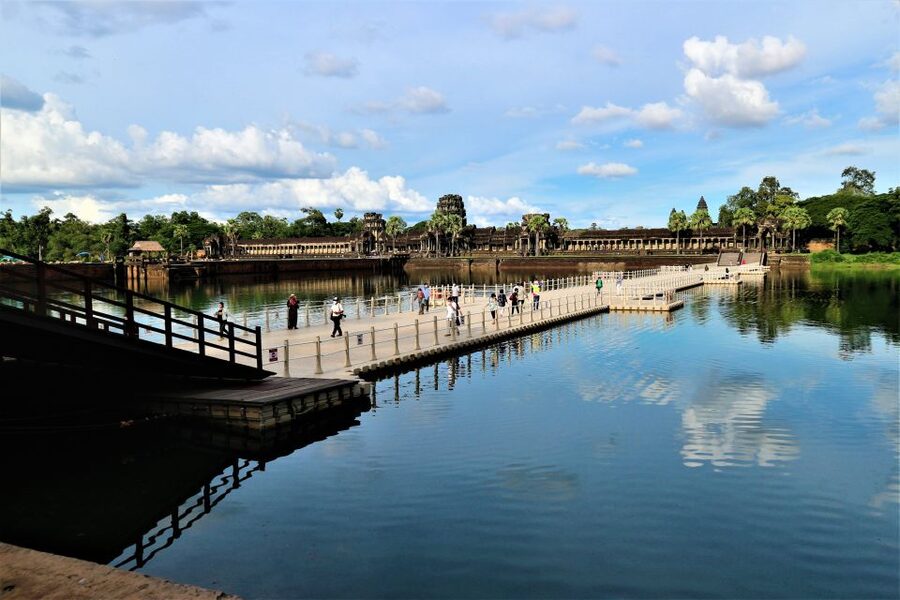
Angkor Wat needs more than a quick glance. Even if you are mainly interested in sunrise, give yourself time to walk through the grounds and into the galleries.
The first impact comes from the scale and symmetry. Then the details begin to take over: carved figures, long wall scenes, stone corridors, and the way the temple’s parts connect. Your guide can help you separate construction details from religious stories and explain features that are easy to overlook while you are looking for the next photo.
The site also demands sensible footwear and patience. Stone surfaces can be uneven, and heat builds quickly after the sun rises. Bring water, sunscreen, a hat, and sunglasses. The supplied cold drinking water is welcome, but it is still wise to bring what you need for a long morning.
If you have mobility limits, discuss them with your guide at the start. Some stairs throughout the Angkor complex are steep, and reaching every upper level may not be possible. One guide assisted a visitor on slippery and difficult sections, but you should not assume every area will be easy to access.
Other early starts at the temples from Siem Reap:
- Angkor Wat Sunrise or Sunset Tour with Guide from Siem Reap
★ 5.0 · 12,109 reviews - Angkor Wat Sunrise tour with Small – Group and Guide tours
★ 5.0 · 3,655 reviews - Full-Day Angkor Wat Sunrise Private Tour with Guide from Siem Reap
★ 5.0 · 2,920 reviews - Angkor Wat Sunrise & 3 Main Temples with Breakfast – Small Group
★ 5.0 · 2,857 reviews
Ta Prohm and the power of the ruins
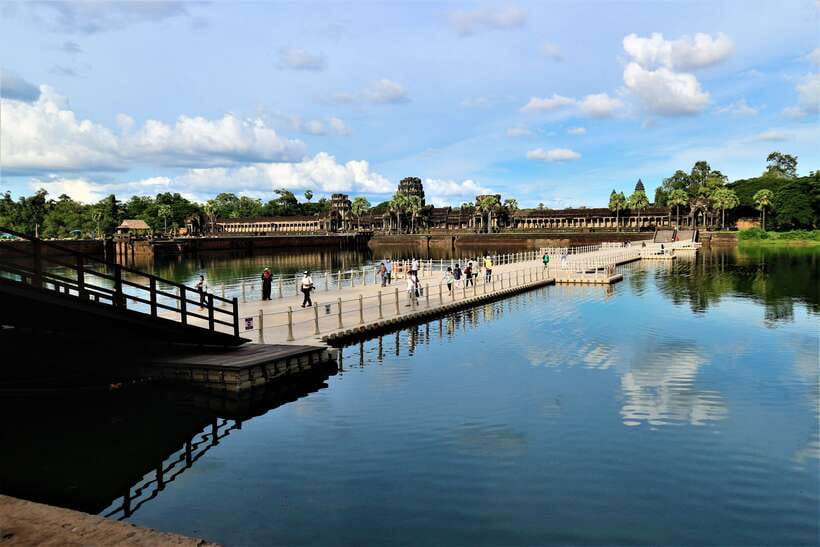
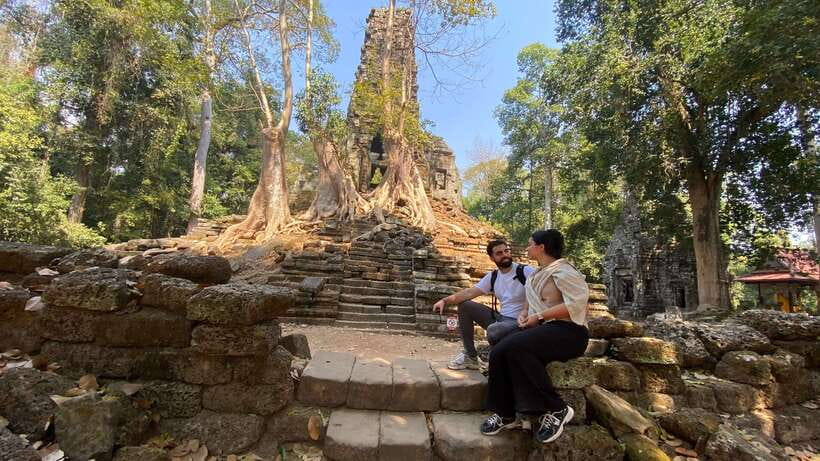
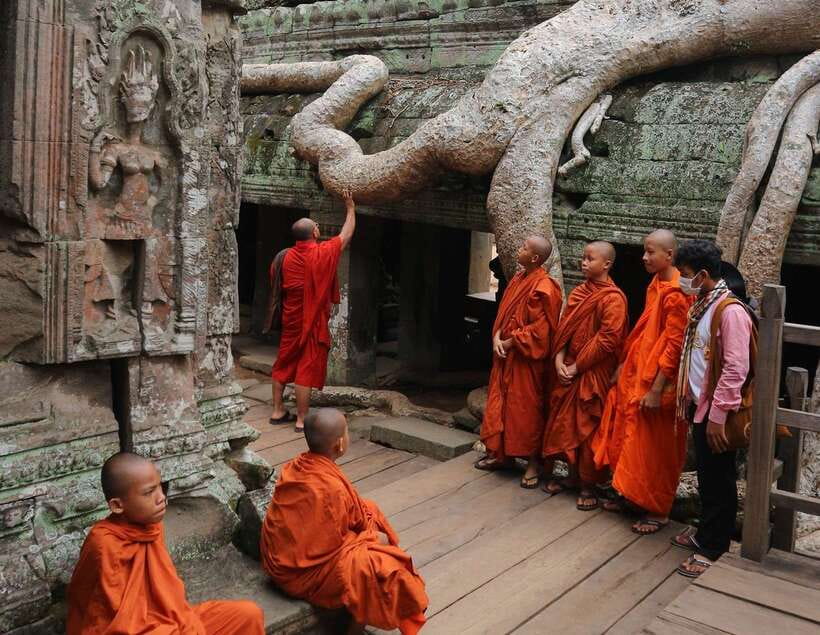
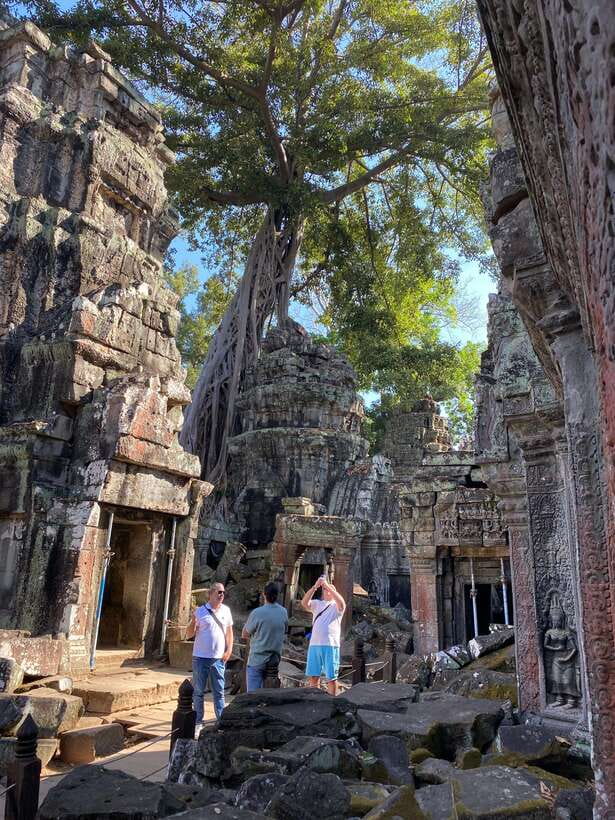
Ta Prohm offers a different mood from Angkor Wat. Here, trees and stone share the scene, with roots pressing over walls and doorways. The temple feels more enclosed and irregular, which makes it a strong second stop after Angkor Wat’s broad, formal design.
Allow about an hour if you want time for photographs and an explanation of the temple’s layout. Your guide can show you how the jungle growth has become part of the modern image of Ta Prohm while also explaining the original purpose and construction of the site.
The timing affects the experience. An afternoon visit can be very hot, as one three-hour tour demonstrated, while a morning visit may bring cooler air and a different crowd pattern. Your private guide can help you change the order when conditions call for it. If you care most about quiet photographs, say so clearly before the tour begins.
Ta Prohm also has uneven paths and confined passages. Wear shoes with a steady grip, especially after rain. You will likely spend much of the stop looking up, turning around, and stepping carefully at the same time.
Angkor Thom, Victory Gate, and the smaller stops
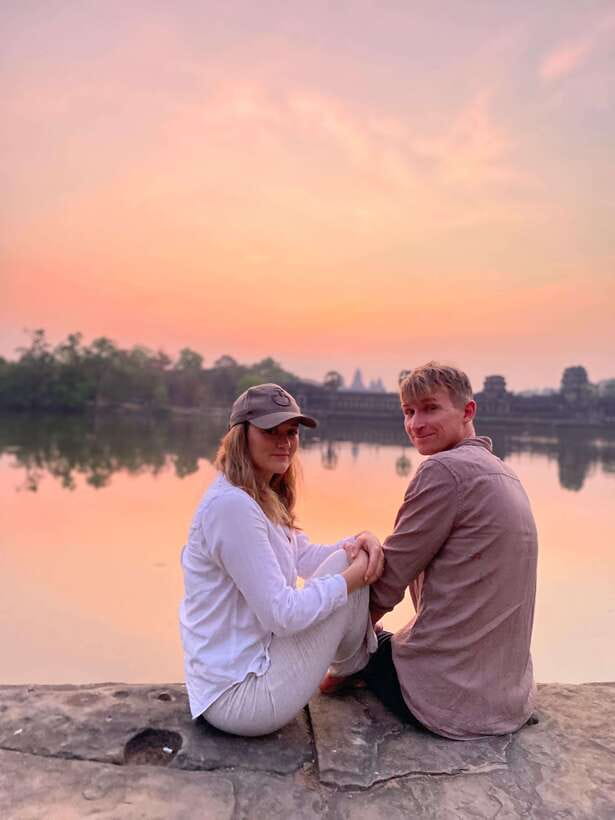
The longer plan continues to Angkor Thom, the walled city that contains several important monuments. Victory Gate makes a quick but worthwhile stop, especially if you want to understand how visitors and processions entered this part of the ancient city.
The route can also include Phimeanakas and Baphuon. These stops are smaller than Angkor Wat, but they help you see Angkor Thom as a connected urban and ceremonial center rather than a collection of isolated temples.
Baphuon has a strong visual presence and a different feel from Ta Prohm. Phimeanakas is another useful stop for understanding the range of structures within Angkor Thom. Your guide can explain the purpose and setting of each place, while you decide how much time to spend on photos and walking.
There are additional short visits in this part of the itinerary, including a 30-minute stop and another guided 15-minute stop. Since the exact order can vary, ask your guide what each site is called and how it fits into Angkor Thom’s story. The ability to ask that question is one of the main advantages of having a private guide.
Do not expect every stop to have the same visual impact as the three headline temples. That is not a weakness. These shorter visits break up the route and give you a broader sense of the ancient city, but people with limited time may prefer to use those minutes at Angkor Wat, Ta Prohm, or Bayon.
Bayon and the stone faces of Angkor Thom
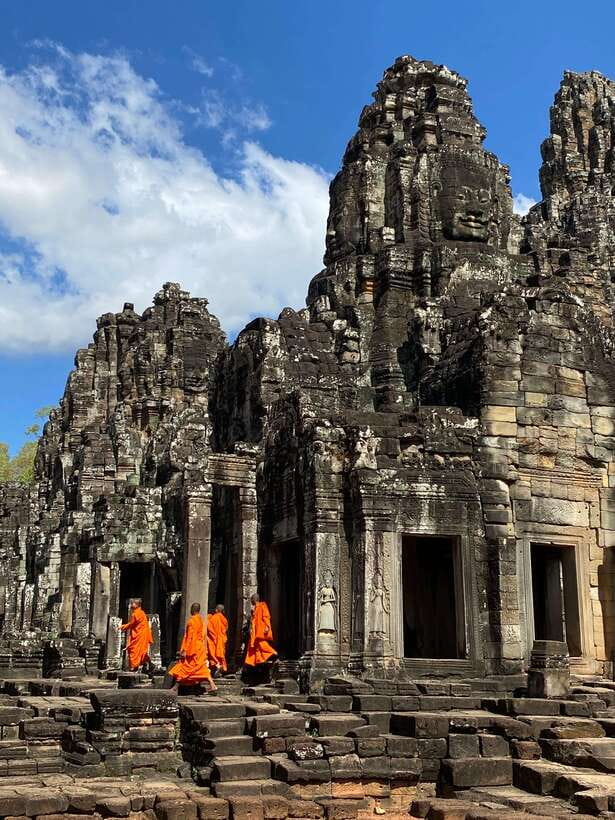
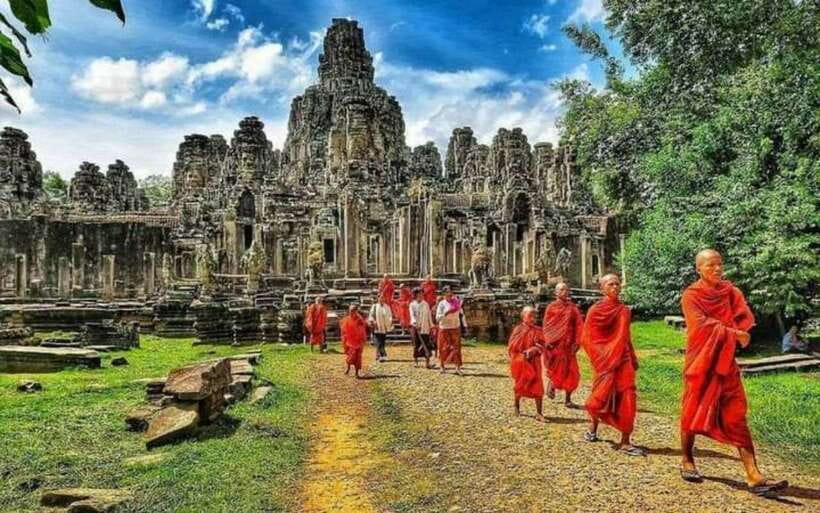
Bayon is the closing highlight on the longer route. The temple is famous for its large stone faces, which appear between towers as you walk through the complex.
Give yourself about 45 minutes here, and do not spend the entire visit looking for the perfect face photograph. Bayon rewards a slower look at the arrangement of towers, narrow passages, and carved scenes. Your guide can help explain what the faces represent and how the temple fits within the wider religious and political story of Angkor Thom.
The tuk-tuk ride from the Angkor Thom stops to Bayon is short, about five minutes in the supplied route. After Bayon, the return ride to Siem Reap takes about 20 minutes. That final ride gives you a chance to cool down and review photos before reaching your accommodation.
Tuk-tuk comfort, water, and the daily rhythm
The standard vehicle is a tuk-tuk, with hotel pickup and drop-off included. The ride between temples is part of the experience, giving you open air and a view of the roads around the park. It is also a practical way to move between stops without walking long distances in the heat.
The ride is not air-conditioned, so consider the car or van add-on if you prefer enclosed transport. The tuk-tuk offers shade, but you will still feel the temperature, particularly in the middle of the day. For a sunrise tour, the open vehicle is likely to feel more comfortable than it would on a hot afternoon.
The driver’s role is more important than it may first appear. A good driver is ready when you come out, keeps water cold, and handles the short transfers efficiently. The supplied experience includes cold drinking water, and several guides and drivers have also provided cold towels after temple visits.
There is a planned café break of about 35 minutes on the longer route. Food and other drinks are not included, so use that pause to eat or refresh yourself. If you have dietary needs, do not assume the café will cover them without checking.
Guides, languages, and the human side of the tour
The tour offers English, Japanese, and Spanish-speaking guides. The actual guide assigned to you may vary, but names praised for clear explanations, good English, friendly manners, and helpful photos include Seyha, Naga, John, Ra, Mr Long, Tom, and Sopheak.
The strongest guiding style here combines facts with conversation. You can expect explanations about Khmer history, Hinduism, Buddhism, architecture, local life, and the stories shown in the carvings. Guides have also helped visitors understand why certain structures were difficult to build and what each part was meant to do.
Tell your guide what you care about. You might want more time for photography, a focus on religion, a quicker route through smaller monuments, or a few quieter stops away from the main flow. The tour is private, so this kind of adjustment is possible.
Do not expect a formal lecture at every temple. The best experience comes from asking questions as you walk. If you want a detailed explanation of a carving, say so. If you need a rest, say that too.
Dress, timing, and practical limits
Wear clothing that covers your shoulders and knees. Shorts, short skirts, and sleeveless shirts are not allowed. A light, breathable outfit that still meets temple rules is the safest choice.
Bring sunglasses, a sun hat, sunscreen, a camera, and a fully charged smartphone. Your phone matters for photos and for staying in contact with the guide if needed. Comfortable shoes are also important because the route includes uneven ground, stairs, and stone surfaces.
Drones are not allowed. The temple pass is extra, and the tour price does not cover meals, drinks beyond the supplied water, or personal expenses.
The activity can last from three to eight hours, with start times checked at booking. Cancellation is free up to 24 hours in advance, and you can reserve now and pay later. Those terms help if your Siem Reap plans are still shifting, though you should still check the selected time and vehicle before confirming.
Who should book this Angkor experience?
I would choose this tour if you want context without joining a large group, especially on your first day at Angkor. It also suits couples and small groups who want photos, a flexible schedule, and a guide who can explain the temples in plain language.
The 6 to 8-hour version is best for a first visit because it connects Angkor Wat, Angkor Thom, Bayon, and Ta Prohm in one day. The 3 to 4-hour version is better if you have limited time, want a sunrise or sunset outing, or already plan to visit other temples independently.
You may prefer a self-guided visit if you enjoy setting your own route, do not want an early start, or want to keep costs as low as possible. You should also think twice about the tuk-tuk if you need air conditioning, though the car or van add-on solves that concern.
Should you book it?
Book it if you want the main Angkor sights explained by a local guide, with hotel pickup and a private vehicle rather than a fixed group schedule. The personal pacing, photo help, cold water, and ability to adjust the route give the $59 price solid value, once you add the separate temple pass.
Choose the longer option for a first visit, and choose the shorter one for a focused sunrise, sunset, or two-temple outing. Just keep your expectations realistic: sunrise color depends on the clouds, the heat can be intense, and the stairs are not gentle everywhere.
FAQ
Is this a private tour?
Yes. The activity is arranged as a private group tour, so you can tailor the timing, temple choices, photo stops, and pace with your guide.
How long does the tour last?
You can choose a 3 to 4-hour express visit or a 6 to 8-hour Angkor circuit. Starting times vary, so check availability for your preferred departure.
Does the tour include Angkor Wat sunrise?
Yes, sunrise or sunset can be included, depending on the option and timing you select. The actual colors at sunrise depend on the weather and cloud cover.
Which temples can I visit?
The longer route includes Angkor Wat, Ta Prohm, Bayon, and sites in Angkor Thom such as Victory Gate, Phimeanakas, and Baphuon. The shorter route can focus on selected temples.
Is hotel pickup included?
Yes. Pickup and drop-off at your accommodation in Siem Reap are included.
What vehicle is used?
The standard transport is a round-trip tuk-tuk. An air-conditioned car or van is available as an add-on at checkout.
Is the temple pass included?
No. The temple pass is separate, as are food, drinks beyond the supplied cold water, and personal expenses.
What languages are available for the guide?
Guides are available in English, Japanese, and Spanish.
Just added in Siem Reap
- Twilight Tastes of Siem Reap Include Dinner★ 5.0 · 13 reviews
- Ultimate Sunrise to Angkor Wat, Angkor Thom and Bayon Temple★ 5.0 · 3 reviews
- Trekking Tour at Phnom Kulen National Park from Siem Reap★ 5.0 · 3 reviews
- Full-Day Private Tour of Angkor Wat with Pick Up★ 5.0 · 12 reviews
- Private Day Trip to Angkor Temples with Expert Guide★ 5.0 · 4 reviews
- Siem Reap City Tour with War Museum and Killing Field★ 5.0 · 27 reviews
- Waterfall & River of 1000 Siva Linga- Kulen Mountain Private Tour★ 5.0 · 3 reviews
- Angkor Wat Experience Temple Pass and Siem Reap Food Tour★ 5.0 · 13 reviews
Angkor Wat Sunrise Tours, compared.
Angkor Wat Sunrise or Sunset Tour with Guide from Siem Reap
Read our review →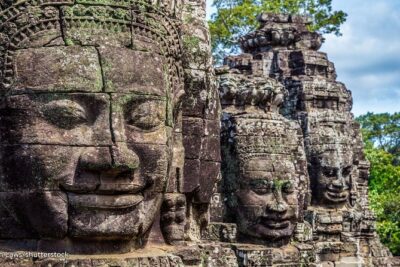
Angkor Wat Sunrise tour with Small – Group and Guide tours
Read our review →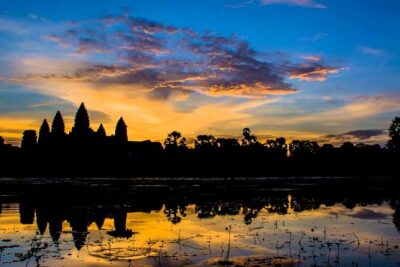
Full-Day Angkor Wat Sunrise Private Tour with Guide from Siem Reap
Read our review →
Angkor Wat Sunrise & 3 Main Temples with Breakfast – Small Group
Read our review →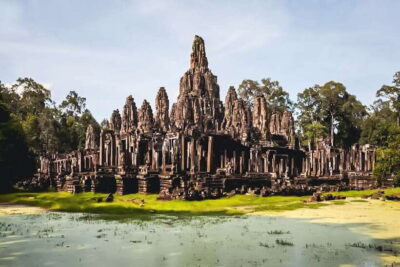
Angkor Wat Sunrise and Full-Day Sightseeing Tour
Read our review →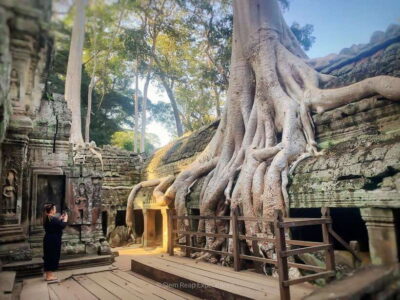
2 Days Exclusive Temple Highlights with Sunset and Sunrise Tour
Read our review →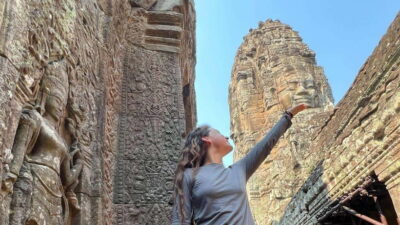
Angkor Sunrise 1- or 2-Day Guided Temples Tour
Read our review →Browse the lists this tour appears in