
Reviewed · BANTEAY SREI & BENG MEALEA TOURS
2-Day Angkor Wat With Small, Big Circuit & Banteay Srei Tour
Angkor Wat is only the beginning. This two-day private tour takes you from the great temple’s galleries to Ta Prohm’s tree roots, Bayon’s stone faces, Banteay Srei’s pink carvings, and the quieter roads beyond Siem Reap. I like the mix of famous sights and less-visited temples, and I like that your guide can adjust the pace and focus to match your interests. Guides such as Bunhak and Chhay are praised for clear explanations, good photo stops, and smart routes through the temple grounds.
The main drawback is the schedule. You’ll see a lot in two long days, including both sunrise and sunset, so this is not a slow, relaxed temple visit. Food and the temple pass are extra, and the $62 pass brings the real cost to about $198 per adult before meals.
Key points to know before booking
- Two full days cover the major circuits: Angkor Wat, Ta Prohm, Angkor Thom, Bayon, Preah Khan, Banteay Srei, and many more.
- Private guiding makes a difference: Your English-speaking guide can adjust walking speed, explanations, and temple order to suit your group.
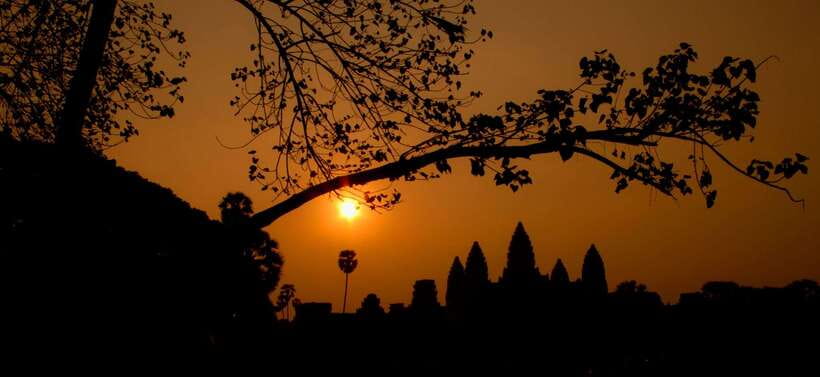
- Sunrise and sunset are included: You visit Phnom Bakheng at sunset on day one and return to Angkor Wat early the next morning.
- The route includes movie-famous Ta Prohm: Giant tree roots cover parts of the temple seen in Tomb Raider.
- The pink sandstone of Banteay Srei is a highlight: Its detailed carvings and smaller scale provide a welcome change from Angkor Wat.
- Comfort touches are practical: Air-conditioning, bottled water, and cool face towels help during long hours in the heat.
What the $136 price really covers
The tour costs $136 per person for two days. That price includes hotel pickup and drop-off in Siem Reap, private air-conditioned transport, an English-speaking guide, cool drinking water, and face towels.
The temple pass is not included. You’ll need the 2 to 3-day pass, priced at $62 per person. Children under 12 enter free. Add meals, which you buy at local restaurants along the route, and the total rises to roughly $198 per adult before food.
That is not the cheapest way to see Angkor, but private transport and guiding add real value here. You are not joining a large group or waiting for a full coach at every stop. You can ask questions, pause for photos, and adjust the pace. Guides can also plan temple entrances and exits to reduce unnecessary walking. Timo’s guide, Chhay, was especially good at arranging routes that avoided returning along the same path.
The price makes the most sense for couples, families, or small groups who want personal attention. Solo visitors may find it expensive, while a group of three or four can share the private experience at a better per-person value.
Other outlying temples from Siem Reap:
- Siem Reap: Kulen Mountain, Beng Mealea and Tonle Sap Tour
★ 5.0 · 1,483 reviews - Full-Day Banteay Srei & 4 Temples – Grand Tours Join-in Tour
★ 5.0 · 1,155 reviews - Siem Reap Tour: Angkor Wat Sunrise, Bayon, Ta Prohm, Banteay Srei
★ 5.0 · 931 reviews
Day one begins with Angkor Wat
Your first morning starts with pickup from your Siem Reap accommodation. The exact time depends on your arrangement, but the day is built around a long visit to Angkor Wat followed by the small circuit, Angkor Thom, and sunset at Phnom Bakheng.
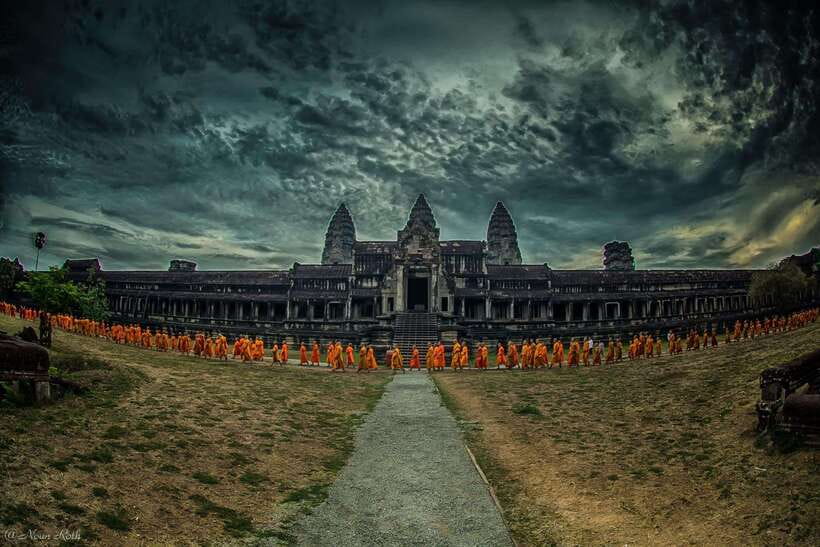
Angkor Wat deserves time. This 12th-century religious complex is immense, with long galleries, towers, courtyards, and carved scenes from Hindu epics. A guide helps you read the site instead of simply walking from one doorway to the next. You can ask about its religious purpose, the carvings, and the design that places the central towers at the heart of the complex.
The scale can be tiring. You’ll walk on uneven stone and climb steps in exposed areas, so good shoes, sun protection, and water matter. The included cold water and towels are small details, but after several hours outdoors, they become very welcome.
Ta Prohm brings the jungle drama
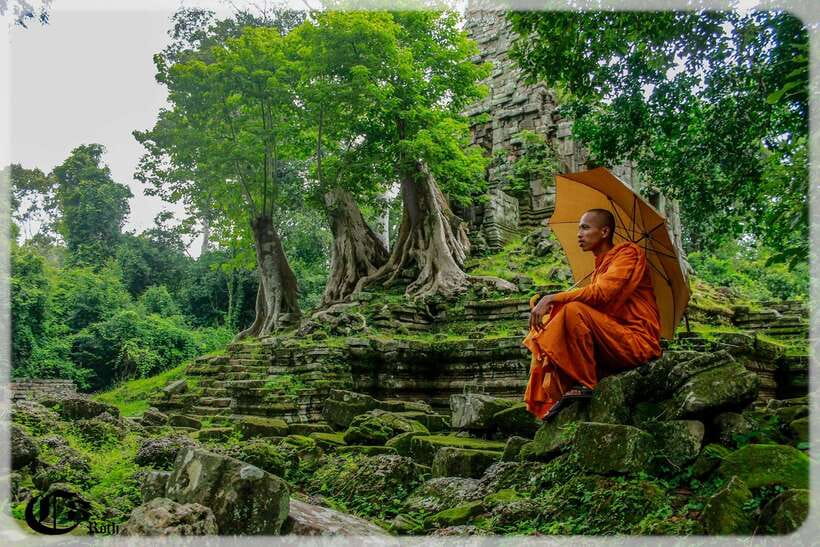
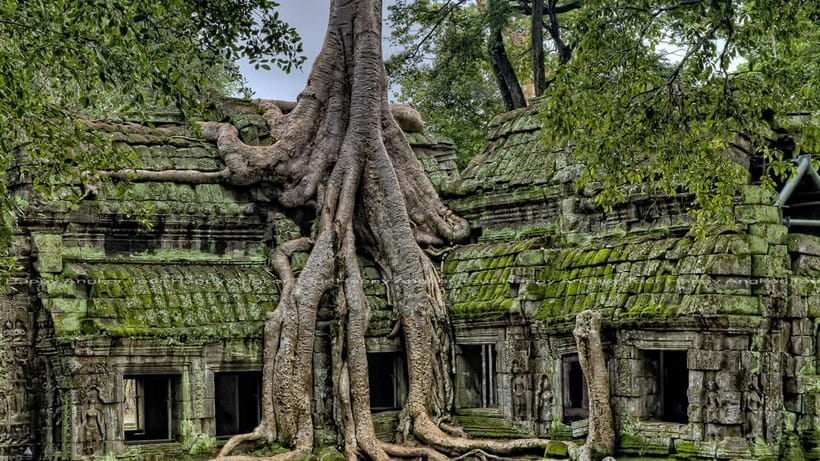
After Angkor Wat, the route moves through the small circuit to Ta Prohm. This is the temple most associated with Tomb Raider, and the movie connection is easy to understand once you see the giant roots gripping the old stonework.
Ta Prohm is memorable because nature is part of the view. Tree roots press over walls and doorways, while broken galleries create a more mysterious feeling than the orderly design of Angkor Wat. The temple is also one of the busiest stops, so your guide’s timing and route can affect how much space you have for photographs.
The tour also includes Ta Nei, a smaller temple with a quieter feel. It does not have the same fame as Ta Prohm, but that is part of its appeal. After a major attraction, a less prominent site gives you time to look at the stonework without feeling rushed from one popular viewpoint to the next.
Lunch is bought at a local restaurant. It is not included, so ask about the price before ordering if you want to keep spending predictable. The itinerary provides a break, though you should not expect a long, leisurely meal if the schedule is running behind.
Angkor Thom and the many faces of Bayon
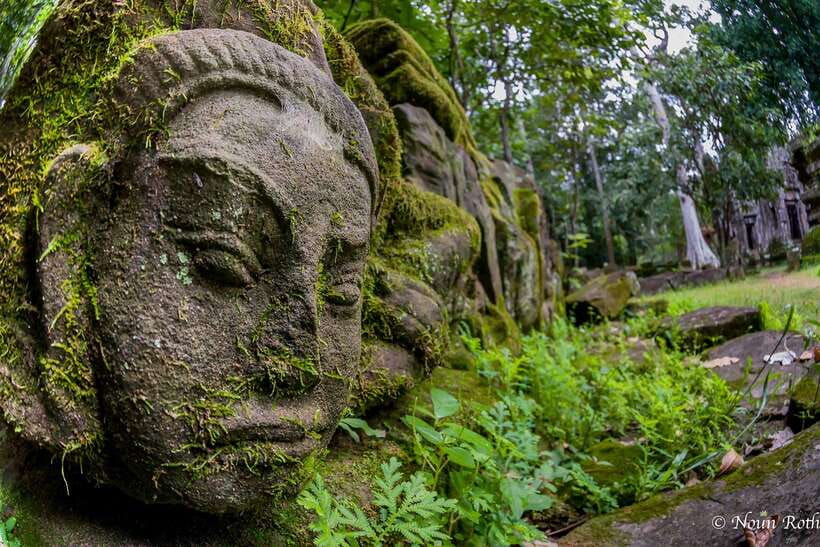
The afternoon continues to Angkor Thom, the great walled city at the center of the Angkor complex. You enter through either the Victory Gate or the Gate of the Dead, depending on the route arranged by your guide.
Bayon is the main draw. Its towers carry large carved faces that look out over the temple from different levels. The expressions are calm and slightly mysterious, and the effect changes as you move through the narrow passages. This is a place where a guide’s explanation helps, especially when you want to understand how the temple relates to the wider city.
Nearby, Baphuon provides a different experience. Its tall structure rises above the surrounding area, and behind it you can see the large reclining Buddha formed from later stonework. The Royal Enclosure Wall, Phimeanakas, Elephant Terrace, Leper King Terrace, and Palilay add more pieces to the city’s story.
You should know that Angkor Thom is not one compact monument. It is a broad area with several stops and walking between them. That makes the private format useful. If your group is tired, you can spend longer at Bayon and shorten a less important stop. If you want more detail, your guide can explain the symbols and layout as you go.
A few more things to do in Siem Reap worth a look
- Siem Reap: Angkor Wat 2-Day Tour with Sunrise and Sunset
★ 4.9 · 4,429 reviews - Angkor 2-Day Sunset & Sunrise Small-Group Tour
★ 5.0 · 2,567 reviews - 2 Days Exclusive Temple Highlights with Sunset and Sunrise Tour
★ 5.0 · 1,157 reviews - Siem Reap: Angkor Sunrise 1- or 2-Day Guided Temples Tour
★ 4.9 · 1,132 reviews
Sunset from Phnom Bakheng
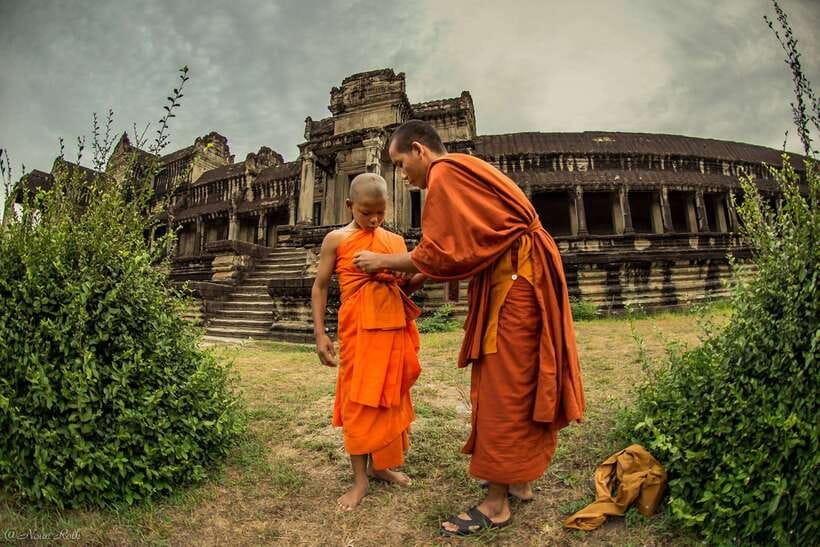
The first day ends at Phnom Bakheng, a hill temple used for sunset views. It is a popular closing stop, and the climb adds another demand after a full day of temples.
The reward is a broad view across the surrounding area, with the temple silhouettes and changing evening light. Sunset conditions vary, of course, and the stop is not guaranteed to produce a dramatic sky. Still, it gives the day a clear ending and lets you see Angkor from above rather than only from inside its courtyards.
If you dislike steep climbs or long days, tell your guide early. The itinerary is adjustable, but the tour is designed to cover a great deal, and Phnom Bakheng comes after many hours on foot.
Sunrise at Angkor Wat needs an early start
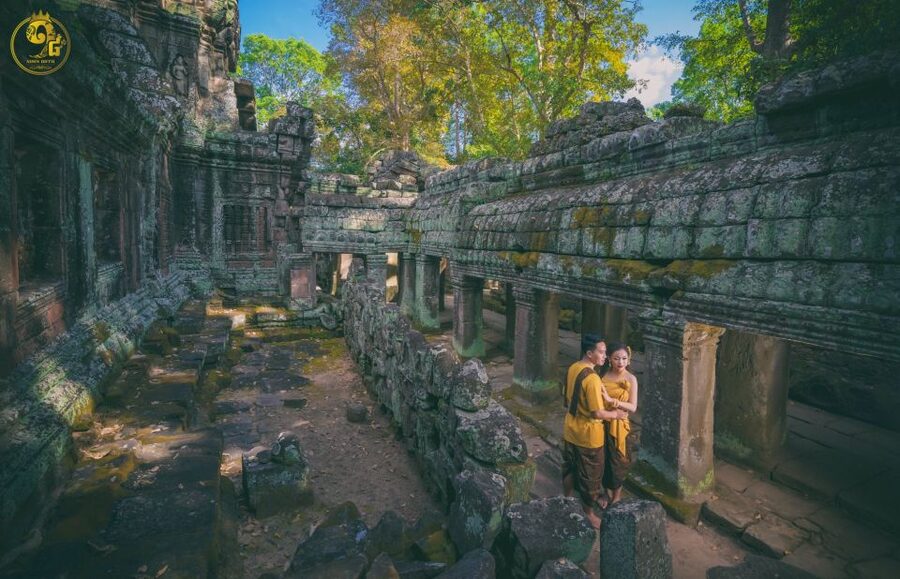
Day two begins before breakfast so you can see sunrise behind Angkor Wat. Your guide and driver take you back to the temple, then you return to your hotel for breakfast or stop at a restaurant, at your own expense.
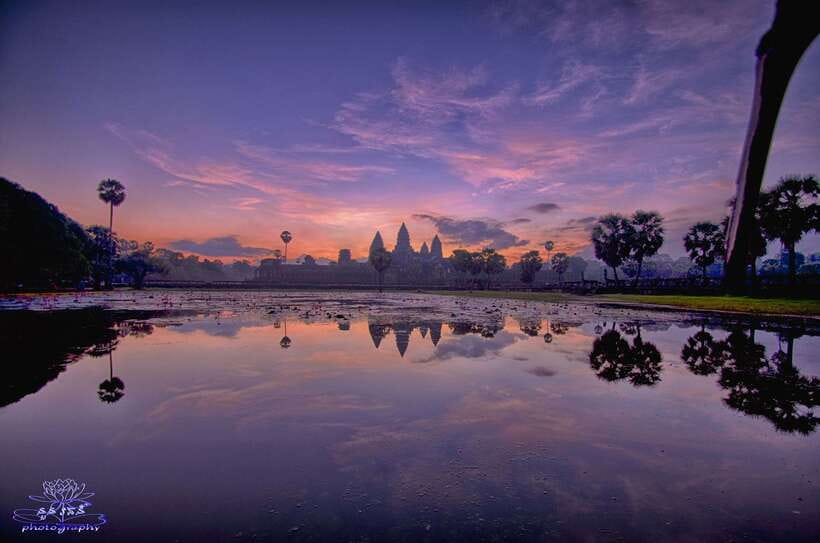
Sunrise is one of the tour’s strongest features, but you should keep expectations sensible. The sky may be clear, hazy, or cloudy, and the best position depends on conditions and crowd levels. Bunhak was praised for finding a good place to watch the sunrise and for helping with photographs.
The early start also makes day two demanding. You will have already spent a full day walking, then you continue with the big circuit and the distant temples. The schedule works best if you are happy to trade a little sleep for the chance to see Angkor at first light.
The big circuit: Preah Khan to Pre Rup
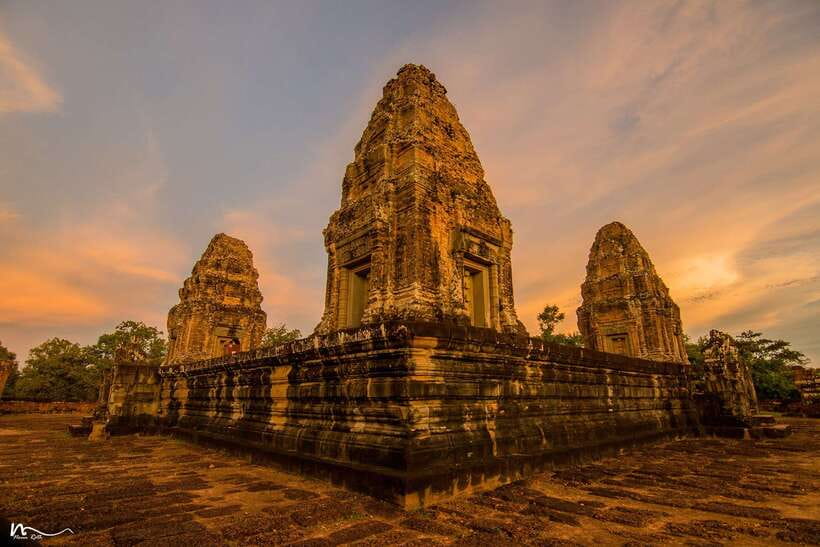
After breakfast, you head to the big circuit. The stops include Preah Khan, Neak Pean, Ta Som, East Mebon, and Pre Rup.
Preah Khan is a large temple complex with long corridors and a layered layout. It rewards slow movement because each turn reveals another doorway, courtyard, or carved section. Neak Pean is more unusual. Built around a central island and water features, it has a different feel from the large stone temples.
Ta Som is a smaller stop with a memorable tree growing over one of its gateways. It gives you another look at the way trees and stone have become linked across the Angkor site, without the scale and crowds associated with Ta Prohm.
East Mebon and Pre Rup are brick-and-stone temple mountains with strong upper-level views. Pre Rup is also a useful place to understand how Angkor temples were built upward in layers. You will climb steps, and some areas are exposed to the sun, so pace yourself.
This part of the tour is valuable because it moves beyond the standard Angkor Wat and Bayon route. You get a better sense of how large the former Khmer capital was and how varied its temples are. The tradeoff is more time in the vehicle and less time at each individual monument.
Banteay Srei and the pink sandstone details
After lunch, the tour heads through villages and rice-paddy fields to Banteay Srei. The drive gives you a change from the central temple zone, with rural scenery along the road.
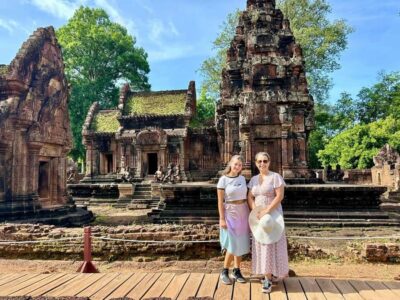
Banteay Srei is often called the Ladies Temple. Its pink sandstone and fine carvings make it one of the most distinctive stops in the area. The temple is smaller than Angkor Wat, but the decoration is exceptionally detailed, with delicate figures and patterns cut into the stone.
This is where a guide can add real value. Rather than judging the temple by size, you can focus on the carving technique, the Hindu imagery, and the way the warm stone changes in the sun. The site is also farther from the central Angkor group, so the drive takes time. For many people, that extra distance is worth it, especially if detailed sculpture interests you.
Banteay Samre follows. Its broad structure and reddish stone give it a different character from Banteay Srei. It is another useful contrast: one temple is prized for fine decoration, while the other feels larger and more fortified.
Banteay Kdei closes the temple circuit
The final temple is Banteay Kdei. Like Ta Prohm, it has galleries, courtyards, and areas where vegetation presses close to the old stone. It is a fitting final stop because it brings you back toward the central temple zone while keeping the focus on atmosphere and architecture.
By this point, fatigue is likely. You will have completed two early starts, many hours of walking, and a long list of monuments. The private setup allows your guide to adjust the final stop if necessary, but you should not book this tour expecting a gentle pace.
Guides, vehicles, and the small comforts
The guide is one of the most important parts of this experience. You receive an English-speaking licensed guide, and names such as Bunhak and Chhay come up for good reason: they explain historical, religious, mythological, and cultural details in a way that helps the temples make sense.
A strong guide also manages the practical side. You may enter from one side and leave from another, avoiding a long walk back to the parking area. Chhay was praised for using routes that reduced repeated walking, while Bunhak was noted for finding strong photo positions.
The private air-conditioned vehicle is another major benefit. You are outside for much of the day, and the ride between temple groups gives you a break from the heat. Cold water and wet face towels are provided at stops. The towels sound minor until you have been walking among hot stone walls for hours.
The driver matters too. Drivers such as Sreang and That were praised for attentive service and comfortable transport. Since the driver handles the road while the guide handles the temples, both roles affect how smoothly the days feel.
Food, timing, and what to pack
Food is not included. You stop at local restaurants for lunch, and on the second morning you either return to your hotel for breakfast or eat at a restaurant. Carry some cash for meals and drinks beyond the supplied water.
Pack light but sensibly:
- Comfortable walking shoes
- Sun protection
- A hat
- A refillable bottle or extra water
- Clothing suitable for temple visits
- A camera or phone with spare battery power
The tour includes both sunrise and sunset, but the middle of the day can be hot. The air-conditioned vehicle, water, and towels help, yet they do not remove the need to pace yourself.
Free cancellation is available up to 24 hours before the tour for a full refund, and you can reserve now and pay later. Provide your hotel address, name, phone number, and website so pickup is not delayed. Wait in the lobby about 10 minutes before the scheduled time.
Who should book this two-day Angkor tour?
I would choose this tour if you want the major Angkor temples in a short visit and prefer private guiding over a fixed group schedule. It suits first-time visitors who want context, photographers who value help finding good angles, and families or couples who want to adjust the pace.
It is less suitable if you want long meals, late mornings, or only a few temples each day. The itinerary is ambitious, and the temple pass and food add to the advertised price.
Should you book it?
Book this tour if you want a well-filled two-day introduction to Angkor with private transport, an English-speaking guide, sunrise, sunset, and Banteay Srei. The strongest reasons are the flexible format, practical comfort, and the mix of famous temples with quieter stops.
Skip it if your priority is a slow schedule or a low total cost. At $136 plus the $62 temple pass and meals, it is a serious expense, but for a small private group, the personal attention and efficient routing make the price reasonable.
FAQ
How long is the Angkor tour?
The tour lasts two days.
What temples are included?
The route includes Angkor Wat, Ta Prohm, Ta Nei, Angkor Thom, Bayon, Baphuon, Preah Khan, Neak Pean, Ta Som, East Mebon, Pre Rup, Banteay Srei, Banteay Samre, and Banteay Kdei.
Is the tour private?
Yes. The tour is arranged for a private group.
Is hotel pickup included?
Yes. Pickup and drop-off from hotels and other accommodations in Siem Reap are included.
Is transportation air-conditioned?
Yes. Private air-conditioned transportation is included.
Is the Angkor temple pass included?
No. A 2 to 3-day temple pass costs $62 per person. Children under 12 enter free.
Are meals included?
No. You purchase breakfast and lunch at your own expense at the suggested stops.
What language does the guide speak?
The live guide speaks English.
Just added in Siem Reap
- Twilight Tastes of Siem Reap Include Dinner★ 5.0 · 13 reviews
- Ultimate Sunrise to Angkor Wat, Angkor Thom and Bayon Temple★ 5.0 · 3 reviews
- Trekking Tour at Phnom Kulen National Park from Siem Reap★ 5.0 · 3 reviews
- Full-Day Private Tour of Angkor Wat with Pick Up★ 5.0 · 12 reviews
- Private Day Trip to Angkor Temples with Expert Guide★ 5.0 · 4 reviews
- Siem Reap City Tour with War Museum and Killing Field★ 5.0 · 27 reviews
- Waterfall & River of 1000 Siva Linga- Kulen Mountain Private Tour★ 5.0 · 3 reviews
- Angkor Wat Experience Temple Pass and Siem Reap Food Tour★ 5.0 · 13 reviews
Banteay Srei & Beng Mealea Tours, compared.
Kulen Mountain, Beng Mealea and Tonle Sap Tour
Read our review →
Full-Day Banteay Srei & 4 Temples – Grand Tours Join-in Tour
Read our review →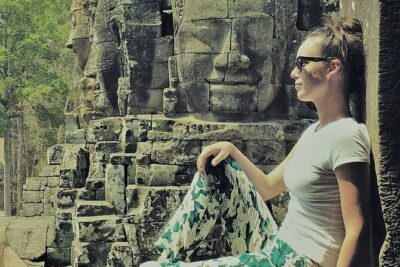
Siem Reap Tour: Angkor Wat Sunrise, Bayon, Ta Prohm, Banteay Srei
Read our review →
Koh Ker Temple Group & Beng Mealea Full-Day Join-in Tour
Read our review →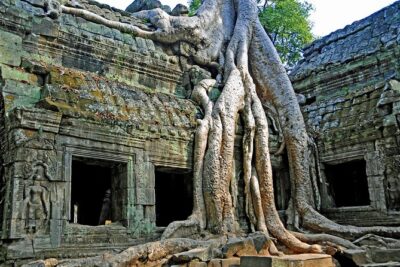
2-Day Angkor Wat With Small, Big Circuit and Banteay Srei Tour
Read our review →
3-Days Discovery Of Angkor: Waterfalls,Floating Village and Banteay Srei temple
Read our review →Browse the lists this tour appears in