
Reviewed · BANTEAY SREI & BENG MEALEA TOURS
2-Day Angkor Wat and Banteay Srei with Countryside Exploration
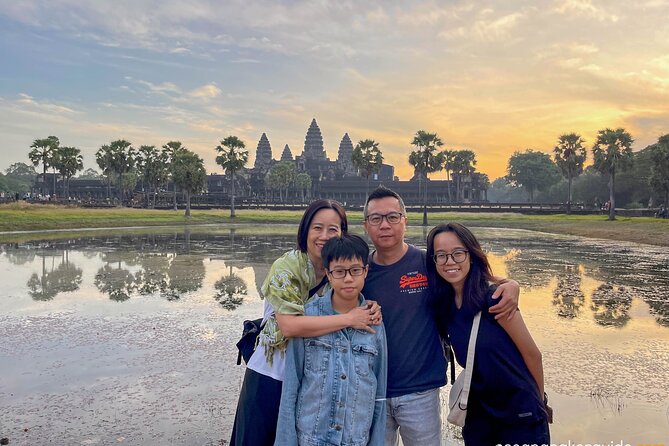
Angkor Wat at sunrise is the star here, but the better surprise is how much ground you cover after the famous temple. You’ll move from jungle-wrapped Ta Prohm and Bayon’s stone faces to quiet countryside roads, smaller temples, a local breakfast, and Banteay Srei’s fine carvings. I especially like the two-day pace and the chance to eat at a local family restaurant rather than rush from monument to monument.
I also like the practical touches: cold water and fresh towels, an air-conditioned vehicle, and guides such as Sam, Sinan, Mony, and Sareik who bring different styles to the history. The main drawback is the early start and the sheer amount of walking and heat. Day 1 can feel long, particularly after a 4:30 to 5:00 am pickup.
Key points to know before booking
- Sunrise at Angkor Wat: Pickup begins between 4:30 and 5:00 am, so you need an Angkor pass before the tour starts.
- A broad temple mix: You see Angkor Wat, Ta Prohm, Bayon, Preah Khan, Banteay Srei, and several less famous sites.
- Local food included: Day 1 includes breakfast at a family restaurant, while Day 2 includes lunch ordered from a menu.
- Private group format: Only your own group participates, with transportation in an air-conditioned minivan or minibus.
- Extra costs matter: The two-day Angkor pass costs $62 per person, and the Landmine Museum charges $5 per person.
- A long first day: The schedule packs in sunrise, several major temples, and a return to Siem Reap around early afternoon.
Why two days work better than one
The $160 price covers two days of guiding, transport, breakfast, lunch, water, and towels. It does not cover the Angkor pass, so your basic cost becomes $222 per person before the $5 museum ticket and any extra food or drinks.
That is not a bargain-basement temple outing, but it can be good value if you want a guide, hotel pickup, and a planned route through both famous and lesser-known sites. Hiring transport and arranging separate temple visits can take time, especially when you also need to organize the early sunrise start.
The two-day format also keeps the second day from being another pre-dawn assault. Day 1 begins before sunrise and finishes after a full run through the central Angkor sites. Day 2 starts at 8:00 am, giving you a more manageable morning and a countryside trip toward Banteay Srei.
You should still expect active sightseeing. The schedule includes steps, uneven ground, open courtyards, and repeated walks between temple structures. The tour suits most people, but it is not designed as a slow, sit-down cultural visit.
Other outlying temples from Siem Reap:
- Siem Reap: Kulen Mountain, Beng Mealea and Tonle Sap Tour
★ 5.0 · 1,483 reviews - Full-Day Banteay Srei & 4 Temples – Grand Tours Join-in Tour
★ 5.0 · 1,155 reviews - Siem Reap Tour: Angkor Wat Sunrise, Bayon, Ta Prohm, Banteay Srei
★ 5.0 · 931 reviews
Day 1: Angkor Wat before breakfast
Hotel pickup takes place between 4:30 and 5:00 am. You are asked to wait in the lobby 15 minutes early, which is sensible advice at this hour. Have your clothing and temple pass ready the night before. A delay at pickup can cut into the best part of the morning.
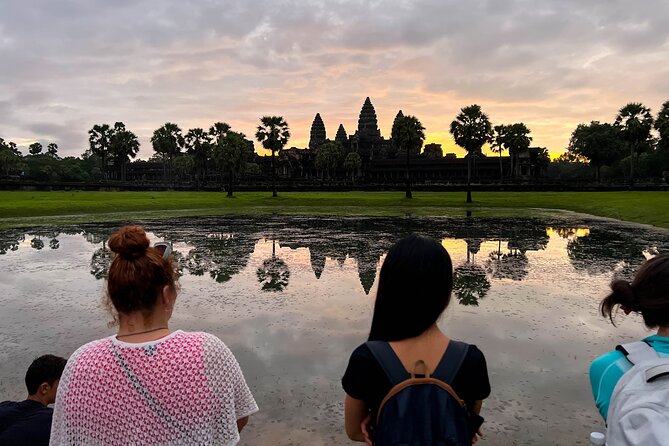
At Angkor Wat, the goal is to see the temple silhouette and towers change as daylight arrives. The experience is worth the lost sleep, but sunrise conditions are never guaranteed. Clouds, haze, or crowds can shape the view, so come for the temple at dawn rather than for a perfect photograph.
Admission is not included in the tour price. You must already have the two-day Angkor pass, listed at $62 per person, and the operator requires it before the tour begins. This is one of the most important planning details. You do not want to discover at 4:45 am that you still need to arrange entry.
After about two hours at Angkor Wat, the morning shifts from grand monument to local routine.
Breakfast near Srah Srang
The next stop is Srah Srang, where you have breakfast at a local family restaurant in Siem Reap. This meal is included, and it is specifically described as local food. A vegetarian option can be arranged if you notify the operator ahead of time.
I like this pause because it gives the day a human rhythm. You are not simply being fed from a bus stop between monuments. You have time to support a local family business and see how a temple morning connects with ordinary life.
Breakfast lasts about an hour. Soft drinks and food beyond the included meals are not covered, so bring some cash or check what you want before ordering. The tour provides free cool water, which becomes increasingly useful as the day warms.
Pre Rup and the older brick temples
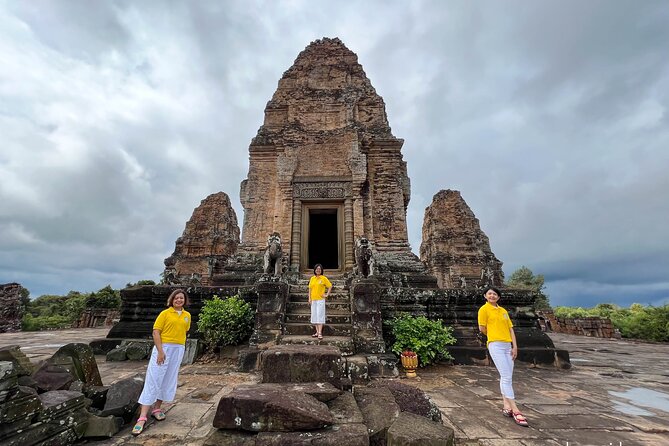
Pre Rup is a 10th-century brick Hindu temple and one of the larger brick structures in the Angkor area. The reddish stone and high terraces give it a different feel from Angkor Wat’s sandstone mass.
The planned visit lasts about 40 minutes. That is enough to look around and hear the main explanation, but not enough for a slow, detailed study of every corner. You may find the exposed steps and open setting tiring after the sunrise start, especially in hot weather.
The guide’s role matters here. A good explanation can help you see why brick construction, temple layout, and elevation matter, rather than treating Pre Rup as just another stop on a long list. Guides named in guest feedback include Sinan, Mony, Sareik, Sam, Makara, and Jan, but the guide assigned to you can vary.
A few more things to do in Siem Reap worth a look
- Siem Reap: Angkor Wat 2-Day Tour with Sunrise and Sunset
★ 4.9 · 4,429 reviews - Angkor 2-Day Sunset & Sunrise Small-Group Tour
★ 5.0 · 2,567 reviews - 2 Days Exclusive Temple Highlights with Sunset and Sunrise Tour
★ 5.0 · 1,157 reviews - Siem Reap: Angkor Sunrise 1- or 2-Day Guided Temples Tour
★ 4.9 · 1,132 reviews
Ta Prohm, where trees take over
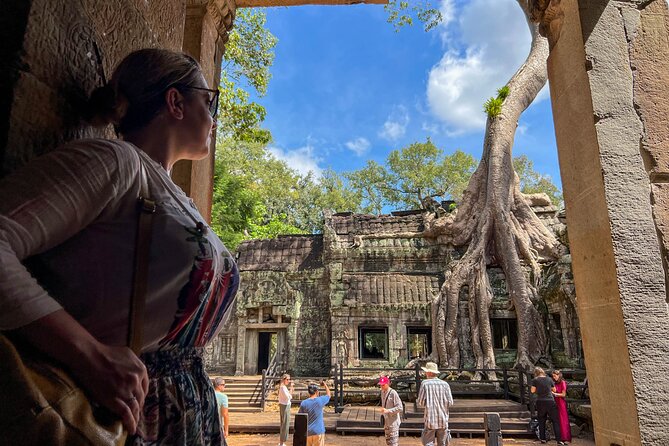
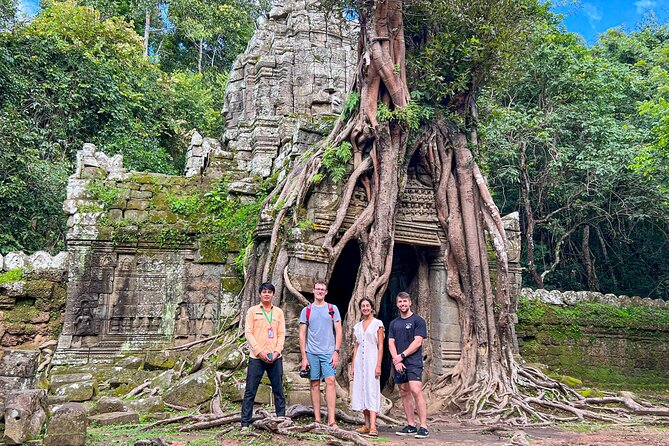
Ta Prohm is the most theatrical stop of the first day. Its galleries and walls remain partly overtaken by trees and thick roots, creating the image many people associate with Angkor’s jungle temples.
You have about an hour here. That gives you time to see the main spaces without spending the entire day in one complex. The tradeoff is that Ta Prohm can feel busy and confined in places, and roots, stones, and uneven paths call for careful footing.
This is also a good point to ask your guide questions. The site is easy to photograph, but the setting becomes more interesting when you understand how it fits into the wider temple city built under King Jayavarman VII. Keep your expectations practical: the tour gives you a guided visit, not a private archaeological study.
Angkor Thom and the faces of Bayon
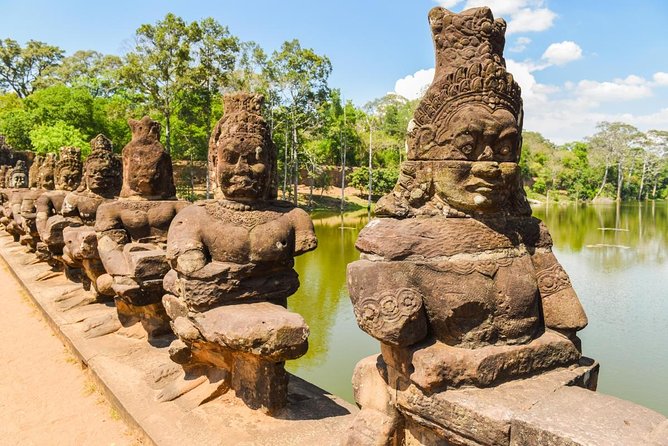
The South Gate of Angkor Thom is a short stop, about 15 minutes. Its statues of gods and demons line the approach, making it a useful introduction to the scale and symbolism of the city enclosure.
The description refers to this as the Victory Gate, but the scheduled stop is Angkor Thom’s famous South Gate. It is worth confirming the exact gate with your guide if the distinction matters to you.
Bayon follows, with about an hour inside the temple. Its towers carry the calm, broad faces that make the site so memorable. The tour description refers to more than 200 faces, though the exact count can vary depending on how they are counted.
Bayon is compact and visually busy. I find it rewarding to slow down and look at the carvings and tower faces rather than simply walk through for photographs. Your guide can help you read the temple’s layout and point out details that are easy to miss.
After Bayon, you return to your Siem Reap hotel. The listed transfer takes about 30 minutes, and the first day generally ends around early afternoon. That sounds early until you remember that the day began before dawn. Plan a quiet evening rather than booking a late-night activity.
Day 2: Preah Khan and the quiet eastern temples
Pickup on Day 2 is at 8:00 am after breakfast. The route moves beyond the city center and into the wider Angkor area, with a more relaxed start than the first morning.
Preah Khan is the first stop, with about an hour to explore. It is a major Buddhist temple and gives you another look at the building program associated with Jayavarman VII. Compared with Angkor Wat, it feels less like a single iconic monument and more like a long sequence of corridors, courtyards, and carved stone.
You then visit Neak Pean for about 30 minutes. This small temple sits on a circular island in the Jayatataka Baray, an artificial reservoir associated with Preah Khan. The approach and water setting make it different from the large temple compounds, though the short visit means you will not linger for long.
Ta Som is another brief stop, also about 30 minutes. Built at the end of the 12th century for Jayavarman VII, it is a smaller temple with a quieter feel than the major sites. Short stops such as this are useful because they break up the grand monuments, but you should not expect an exhaustive examination.
Eastern Mebon follows, with another 30-minute visit. This 10th-century temple once stood on an artificial island in the now-dry East Baray. Its location helps you understand how water engineering shaped Angkor, even though the reservoir is no longer full.
Lunch and the road to Banteay Srei
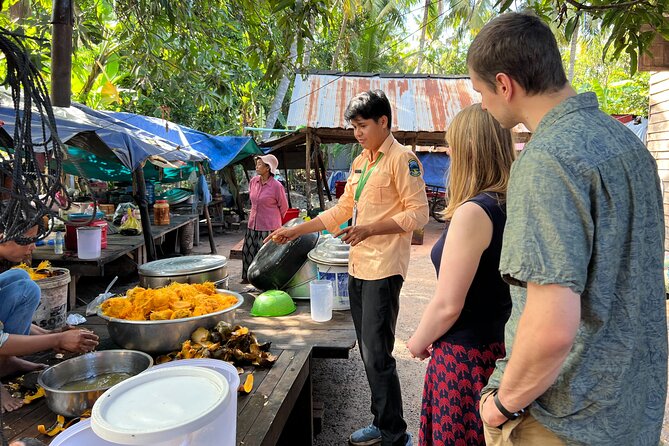
Lunch takes about an hour at a local restaurant in the Angkor area. Unlike the included Day 1 breakfast, lunch is ordered as an individual dish from a menu. The meal is included, but drinks and food not covered by the stated arrangement are extra.
The drive to Banteay Srei changes the feel of the day. You leave the central cluster of major monuments and spend more time outside the city center, with countryside along the route. Exact driving time is not provided, so you should treat the day as a full outing rather than assume every stop is close together.
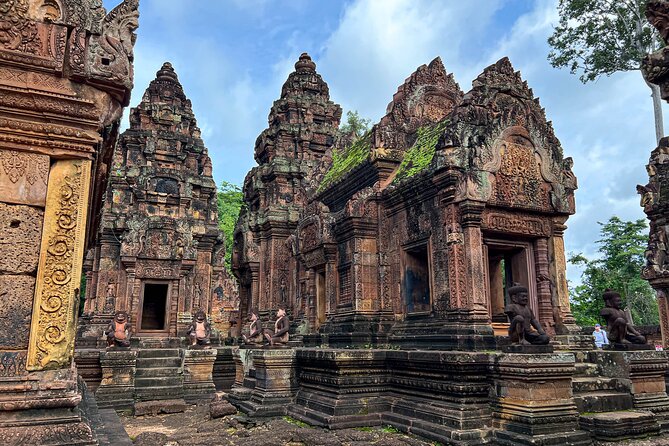
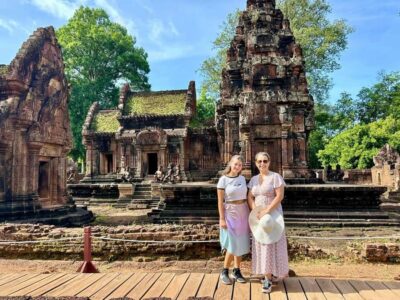
Banteay Srei is the artistic high point for many visitors. The smaller sandstone temple is known for exceptionally detailed and well-preserved carvings. Its scale is more intimate than Angkor Wat, and the ornament is so fine that you will want time to look closely rather than rush through.
The planned visit lasts two hours, the longest temple stop on Day 2. That is appropriate. Banteay Srei rewards patience, especially when your guide points out the relief work and explains how the temple differs from the larger state temples.
The Cambodian Landmine Museum
On the return to Siem Reap, you stop at the Cambodian Landmine Museum for about 20 minutes. The museum displays different types of mines used during Cambodia’s civil war and adds modern human context to a trip otherwise focused on ancient stonework.
The museum ticket is not included and costs $5 per person. Twenty minutes is a short visit, so think of this as a focused introduction rather than a full museum session. It can also be a sobering change of mood after a day of temples.
That contrast is valuable. Angkor explains Cambodia’s ancient power and art, while the museum points to the country’s much more recent hardship. If you prefer a trip devoted only to temples, this stop is the main element you may find less appealing. If you want a broader understanding of Cambodia, it earns its place.
Guides, vehicles, and comfort
The tour uses an English-speaking guide and an air-conditioned minivan or minibus. Cold water and fresh cold towels are provided during the tour, small details that matter in Siem Reap’s heat.
Guide style can shape the experience. Sam is described as funny and energetic through a very early start. Sinan is described as serious and respectful in his explanations. Mony is noted for temple knowledge and photography, while Sareik is associated with patient explanations and personal stories from his life as a monk and his family’s wartime experience.
Those names come from individual tour experiences, so you should not assume one specific guide will be assigned. Still, they give you a useful sense of the range of guiding styles available. You can ask questions, request a little more time at a site when practical, and tell the guide if the pace is becoming too fast.
The tour is described as private, with only your group participating. That is different from a large coach outing. It gives you more room to ask questions and manage the pace, although the exact vehicle size and group capacity are not stated.
Clothing, timing, and useful preparation
Temple rules require your knees and shoulders to be covered. Pack light, breathable clothing that meets those rules, plus shoes suitable for uneven stone paths. Do not rely on being able to enter in short shorts or sleeveless tops.
The pre-dawn start is the biggest practical challenge. Set out clothes, money, phone, camera, and your Angkor pass before bed. You may also want a small snack for the vehicle, since breakfast comes after sunrise rather than before it.
Tell the operator in advance if you are vegetarian. Vegetarian breakfast and lunch options can be arranged. The experience is available with hotel pickup, and you should wait in the lobby 15 minutes before the stated time.
Free cancellation is available until 24 hours before the start time. Changes or cancellations inside that window are not accepted for a refund, and the tour requires a minimum number of participants. If that minimum is not reached, an alternative date or experience, or a full refund, is offered.
Who should book this two-day temple trip?
I would choose this tour if you want the major Angkor sights, Banteay Srei, a few quieter temples, and some local context without arranging transport yourself. It is particularly useful for a first visit to Siem Reap, when a guide can help you make sense of a vast archaeological area.
It also suits you if you value private-group arrangements, hotel pickup, air conditioning, and a clear plan. The inclusion of breakfast, lunch, water, and towels improves the value, though the Angkor pass and museum ticket add a noticeable amount to the advertised price.
I would hesitate if you dislike early mornings, long sightseeing days, or short stops. A one-day visit could cover the central highlights, but it would be rushed. The second day makes room for Banteay Srei and the countryside, yet it also asks for another full day of temple walking.
Should you book it?
Book this tour if you want a well-organized first look at Angkor with a guide, local meals, and a strong mix of famous and smaller temples. The best reasons are the sunrise start, Banteay Srei’s detailed carvings, and the comfort of a private vehicle with water and towels.
Skip it if you want to explore at your own slow pace or spend long stretches at only one or two temples. For most first-time visitors with two days in Siem Reap, though, the route gives you a useful balance of scale, detail, countryside, and recent Cambodian history.
FAQ
Is the Angkor pass included?
No. The two-day Angkor pass costs $62 per person and must be arranged before the tour begins.
What time is hotel pickup?
Day 1 pickup is between 4:30 and 5:00 am. You should wait in the hotel lobby 15 minutes before the scheduled pickup. Day 2 pickup is at 8:00 am.
Is breakfast included?
Yes. Day 1 includes breakfast with local food at a family restaurant. Vegetarian food can be arranged if you notify the operator in advance.
Is lunch included?
Yes. Day 2 lunch is included, with an individual dish ordered from a menu. Extra food and drinks not covered by the stated arrangement cost more.
How much does the Landmine Museum cost?
The museum ticket costs $5 per person and is not included in the tour price.
What should I wear to the temples?
Your knees and shoulders must be covered. Shorts and tops that leave the shoulders uncovered are not permitted for this experience.
Just added in Siem Reap
- 1-Day Angkor Wat Private Tour with Spanish Tour Guide.★ 5.0 · 9 reviews
- Angkor Wat: Small-Group Tour with Balloon Ride and Lunch★ 4.6 · 13 reviews
- Sky Venture Microlight Siem Reap★ 4.9 · 18 reviews
- Angkor Wat plus Balloon Ride with Khmer Lunch★ 5.0 · 46 reviews
- Siem Reap: Quad Bike Tour of Local Villages★ 5.0 · 63 reviews
- Full Day Tour Angkor Wat Sunrise and Siem Reap Temples★ 5.0 · 68 reviews
- Angkor Wat Sunrise: Exclusive Private Tour!★ 5.0 · 70 reviews
- NhumBai, The Village Experience★ 4.5 · 66 reviews
Banteay Srei & Beng Mealea Tours, compared.
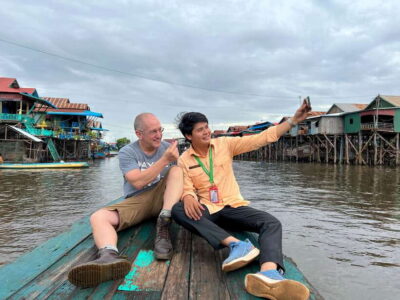
Kulen Mountain, Beng Mealea and Tonle Sap Tour
Read our review →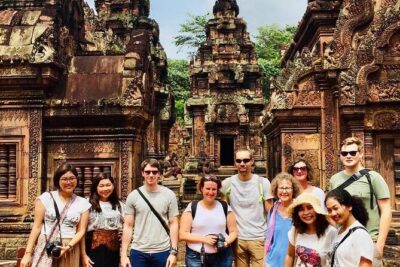
Full-Day Banteay Srei & 4 Temples – Grand Tours Join-in Tour
Read our review →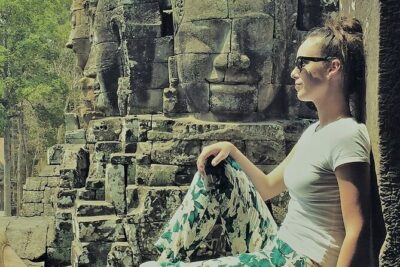
Siem Reap Tour: Angkor Wat Sunrise, Bayon, Ta Prohm, Banteay Srei
Read our review →
Koh Ker Temple Group & Beng Mealea Full-Day Join-in Tour
Read our review →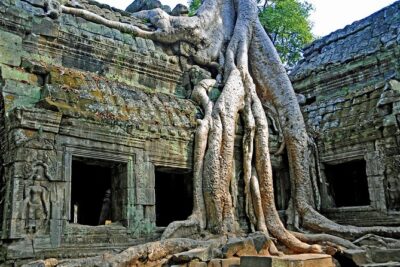
2-Day Angkor Wat With Small, Big Circuit and Banteay Srei Tour
Read our review →
3-Days Discovery Of Angkor: Waterfalls,Floating Village and Banteay Srei temple
Read our review →Browse the lists this tour appears in