
Reviewed · TONLE SAP & FLOATING VILLAGE TOURS
3-Day ‘Temples & Tonle Sap’ Tour
Angkor Wat may be the headline, but this tour gives you a much fuller picture of the Siem Reap area. Over three busy days, you visit the great temples, smaller outlying ruins, floating villages on Tonle Sap, and early Khmer sites around Roluos. The mix of famous and lesser-visited places is the main reason to consider it.
I like the included private air-conditioned transport, which saves you from arranging a car or tuk-tuk for every temple. I also like that the English-speaking guide adds historical and cultural context, while bottled water, cold towels, hotel transfers, and the boat ride are already covered. The main drawback is the pace: this is a packed schedule with plenty of walking, stairs, heat, and early starts.
Key points at a glance
- Angkor Wat gets two visits: You see the temple during the main sightseeing day and return for sunrise on the second day.
- The private format matters: Only your group participates, so transport and explanations are not shared with a large crowd.
- The temple list is broad: Bayon, Baphuon, Ta Prohm, Banteay Srei, Preah Khan, Ta Som, East Mebon, and several more are included.
- Tonle Sap adds a change of pace: Kampong Phluk brings a motorized boat ride and a look at stilt-built villages.
- The three-day pass costs extra: Allow USD 62 per person for the Angkor pass, on top of the $250 tour price.
- The final day is not just temples: Roluos, Phsar Leu, Phsar Chas, and Artisans d’Angkor round out the visit with markets and local craftwork.
A fast route through Siem Reap’s biggest sights
At $250, this is a logistics-saving tour rather than a bare-bones temple transfer. Your guide and driver handle the route, hotel pickup, air-conditioned vehicle, and daily movement between sites. The fee also includes the Tonle Sap motorized boat, bottled water, and cold towels.
The important extra cost is the Angkor pass. You need a three-day pass from Angkor Enterprise, priced at USD 62 per person. That makes the real cost higher than the advertised tour price, but the pass is necessary for nearly all the temple visits across the first two days.
You also pay for meals, soft drinks, and alcohol. Since the schedule is full, I would plan for simple meals near the sightseeing route rather than long restaurant stops. The tour is designed to keep you moving.
A perfect five-star rating from 17 ratings and a 100 percent recommendation suggest that the organization, punctuality, and guide service have been major strengths. Those are useful qualities here. With this many stops, a late vehicle or unclear plan would quickly eat into your temple time.
Other trips out on the lake from Siem Reap:
- From Siem Reap: Kampong Phluk Floating Village Tour by Boat
★ 4.9 · 6,979 reviews - Sunset tour of Kampong Phluk stilts home village on the Tonle Sap
★ 5.0 · 4,865 reviews - Kompong Phluk Floating Village Half-Day Tour ( Morning / Sunset )
★ 5.0 · 1,494 reviews
Day one: Bayon, Baphuon, Ta Prohm, and Angkor Wat
The first morning begins with hotel pickup at 8:30 a.m. You start at the Angkor Archaeological Park, where you purchase or use your three-day pass. The ticket stop is listed as about 30 minutes, so have your passport details and payment ready if needed.
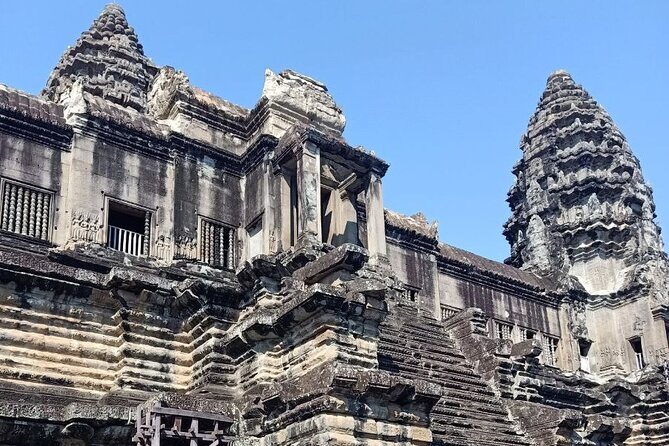
Your first major temple is Bayon, the central temple of Angkor Thom. Its famous stone faces and dense carved galleries give it a different feel from Angkor Wat. Allow about an hour here. Your guide can help you make sense of the temple’s Buddhist purpose under King Jayavarman VII and point out how the faces shape the building’s identity.
Next comes Baphuon, a tall temple mountain built in the 11th century and dedicated to Shiva. The climb and uneven stone surfaces add physical effort, but the structure helps you see how Khmer temples were planned vertically, with the central tower representing a sacred mountain.
The schedule allows about an hour at each temple. That is enough for a guided look, photographs, and some quiet time, but not enough to inspect every carving. If you like to linger, tell your guide early so you understand where time can be gained or lost.
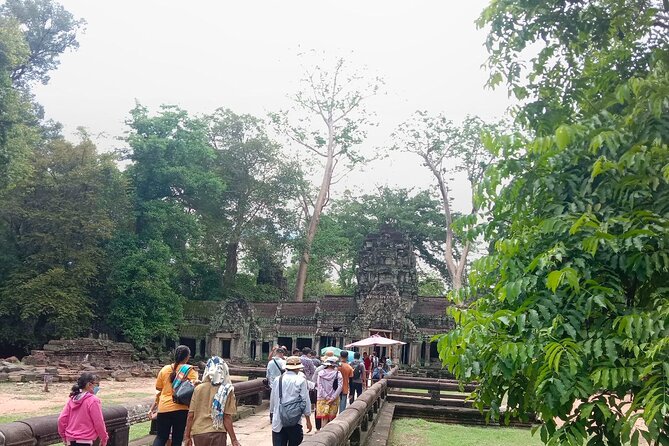
Ta Prohm follows, and this is one of the most atmospheric stops on the route. The temple was built in the late 12th and early 13th centuries and is known for its stone corridors and trees growing around the ruins. It is a popular site, so the value of the guide is not just historical explanation. A good guide also helps you move through the complex without missing the main architectural details.
The Terrace of the Elephants is a shorter stop, about 30 minutes. It formed part of the eastern edge of the royal palace grounds and faced the parade area. This is more of an architectural and historical viewpoint than a full temple visit. You will see carved elephants and other figures along the terrace, but do not expect the same enclosed spaces as Ta Prohm or Angkor Wat.
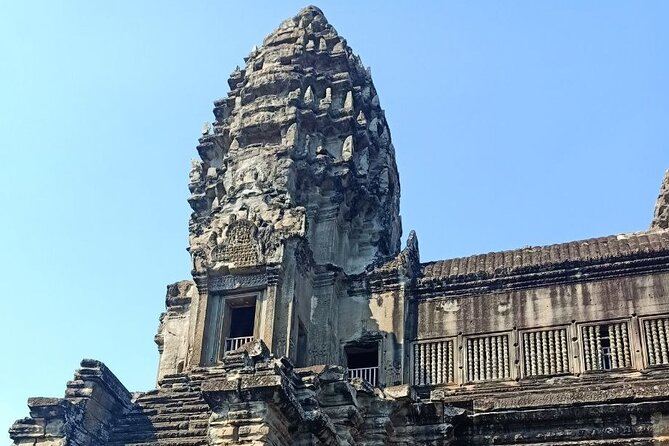
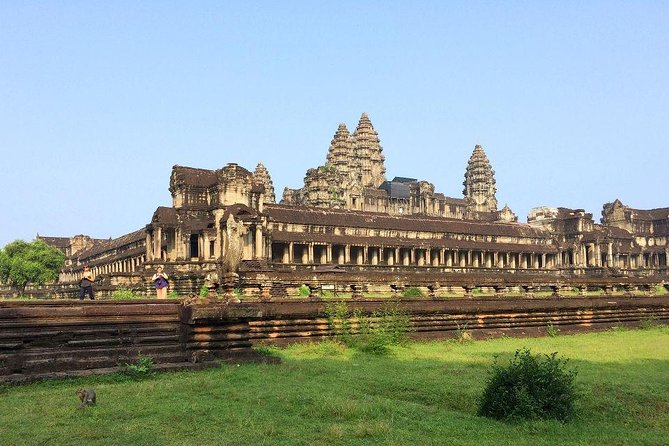
After lunch, the itinerary turns to Angkor Wat. Three hours gives you time to cross the causeway, enter the galleries, see the bas-reliefs, and explore the central sanctuary area at a reasonable pace. Angkor Wat was first built as a Hindu temple and later became a Buddhist site. That change is part of what makes the monument so interesting, and your guide can connect the carvings and layout to its original purpose.
You should wear clothing that covers your shoulders and knees, as temple rules can apply at sacred areas. Comfortable shoes matter too. The day includes several hours on stone paths and stairways, and the tropical heat can make short walks feel longer.
The final stop is Phnom Bakheng, a hilltop temple mountain linked to Shiva and later used as a Buddhist site. The listed visit is long, up to three hours, and the climb is the reason. It is also a popular place for sunset views. Ask your guide how the timing works on your date, since the schedule includes both a three-hour temple visit and the earlier Angkor Wat stop.
Day one is the most demanding day for first-time visitors. You see an impressive amount, but you will be tired by the end. I would not add a separate evening plan unless you are comfortable with long days.
Day two: sunrise and the quieter eastern temples
Day two begins with a return to Angkor Wat for sunrise. The schedule then sends you back to the hotel for breakfast. The exact pickup time is not stated, so confirm it after booking, especially because the tour’s general start time is listed as 8:30 a.m. Sunrise requires an earlier departure.
Seeing Angkor Wat at first light gives you a different experience from the previous afternoon. The changing light can reveal different details on the towers and galleries, while the cooler morning air makes walking easier. The tradeoff is simple: you need to get up early, and the sunrise stop can be busy.
After breakfast, you visit Preah Khan, Neak Pean, Ta Som, and East Mebon. These temples are grouped together, which keeps the driving practical. The combined visit is listed at about two hours, so the morning moves quickly.
Preah Khan is a large complex with long passages and a sense of scale that differs from the compact central sanctuaries. Neak Pean is known for its unusual island setting and water-related design. Ta Som is smaller and often feels more manageable after the larger monuments. East Mebon gives you another look at the temple-mountain tradition, with its older construction and formal layout.
I like this part of the plan because it gives you more than the standard Angkor circuit. You get a better sense of how varied Khmer temple design can be, from a sprawling religious complex to smaller shrines and water-centered structures.
After lunch, you travel to Banteay Srei. This 10th-century temple is dedicated to Shiva and lies about 25 kilometers northeast of the main Angkor area. The red sandstone carvings are the main attraction, with detailed figures and decorative work that reward a slower look.
Two hours are assigned here, which is useful because Banteay Srei is not a quick roadside photo stop. Its distance from the central temples also makes private transport valuable. You do not need to work out a separate car or negotiate another fare for the trip.
Banteay Samre follows, with about an hour at the site. Built in the early 12th century during the reigns of Suryavarman II and Yasovarman II, it uses an Angkor Wat style. It is a good comparison point after Banteay Srei, since you can see differences in scale, stonework, and overall design.
The day ends at Banteay Kdei, a Buddhist temple whose name refers to a citadel of chambers or monks’ cells. It lies near Ta Prohm and Angkor Thom and was built during the 12th and early 13th centuries. An hour here gives the day a quieter finish, although you will still be walking over uneven ground.
Day two combines the best sightseeing conditions with a fairly demanding schedule. The early start improves the heat and light, but the total amount of temple time can be tiring. This tour is a better fit if you want a full program than if you prefer a slow, unhurried morning.
Day three: stilt villages and the Roluos beginnings
The third day changes the subject. Instead of another full circuit of major Angkor temples, you head to Kampong Phluk on Tonle Sap.
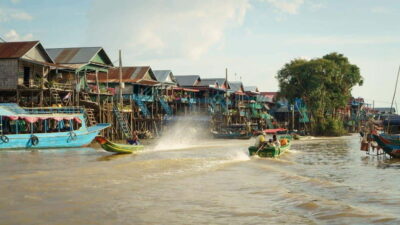
Kampong Phluk is a group of villages built largely on stilts. The community depends heavily on fishing, and the height of the homes relates to the changing water conditions on the lake. The description of the area points to a seasonal rhythm, with wet-season fishing from May through October.
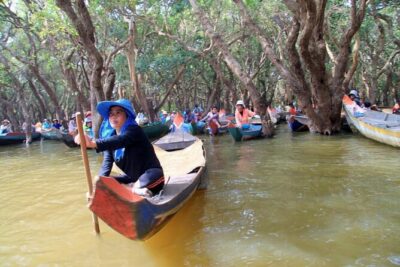
The motorized boat ride is included, and the visit is scheduled for about three hours. This gives you time to see the village setting from the water rather than treating it as a brief photo stop. It also adds a living community to a trip otherwise focused on monuments.
Conditions on Tonle Sap can vary with the season, so the appearance of the village may not be the same throughout the year. The tour data does not promise a particular water level or wildlife sighting, so book this portion for the village and lake experience itself, not for a specific natural spectacle.
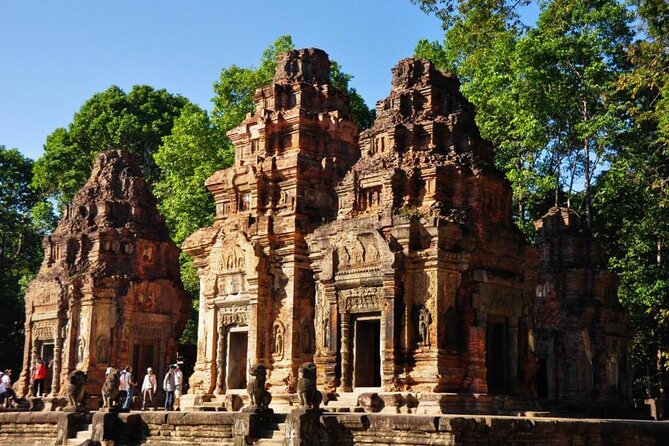
After lunch, you visit the Roluos temples. These are among the earliest permanent Khmer structures in the area and date to the late ninth century. Their importance is less about the famous-name factor and more about seeing an earlier stage of Khmer civilization.
The Roluos group helps put Angkor’s later monuments into context. After two days of grand towers and large temple compounds, these earlier sites show how the architectural tradition developed. The visit is listed at about three hours, so you get time to study the structures rather than rushing through.
On the way back to Siem Reap, the tour includes Phsar Leu, Phsar Chas, and Artisans d’Angkor. Phsar Leu is described as the top market, while Phsar Chas is the old market. These stops give you a chance to see the commercial side of the city after the formal temple grounds.
Artisans d’Angkor adds a craft-focused stop to the end of the trip. The total market and craft visit is about two hours, although the precise balance among the three places can depend on the day. You should tell your guide if you are more interested in shopping, local products, or simply a short look before returning to your hotel.
A few more things to do in Siem Reap worth a look
- From Siem Reap: Angkor Wat and Floating Village 3-Day Trip
★ 5.0 · 100 reviews - 3-Day Angkor Wat with All Interesting Major Temples, Banteay Srei & Beng Mealea
★ 5.0 · 70 reviews - 3-Day Angkor Wat & All Interesting Major Temples & Kulen Mount Waterfall
★ 5.0 · 63 reviews - 3 Days Siem Reap Explorer – Small Group
★ 5.0 · 50 reviews
What the private format changes
This is a private activity, so only your group participates. That makes a real difference on a route with many temples. You can ask for more explanation at Bayon, move faster at a site that does not interest you, or discuss the day’s timing without waiting for a busload of people.
The tour includes an English-speaking professional guide. No individual guide name is provided, so you should not expect to select a particular person when booking. The strongest practical value of the guide is the connection between places. Without context, Bayon, Baphuon, Ta Prohm, and the later temples can blur into a long sequence of stone buildings.
Hotel pickup and drop-off are included, as is an air-conditioned vehicle for the tour. That matters in Siem Reap, where temple visits involve heat and walking. Bottled water and cold towels are small inclusions, but useful ones during a three-day schedule.
The tour is not designed for anyone who cannot walk normally or has below-average fitness. Most people can participate, but you should be ready for uneven paths, temple steps, long outdoor visits, and a sunrise start. It is not available to children under three.
Is $250 good value?
The value depends on how much you would otherwise pay for transport, guiding, and planning. The price includes three days of private touring, hotel transfers, an English-speaking guide, an air-conditioned vehicle, the Tonle Sap boat, bottled water, and cold towels.
You still need to add the USD 62 three-day Angkor pass per person, plus meals and drinks. That means you should compare the full cost, not just the advertised tour price. Even so, arranging a similar route independently would require separate planning for the main Angkor circuit, the farther Banteay Srei visit, Tonle Sap, and Roluos.
The tour is especially useful if you have only three days in Siem Reap and want to see both famous and less familiar places. If you already have transport and prefer to choose one temple at a time, the fixed itinerary may feel too full.
Booking details worth checking
Complimentary hotel pickup and drop-off are available, and the listed start time is 8:30 a.m. Because day two includes sunrise at Angkor Wat, confirm the exact early pickup time with the operator.
Confirmation is provided at booking. Free cancellation applies if you cancel at least 24 hours before the start time. Cancellations or changes made within 24 hours are not accepted for a refund.
The experience offers mobile tickets and group discounts, although the tour itself is private for your group. That combination may suit families or friends who want the privacy of their own vehicle while sharing the cost.
Should you book the Temples and Tonle Sap tour?
Book it if you want a well-organized, private three-day sweep of Siem Reap and do not want to arrange transport between distant sites. The route covers the essential monuments, adds Banteay Srei and Roluos, and gives you a useful change of subject with Kampong Phluk and Tonle Sap.
Skip it if your priority is a slow temple visit, long breaks, or a flexible schedule. The program is packed, the Angkor pass is extra, and the combination of heat, walking, and sunrise makes it a serious sightseeing commitment. For a short stay, though, the private transport, guide, and wide range of sites make the $250 price a practical choice.
FAQ
How long is the Temples and Tonle Sap tour?
The tour lasts approximately three days.
What time does the tour start?
The listed start time is 8:30 a.m. Day two includes an Angkor Wat sunrise visit, so you should confirm the exact early pickup time.
Is hotel pickup included?
Yes. Complimentary hotel pickup and drop-off are included.
Is the tour private?
Yes. Only your group participates in this private tour or activity.
Is an English-speaking guide included?
Yes. A professional English-speaking guide is included.
Is transportation included?
Yes. An air-conditioned vehicle is included for pickups, drop-offs, and the tour.
Is the Angkor temple pass included?
No. The three-day Angkor pass is not included. The stated price is USD 62 per person.
Is the Tonle Sap boat ride included?
Yes. The fee for the motorized boat is included.
Are meals included?
No. Meals, soft drinks, and alcohol are not included.
Is the tour suitable for young children?
The tour is not available for children under three years old. Most people can participate, but it is not suitable for those who cannot walk normally or have below-average fitness.
Just added in Siem Reap
- Ultimate Sunrise to Angkor Wat, Angkor Thom and Bayon Temple★ 5.0 · 3 reviews
- Twilight Tastes of Siem Reap Include Dinner★ 5.0 · 13 reviews
- Trekking Tour at Phnom Kulen National Park from Siem Reap★ 5.0 · 3 reviews
- Full-Day Private Tour of Angkor Wat with Pick Up★ 5.0 · 12 reviews
- Private Day Trip to Angkor Temples with Expert Guide★ 5.0 · 4 reviews
- Siem Reap City Tour with War Museum and Killing Field★ 5.0 · 27 reviews
- Waterfall & River of 1000 Siva Linga- Kulen Mountain Private Tour★ 5.0 · 3 reviews
- Angkor Wat Experience Temple Pass and Siem Reap Food Tour★ 5.0 · 13 reviews
Tonle Sap & Floating Village Tours, compared.
Sunset tour of Kampong Phluk stilts home village on the Tonle Sap
Read our review →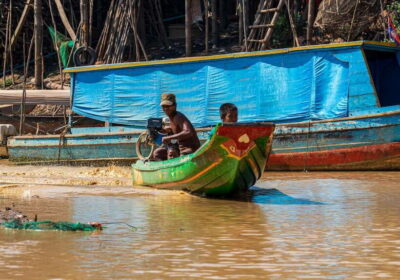
Siem Reap Floating Village Kampong Phluk Sunset with Boat
Read our review →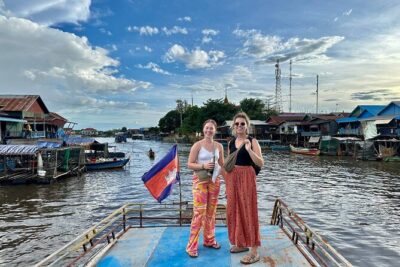
Kompong Phluk Floating Village Half-Day Tour ( Morning / Sunset )
Read our review →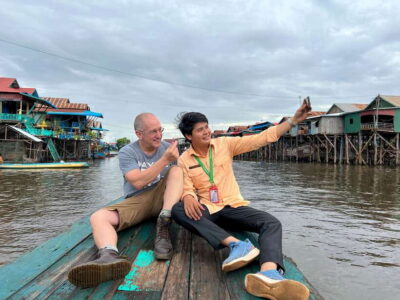
Kulen Mountain, Beng Mealea and Tonle Sap Tour
Read our review →
Tonle Sap Lake & Kampong Phluk Village Half-Day Tour
Read our review →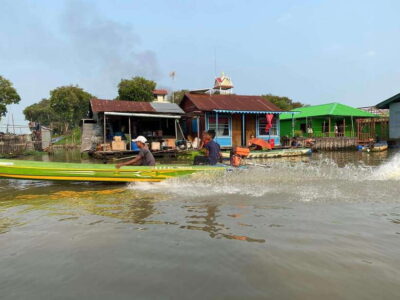
Tonle Sap, Kampong Phluk & Floating Village Tour
Read our review →
Sunset Dinner Tour: Tonle Sap Lake Floating Village
Read our review →Browse the lists this tour appears in