
Reviewed · HISTORICAL TOURS
One Day Private Guide Tours History in Phnom Penh Incl. admission
Phnom Penh’s story comes in powerful layers: royal ceremony, ancient Khmer art, Buddhist worship, French-era architecture, and the painful history of the Khmer Rouge. This private day covers the city’s four major cultural and historical sights, then adds five shorter stops that help you understand Phnom Penh as a living capital.
I like the private car and guide, especially in the heat and traffic, and I like that entrance fees, water, and transport are built into the $128.21 price. The main caution is the schedule: eight to ten hours is a full day, and the two genocide sites can be emotionally heavy. Confirm that the Royal Palace and Silver Pagoda will be open before you go, since a past booking was affected by an unannounced closure.
Key points at a glance
- A full Phnom Penh circuit: Cover the Royal Palace, Silver Pagoda, National Museum, Choeung Ek, and Tuol Sleng in one day.
- Private transport matters: You ride in a modern air-conditioned vehicle with only your own group.
- Guide Sam has led the route: A professional English-speaking guide accompanies you, with a driver handling Phnom Penh’s traffic.
- Ancient art and modern tragedy share the day: The National Museum’s Khmer sculpture collection is paired with the Killing Fields and Tuol Sleng.
- Five shorter city stops round things out: See Wat Phnom, the King Father statue, Independence Monument, Wat Ounalom, and Central Market.
- Lunch is separate: The tour includes two bottles of mineral water per person, but you pay for lunch yourself.
Why this private day works in Phnom Penh
Phnom Penh can be hard to read at first. Main roads fill with motorbikes and cars, grand government buildings appear beside small cafés, and important sights are spread across the city and beyond it. A private guide and driver remove much of the guesswork.
The day begins at 8:30 am with pickup at your hotel lobby. You get a private air-conditioned vehicle rather than waiting for a larger group, a useful advantage when temperatures rise and traffic slows the trip. The guide can explain what you are seeing as you go, while the driver deals with the city streets.
The route is ambitious. It includes the royal complex, a major museum, two sites connected to the Khmer Rouge period, four religious or civic landmarks, and Central Market. You should expect a steady pace rather than long breaks at each place. That tradeoff is sensible if this is your only full day in Phnom Penh, but it may feel rushed if you prefer to linger over every gallery.
The price is $128.21 per person. For a private tour, that includes the vehicle, driver, licensed English-speaking guide, all listed admission fees, taxes, service charges, and two bottles of mineral water per person. Lunch is not included. I see the value in paying for a private vehicle and guide when you want to combine sights in different parts of the city without arranging separate rides.
A few more things to do in Phnom Penh worth a look
- Oudong Mountain History and Pagoda Tour
★ 5.0 · 39 reviews - Guided Phnom Penh Heritage Tour
★ 5.0 · 37 reviews - Phnom Penh Historical Tour
★ 5.0 · 13 reviews
The Royal Palace and Silver Pagoda
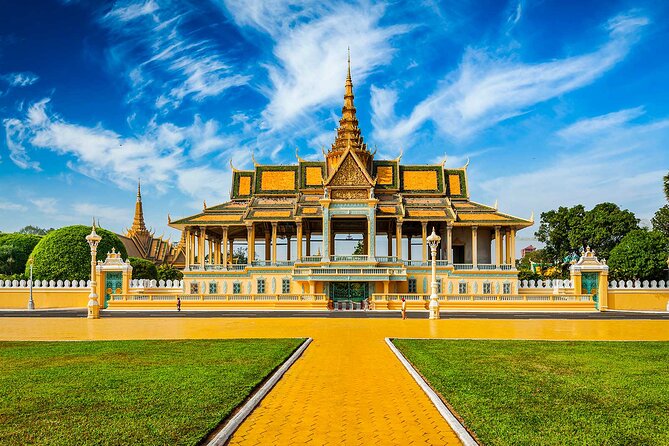
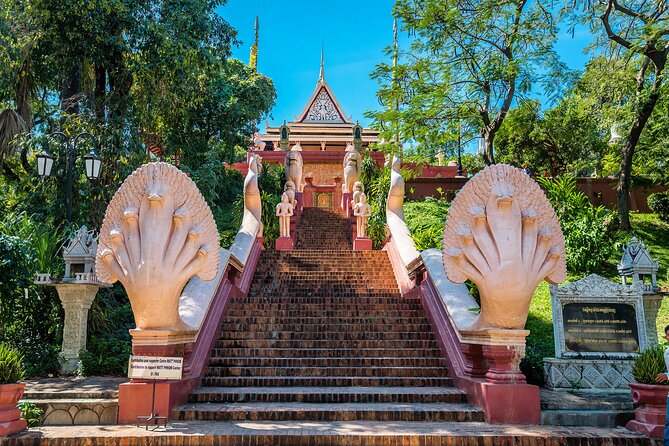
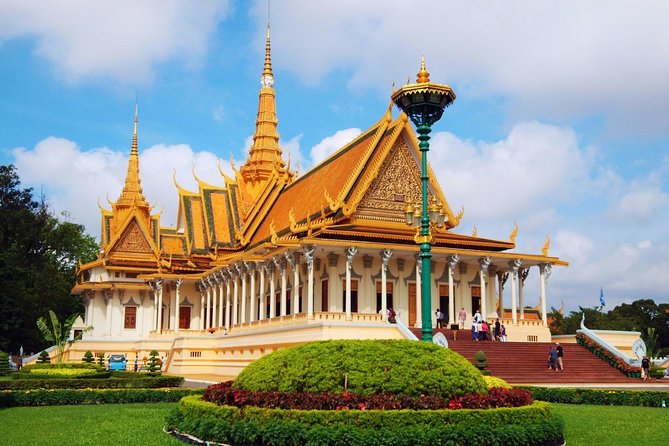
The Royal Palace is the natural opening to Phnom Penh. Built on the site of an earlier citadel, it remains one of the city’s clearest symbols of Cambodia’s monarchy. The graceful buildings and formal grounds give you a visual introduction to royal Cambodia before the day moves into museums and memorials.
You have about an hour at the palace, followed by roughly 45 minutes in the Silver Pagoda. The two sites are closely linked, but they offer different experiences. The palace focuses on royal architecture and ceremonial space. The Silver Pagoda is a chamber of royal treasures, also called the Pagoda of the Emerald Buddha.
Its name comes from the floor, which contains about 5,000 silver tiles weighing one kilogram each. Inside, you can see an emerald Buddha figure, a Baccarat crystal Buddha, and another Buddha made of gold and diamonds. These details make the visit more than a quick look at a pretty building. They show the wealth and religious importance attached to the royal compound.
The main practical point is to confirm opening dates. The palace and Silver Pagoda were closed on January 1, 2024, and that closure was not clearly communicated before one booking. Ask the operator to confirm both sites before your day is fixed. If they are closed, you want the chance to change dates rather than discover the problem after pickup.
Ancient Khmer art at the National Museum
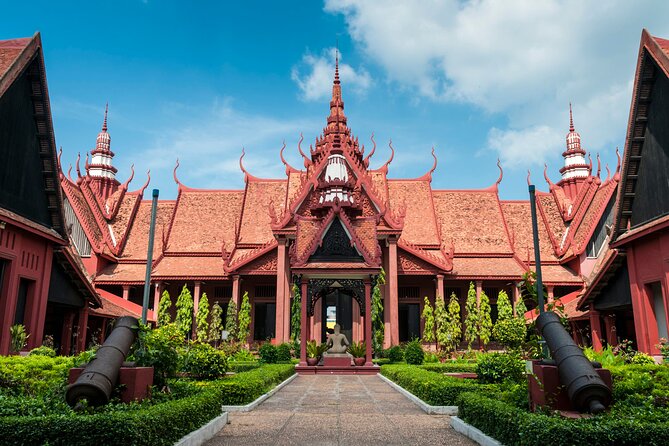
The National Museum sits in a terracotta-roofed building designed in a traditional Cambodian style and built between 1917 and 1920. The architecture gives the visit a calm setting after the formality of the palace.
Plan on about 90 minutes here. That is enough time for a useful guided visit without trying to inspect every object. The museum holds the world’s premier collection of ancient Khmer sculpture and artifacts, so this is where the morning’s royal and religious symbols gain wider context.
A guide helps connect the statues and objects to the temples, beliefs, and periods of Cambodian history. Without that context, a museum devoted to Khmer art can become a procession of stone figures. With the guide, you have a better chance of understanding what you are looking at and why it matters.
I like the placement of this stop. Seeing the Royal Palace and Silver Pagoda first gives you a visual sense of Cambodian religious and royal traditions. The museum then broadens that picture beyond the modern capital.
Wat Phnom, the city’s namesake
Wat Phnom takes about 45 minutes and offers a change of scale. It sits on one of the few hills in an otherwise flat capital, which gives the site its name and its place in the city’s origin story.
The first pagoda was built in 1373 to house Buddha statues found in the Mekong by a woman named Penh. That story is tied to the name Phnom Penh, or Penh’s Hill. The site is not as large as the royal compound, but it is important for understanding why the city developed around this particular point.
This stop also breaks up the museum visits. You get a pagoda, a small rise above the streets, and a chance to see a religious site that remains part of the city rather than only a preserved monument. The 45-minute visit is long enough to take in the setting without adding too much strain to an already packed day.
Same base, a different kind of day out:
- The Killing Field and Toul Sleng Genocide Museum (S21) Tour
★ 5.0 · 1,977 reviews - Phnom Penh: Sunset Cruise with Unlimited Beers & BBQ Buffet
★ 4.5 · 727 reviews - Aroma Therapy Massage, Relaxation therapeutic aromatherapy oil massages.
★ 5.0 · 645 reviews - Killing field and Toul Sleng genocide museum Tour
★ 5.0 · 610 reviews
Choeung Ek and Tuol Sleng
After lunch, the tour turns to Cambodia’s recent past. This is the most serious part of the day, and you should approach it with time and attention. Choeung Ek and Tuol Sleng explain the violence of the Khmer Rouge period from two different angles.
Choeung Ek Genocidal Center is about 16 kilometers south of Phnom Penh. The visit lasts about 90 minutes, with the guide explaining the history of the site. Between 1975 and 1978, about 17,000 people were killed there. The site is commonly known as the Killing Fields, but the name should not soften what you will learn.
The setting and the information can be difficult. This is not a sightseeing stop in the usual sense. It is a place for remembering victims and understanding how the Khmer Rouge system operated. The guide’s role is especially important here because the facts and setting need careful explanation.
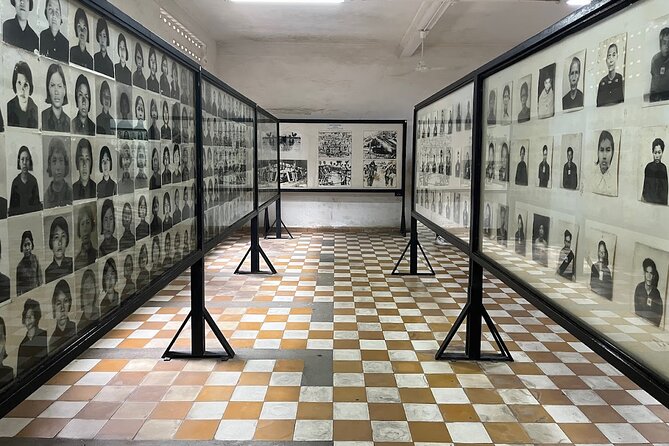
Tuol Sleng Genocide Museum follows, with about an hour inside the former school. In 1975, Pol Pot’s security forces took over Tuol Svay Prey High School and turned it into a prison. The guide explains the site’s background and history in depth.
Putting these two places in the same afternoon makes sense. Tuol Sleng shows what happened inside a Phnom Penh detention center, while Choeung Ek shows the final stage for many prisoners sent away from the city. I would not book this day expecting light sightseeing from morning to evening. The genocide sites are essential for many people, but they can leave you quiet and shaken.
The lunch break comes before Choeung Ek. You pay for lunch yourself, and no restaurant is specified, so keep the timing flexible. Since the day is long, use the break to eat and reset before the most demanding part of the tour.
Five shorter stops across central Phnom Penh
The final group of stops gives you a broader look at the capital. None receives as much time as the palace or museums, but together they prevent the tour from becoming only a sequence of enclosed attractions.
The Statue of King Father Norodom Sihanouk is a large bronze memorial in Independence Square. You have about 30 minutes here. It is a concise stop, but it introduces a major figure in modern Cambodian public life and gives you a place to see how the city marks its former king.
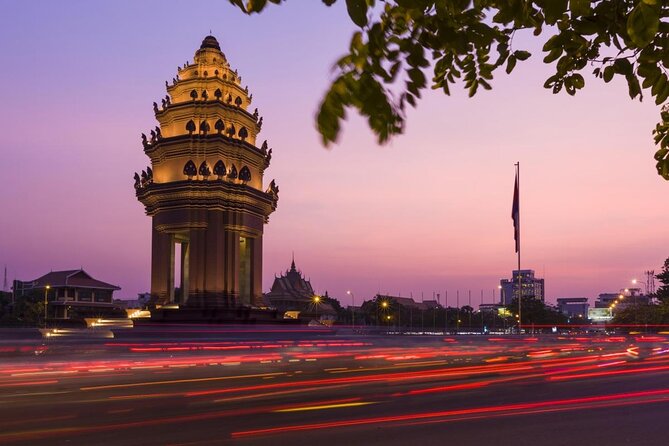
The Independence Monument takes about 15 minutes. Built in 1958, it commemorates Cambodia’s independence from France in 1953. It sits at the intersection of Norodom Boulevard and Sihanouk Boulevard. This is primarily a photo and explanation stop, not a long visit, but its location helps you understand the main ceremonial axis of central Phnom Penh.
Wat Ounalom receives about 45 minutes. It is one of Phnom Penh’s five original monasteries, founded in 1422, and it once housed the Institute Bouddhique and library. Located near the riverfront, about 250 meters north of the Royal Palace and facing the Tonle Sap River, it adds an active Buddhist setting to a day otherwise filled with royal buildings and museums.
Central Market is the last major stop, with about 45 minutes. Completed by the French in 1937, the market is known in Khmer as Psar Thmei, or New Market. Its huge dome is designed for ventilation and makes the building one of the city’s most recognizable landmarks.
The market is useful because it brings you back to daily Phnom Penh. After the palace, galleries, monuments, and memorials, you see a place built for ordinary buying and selling. Forty-five minutes is enough for a first look, though not enough for a slow shopping session if you want to explore every aisle.
Guide, vehicle, and pace
The experience is private, so only your own group joins the tour. That gives you more control than a shared bus trip. You can ask questions without competing for the guide’s attention, and the group does not need to wait for strangers at every stop.
A professional licensed English-speaking guide and driver accompany you. One guide identified in the tour information is Sam, who has led this route. A past booking specifically praised the benefit of returning to the cool car after time outside, and that is a real consideration in Phnom Penh.
The vehicle is modern and air-conditioned. Transport, transfers, and sightseeing are included, as are two bottles of mineral water per person. The schedule still depends on city traffic, so the stated eight to ten hours is an estimate rather than a promise of a perfectly timed finish.
The itinerary gives you about 30 minutes in Phnom Penh as an introduction, then moves through stops ranging from 15 minutes to 90 minutes. The long museum visits and genocide sites deserve attention, while the monument stops are intentionally brief. If you want a slow morning at the National Museum or extended time at Central Market, ask if the route can be adjusted before booking.
Who should book this tour
I would choose this tour if you have one full day in Phnom Penh and want the major sights handled in one private circuit. It suits first-time visitors, families or friends who prefer their own vehicle, and anyone who wants a guide to explain the Khmer art and twentieth-century history rather than simply point out buildings.
It is also a good fit if heat and traffic make independent sightseeing less appealing. The air-conditioned car gives you a place to recover between sites, and pickup removes the need to arrange separate transport.
You may want a different plan if you dislike tightly scheduled days or want to spend hours in one museum. The two genocide sites are another serious consideration. They are important places, but the subject is painful, and the combination of both in one afternoon is not easy.
The tour requires good weather. If poor weather causes cancellation, you are offered another date or a full refund. Most people can participate, according to the supplied booking information, but the tour does involve movement through several sites and a full day out.
Is $128.21 a fair price?
For a private eight to ten hour day, the cost is reasonable if you are traveling with at least one other person and value the convenience of a dedicated guide and car. You are not paying admission separately at each stop, and the price includes all listed entrance fees, taxes, service charges, transfers, and water.
The value drops if you plan to see only one or two attractions, since the schedule is built around a full city circuit. It also does not include lunch, so add that to your daily budget.
The strongest part of the price is the combination of transport and interpretation. Phnom Penh’s key sights are not all next door to one another, and the trip to Choeung Ek adds distance beyond the central monuments. A private vehicle saves time and gives you relief from the heat.
Should you book it?
Book this tour if you want Phnom Penh’s royal buildings, Khmer art, Buddhist sites, major monuments, central market, and Khmer Rouge history explained in one day. The guide, driver, private vehicle, included admissions, and water make it a practical choice for a first visit.
Before paying, confirm the Royal Palace and Silver Pagoda opening date, then decide if you are comfortable visiting both genocide sites in one afternoon. If the answer is yes, this is a strong, efficient introduction to Phnom Penh, with enough local context to make the city’s major sights fit together.
FAQ
What time does the tour start?
The tour starts at 8:30 am.
How long does the experience last?
The tour lasts approximately eight to ten hours.
Is hotel pickup available?
Yes. Pickup is offered, and the itinerary states that you meet the guide and driver at your hotel lobby.
Is this a private tour?
Yes. Only your own group participates in the activity.
Is an English-speaking guide included?
Yes. A professional licensed English-speaking guide is included. The tour information identifies Sam as one guide who has led this route.
Is transportation included?
Yes. Private transportation in a modern air-conditioned vehicle is included.
Are admission fees included?
Yes. Admission fees for the listed attractions are included in the price.
Is lunch included?
No. Lunch is at your own expense.
How much water is provided?
You receive two bottles of mineral water per person during sightseeing and transfers.
Can I cancel for a full refund?
Yes, if you cancel at least 24 hours before the experience start time. Cancellations made less than 24 hours before the start time are not refunded, and changes within that period are not accepted.
Just added in Phnom Penh
- Watch Live Khmer Traditional boxing in Phnom Penh★ 5.0 · 46 reviews
- The killing field and Toul Sleng Genocide museum (S21) Tour★ 4.5 · 19 reviews
- Watch Khmer Kickboxing with Free Beers by Ringside Seats★ 5.0 · 11 reviews
- Udong Historical Site Tour★ 5.0 · 8 reviews
- Udong Old Capital Tour★ 4.5 · 3 reviews
- Warm Stone Massage★ 5.0 · 23 reviews
- Private Taxi Phnom Penh to Siem Reap-English Speaking Drivers★ 5.0 · 50 reviews
- Private Taxi Between Phnom Penh – Siem Reap Stop Sightseeing★ 5.0 · 23 reviews
Historical Tours, compared.
Bokor Mountain Adventure – History, Sights and Waterfalls
Read our review →
Angkor World Heritage with Sunrise – Small Group
Read our review →
Private Angkor Wat Tour & Angkor Park/Heritage With Local Guide
Read our review →Browse the lists this tour appears in