
Reviewed · TOURS IN SIEM REAP
Private Cambodia 5 Days Tour from Siem Reap to Phnom Penh
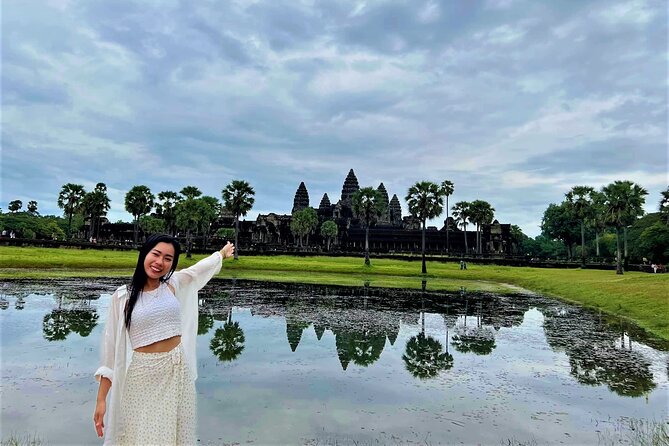
Angkor Wat may be the headline, but this five-day journey gives you a wider view of Cambodia. You move from the stone faces of Bayon and tree-covered Ta Prohm to Phnom Penh’s royal buildings, markets, and difficult Khmer Rouge memorials. The private format lets your guide shape the pace around your group, while the Siem Reap to Phnom Penh route saves you from planning several separate transfers.
I especially like the mix of famous sights and quieter stops, including Ta Nei Temple, the old Kampong Kdei Bridge, and Prasat Kuha Nokor. I also like that the price includes hotels, breakfast, transport, entrance fees, water, and fresh tissues, with a choice of 3-star, 4-star, or 5-star lodging. The main consideration is the pace: Day 2 is packed with temples, and Day 4 includes both royal Phnom Penh and the country’s most painful historical sites.
Key points at a glance
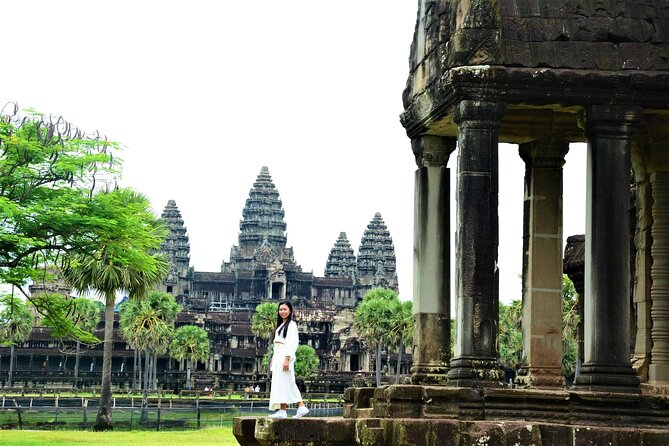
- Angkor in one long, rewarding day: See Angkor Thom, Bayon, Baphuon, Ta Prohm, and Angkor Wat, with lesser-known Ta Nei included.
- Private guiding from start to finish: Guides including Leap, Tokk, Sara, Rain, and others provide history, architecture, and practical help in English.
- A useful Siem Reap to Phnom Penh route: The journey adds Kampong Kdei Bridge, Prasat Kuha Nokor, and Skun to the usual city stops.
- Hotels at three comfort levels: Choose 3-star, 4-star, or 5-star options in both Siem Reap and Phnom Penh.
- A serious look at recent history: Tuol Sleng and Choeung Ek give essential context for modern Cambodia, though the visits can be emotionally heavy.
- Good value for a private trip: The $616.55 price includes major costs that can quickly add up when arranged separately.
Why this five-day route works
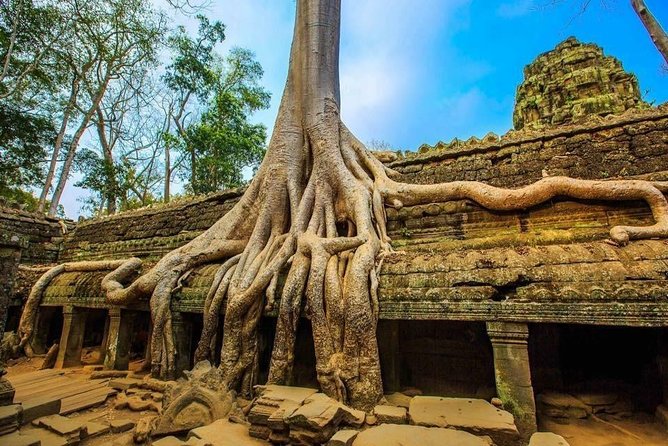
This is not a temple-only holiday. You begin with Cambodia’s ancient Khmer civilization, then follow the road south to the capital and its royal, religious, colonial, and modern sites. That broad scope makes the trip useful if you have only a few days and want more than Angkor Wat.
The private arrangement matters here. You are not tied to the interests or walking speed of a large group. Your guide and driver meet you at Siem Reap Angkor International Airport, take you to your hotel, and remain part of the trip as you move through the temples and onward to Phnom Penh.
The published price is $616.55 per person. That is not a bare sightseeing rate. It includes four nights of hotel accommodation, four breakfasts, an English-speaking licensed guide, transport, entrance fees, drinking water, and fresh tissues. Since you also receive airport transfers at the beginning and end, the cost can be reasonable for people who want one booking to cover the main arrangements.
Still, check the room setup before booking. Accommodation is based on double, twin, or triple sharing, and the hotel category changes the overall value. Solo guests may also want to confirm how the price applies to their room arrangement.
A few more things to do in Siem Reap worth a look
- Angkor Wat Sunrise and Tonle Sap Lake 1.5 Days
★ 5.0 · 39 reviews - 5-Day All Major Temples & Kulen Mount Waterfall & Koh Ker & Beng Mealea
★ 5.0 · 13 reviews - 5-Day ‘All The Sights’ Tour
★ 5.0 · 11 reviews
Arrival in Siem Reap and a practical first afternoon
Your guide and driver meet you at Siem Reap Angkor International Airport. The airport transfer is listed at about two hours, including the journey into Siem Reap and an introduction to the city’s culture.
That first day is intentionally light. You check into one of the suggested hotels, such as Royal Crown Hotel & Spa at the 3-star level, Regency Angkor Hotel at the 4-star level, or Angkor Paradise Hotel at the 5-star level, or a similar property.
I like this arrival plan because it avoids throwing you straight into a major temple visit after a flight. You have time to settle in before the long temple day. If your flight arrives early, the schedule may feel open, but that is useful in a hot climate where rest helps.
Angkor Thom, Bayon, and the royal center
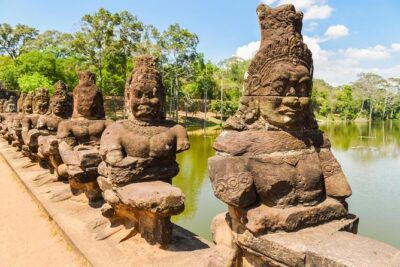
Day 2 is the tour’s busiest day and its main archaeological showcase. After breakfast, you enter Angkor Thom through the South Gate, a popular approach with restored features and many surviving stone heads.
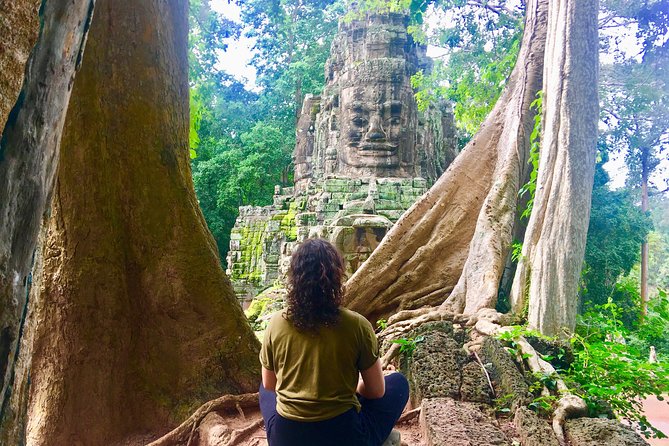
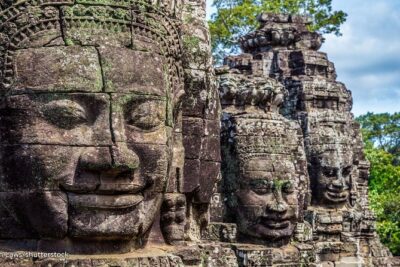
Bayon follows, and this is one of the most memorable stops in the Angkor area. Its towers carry the famous serene faces associated with the temple. Your guide can help you make sense of the unusual layout and explain how Bayon differs from Angkor Wat, which was built earlier and served a different religious and royal purpose.
Next comes Baphuon, a large sandstone temple on a five-level rectangular base. You have about an hour here, enough to look closely at the structure and understand how the temple rises above the surrounding grounds. Phimeanakas, near the former Royal Palace area, adds another piece to the picture of Angkor as a functioning royal city rather than a collection of isolated monuments.
The Terrace of the Elephants and Terrace of the Leper King are shorter stops, each about 30 minutes. They reward close attention to carved details. The first is associated with royal processions and ceremonial display, while the second has dramatic bas-reliefs on both its inner and outer faces.
These shorter visits also help break up the larger temple blocks. You are not simply rushing from one famous photograph to the next. The sequence shows how walls, terraces, temples, and royal spaces worked together.
Ta Nei and Ta Prohm, two very different temple visits
Ta Nei is one of the most appealing parts of the day for people who want a quieter stop. It lies deeper in the forest and is less visited than the major temples. The visit is about an hour, giving you time to notice the contrast between a modest, less polished site and the better-known monuments.
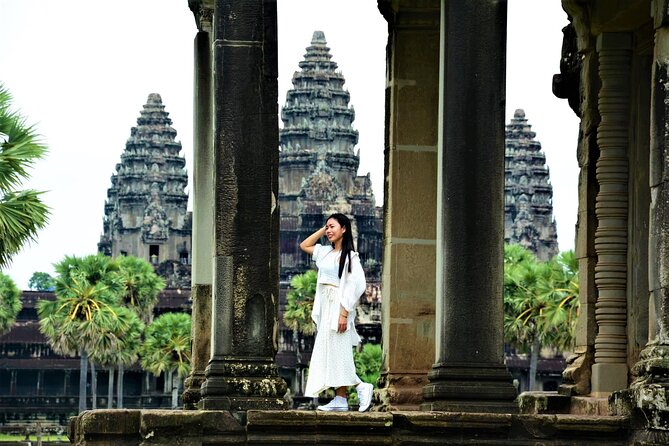
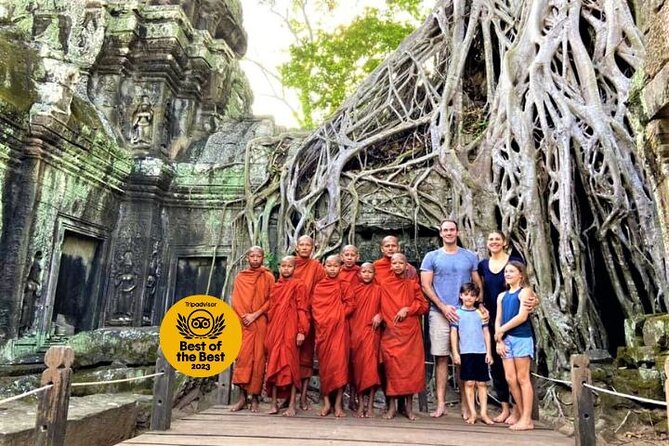
Ta Prohm then brings you back to one of Angkor’s most recognizable settings. Trees grow around the temple ruins, and the site has been left largely intact apart from paths and structural work needed for safety. That rougher appearance is part of its appeal, but it also means uneven surfaces and a less orderly walk.
You have about an hour at Ta Prohm. It is enough for the key areas, though not enough for an unhurried exploration of every corner. If you prefer a slower archaeological visit, the full day may feel demanding. If your priority is to see the major Angkor sites efficiently, the schedule does its job.
Same base, a different kind of day out:
- Angkor Wat Sunrise or Sunset Tour with Guide from Siem Reap
★ 5.0 · 12,109 reviews - Siem Reap: Angkor Wat: Small-Group Sunrise or Sunset Tour
★ 5.0 · 9,444 reviews - From Siem Reap: Kampong Phluk Floating Village Tour by Boat
★ 4.9 · 6,979 reviews - Sunset tour of Kampong Phluk stilts home village on the Tonle Sap
★ 5.0 · 4,865 reviews
Two hours at Angkor Wat
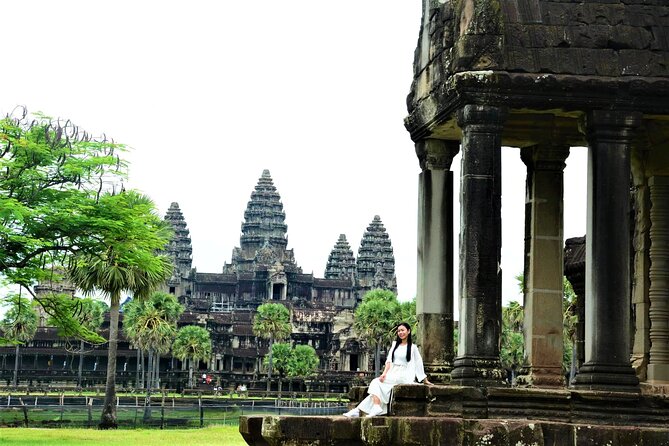
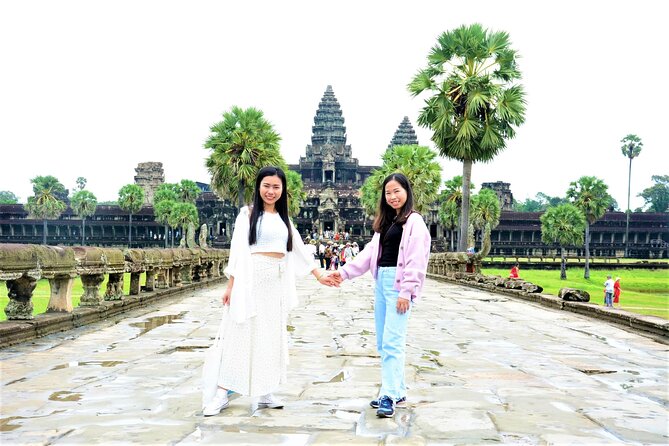
Angkor Wat receives the longest single visit, about two hours. That is sensible. It is the largest and best-preserved monument in the Angkor group, with carefully balanced proportions, extensive reliefs, and a layout that rewards a guide’s explanation.
I would not treat this as just a photo stop. Look at the galleries, the scale of the enclosure, and the carved scenes. Your guide can connect the architecture to Khmer religion and royal power, giving meaning to details you might otherwise pass without noticing.
The day’s schedule does not specifically promise sunrise at Angkor Wat. It does include time to see a sunset over the ancient ruins in the tour overview, but the detailed stop list places Angkor Wat within the daytime temple circuit. Confirm the exact timing if a sunrise or sunset photograph is important to you.
The temple day includes drinking water and transport, both welcome in Cambodia’s heat. Wear clothing suitable for temple visits and expect plenty of walking. The private vehicle gives you a cool break between sites, but the schedule still asks for stamina.
The road south: Kampong Kdei Bridge and Prasat Kuha Nokor
Day 3 changes the tone. You leave the main Angkor circuit and travel toward Phnom Penh, stopping at several places that show Cambodia beyond its most famous temples.
Spean Praptos, also called Kampong Kdei Bridge or Dragon Bridge, is an old laterite bridge in Siem Reap province. The stop lasts about 30 minutes. It is brief, but it gives you a chance to see a piece of Khmer engineering outside the large temple compounds.
Prasat Kuha Nokor in Kampong Thom province receives about an hour. Built from sandstone and laterite on a square terrace, it offers another temple setting without the crowds and scale of Angkor Wat. This is a good place to ask your guide about construction materials, regional sites, and how temple building extended beyond the main royal center.
The road day is not as visually grand as Day 2, and that is part of its value. You get a better sense of the country between the two major cities instead of treating the transfer as dead time.
Skun and the arrival in Phnom Penh
The stop in Skun is unusual. The town is known for a market selling fried spiders, making it one of the more distinctive food stops in Cambodia. You have about an hour, so you can observe the market and decide for yourself how adventurous you feel.
No one should feel pressured to sample something simply because it is famous. The point is the local market experience and the chance to see a food tradition that is far outside most visitors’ routines.
After Skun, you continue to Phnom Penh and check into a city hotel. The 3-star option is King Grand Boutique Hotel, with Sun & Moon Urban Hotel at the 4-star level and Sun & Moon Riverside at the 5-star level, or similar properties.
Phnom Penh’s royal and religious landmarks
Day 4 covers a lot of ground. The city introduction begins with Phnom Penh itself, located near the junction of the Mekong and Tonlé Sap rivers. The riverfront and central districts help you understand the capital’s position as a political and commercial center.
The Royal Palace is given about two hours. Built after King Norodom moved the royal capital to Phnom Penh, it remains one of the city’s key landmarks. The Silver Pagoda is next, with a garden setting and an ornate interior. Since it sits beside the palace, visiting both together is efficient.
Wat Phnom offers a different kind of city experience. The pagoda sits on the city’s only hill, a tree-covered rise connected to the foundation story of Phnom Penh. You have about an hour, enough to see the site and take a break from the flatter streets.
The Independence Monument is a short 30-minute stop, while Wat Ounalom receives another 30 minutes. These visits are useful because they widen the story beyond palace architecture. You see national independence, Buddhist life, and the city’s older religious institutions.
Tuol Sleng and Choeung Ek
The afternoon turns serious. Tuol Sleng Genocide Museum occupies the former S-21 security prison, a secondary school converted into a detention and torture center during the Khmer Rouge period. The planned visit is about two hours.
Choeung Ek, about 17 kilometers south of Phnom Penh, is a former orchard and mass grave site connected to victims killed between 1975 and 1979. Another two hours are allotted here. Together, the two sites explain the scale and human cost of Cambodia’s recent past in a way that a general city tour cannot.
I consider these visits essential, but they are not easy. The subject matter is painful, and you may want quiet time afterward. The private format helps because you can ask your guide questions directly and take the history at a pace that suits your group.
This is also where the tour becomes more than a pleasant sightseeing package. You see Cambodia’s artistic achievements and royal traditions, but you also confront the events that shaped modern families and the country’s recovery.
Central Market and the final city stops
Central Market provides a lighter finish. The domed market, built in 1937, has four arms extending into long interior aisles packed with stalls. You have about an hour to look at the building, browse goods, and observe daily city life.
The Statue of King Father Norodom Sihanouk is a short final stop, about 20 minutes. It adds a modern national figure to a day already covering monarchy, religion, independence, and genocide.
The schedule is ambitious, and traffic can affect how relaxed the day feels. You will get a broad introduction to Phnom Penh, but not the leisurely rhythm of a stay focused on just two or three neighborhoods.
Guides, drivers, and the private advantage
The strongest feature running through this trip is the guide service. Specific guides associated with the experience include Leap, Tokk, Sara, Rain, and others. Leap is particularly suited to travelers who want detailed explanations of Angkor and Siem Reap, while Tokk and Sara are described as enthusiastic and clear when explaining the temples and Cambodia’s past.
The drivers also receive strong praise in the supplied material. Names including Pheap, Leng, Barang, Ching, and La appear in connection with safe, punctual service and comfortable vehicles. Water is kept ready in the vehicle, an easy detail to appreciate after walking around exposed stone temples.
Because this is a private tour, only your group participates. That gives you more room to ask questions and adjust the pace than a standard coach trip. It does not remove the physical demands of Angkor or the long road transfer, but it makes those demands easier to manage.
Hotels, price, and who gets the best value
The choice of hotel category is useful. A 3-star booking keeps the overall cost more controlled, while 4-star and 5-star options give you a more comfortable base in both cities. Daily breakfast is included across the options.
At $616.55 per person, the value depends on how many people share the booking and which hotel level you choose. For a private five-day trip with a guide, driver, hotels, transfers, entrance fees, breakfast, water, and tissues included, it can compare well with assembling the same pieces independently.
Tips for the guide and driver are not included, and other expenses outside the stated program are your responsibility. The tour offers group discounts, which may improve the price for families or friends booking together.
Cancellation terms are strict close to departure. Cancel at least six full days before the start time for a full refund. A cancellation two to six full days ahead receives a 50 percent refund, while cancellations less than two full days ahead are nonrefundable.
Who should book this Cambodia tour?
I would choose this tour if you want Cambodia’s main ancient and modern sights in one organized trip, especially if you prefer a private guide to independent planning. It suits first-time visitors, couples, families, and small groups who value a driver and a clear route between Siem Reap and Phnom Penh.
It is less suitable if you want long, slow temple walks, extensive free time, or a relaxed city break. Day 2 and Day 4 are full, and the genocide sites require emotional as well as physical energy.
My advice is to book it if your priority is range and convenience. Choose the hotel level carefully, confirm the timing of the sunset element, and allow yourself some quiet time after Tuol Sleng and Choeung Ek. With those expectations, this is a well-shaped introduction to both Cambodia’s ancient achievements and its difficult modern story.
FAQ
Where does the tour begin?
The tour begins with pickup at Siem Reap Angkor International Airport in Siem Reap, Cambodia.
Where does the tour finish?
The tour finishes with a transfer from your Phnom Penh hotel to Techo International Airport on Day 5. This final transfer is provided without a guide.
Are hotels and breakfast included?
Yes. Four nights of hotel accommodation and four breakfasts are included. You can select 3-star, 4-star, or 5-star hotel options, subject to the listed or similar properties.
Is this a private tour?
Yes. Only your group participates in the activity, and a professional English-speaking licensed guide accompanies the sightseeing portions.
Are entrance fees and transport included?
Yes. Entrance fees, transport, drinking water, and fresh tissues are included. Tips for the guide and driver, along with expenses not mentioned in the program, are not included.
What is the cancellation policy?
You receive a full refund if you cancel at least six full days before the experience start time. Cancellation two to six full days ahead receives a 50 percent refund. Cancellations less than two full days before the start time are nonrefundable.
Just added in Siem Reap
- Twilight Tastes of Siem Reap Include Dinner★ 5.0 · 13 reviews
- Ultimate Sunrise to Angkor Wat, Angkor Thom and Bayon Temple★ 5.0 · 3 reviews
- Trekking Tour at Phnom Kulen National Park from Siem Reap★ 5.0 · 3 reviews
- Full-Day Private Tour of Angkor Wat with Pick Up★ 5.0 · 12 reviews
- Private Day Trip to Angkor Temples with Expert Guide★ 5.0 · 4 reviews
- Siem Reap City Tour with War Museum and Killing Field★ 5.0 · 27 reviews
- Waterfall & River of 1000 Siva Linga- Kulen Mountain Private Tour★ 5.0 · 3 reviews
- Angkor Wat Experience Temple Pass and Siem Reap Food Tour★ 5.0 · 13 reviews
Tours in Siem Reap, compared.
Angkor Wat Sunrise or Sunset Tour with Guide from Siem Reap
Read our review →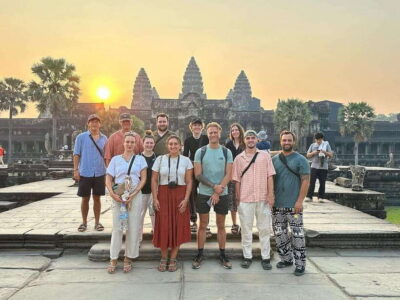
Angkor Wat: Small-Group Sunrise or Sunset Tour
Read our review →
Sunset tour of Kampong Phluk stilts home village on the Tonle Sap
Read our review →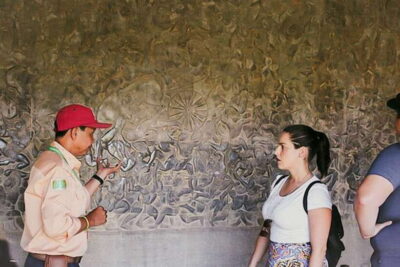
Angkor Wat 2-Day Tour with Sunrise and Sunset
Read our review →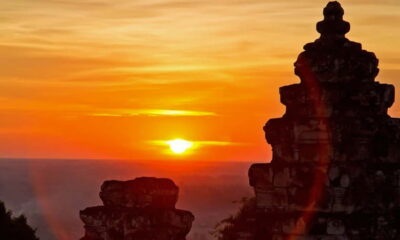
Angkor Wat Sunrise tour with Small – Group and Guide tours
Read our review →
Angkor Wat Highlights and Sunrise Guided Tour from Siem Reap
Read our review →Browse the lists this tour appears in