
Reviewed · MUSEUMS
Siem Reap: Khmer Rogue, War museum &landmine museum Day Tour
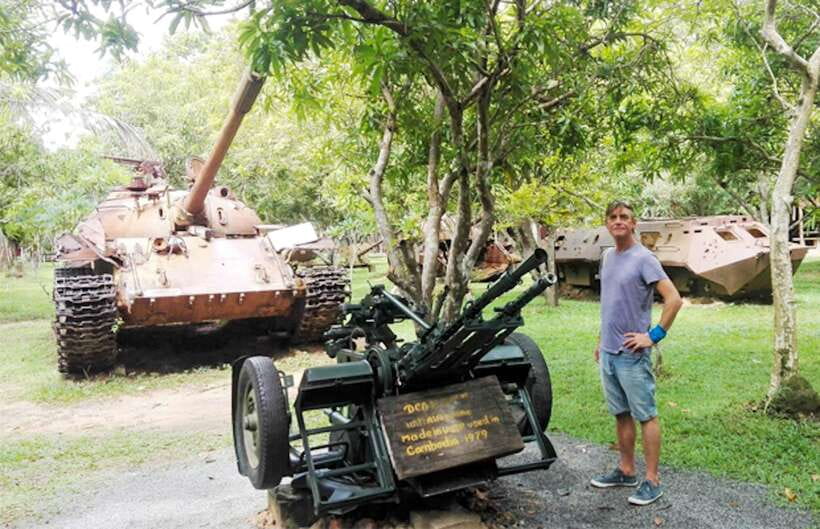
Cambodia’s recent past is not tucked away in a textbook. It is visible at Wat Thmei, in rooms filled with decommissioned mines, and among weapons collected from former battle zones. This eight-hour Siem Reap tour puts those places together in one demanding but useful day.
I like the way the experience joins three different parts of the story: the human cost at the Killing Fields, the lasting danger of landmines, and the machinery of war at the museum. I also like that an English-speaking guide such as Sok Vuthy or Buth Veasna helps explain difficult material instead of leaving you to face it alone.
The main drawback is the amount of time in the vehicle. The day includes several drives, with some stretches lasting an hour, and the subject matter is heavy from beginning to end.
Key points to know before you book
- Wat Thmei brings the Khmer Rouge period close to home: The site is a painful memorial in Siem Reap, not an abstract history lesson.
- The Landmine Museum was founded by a former child soldier: Its collection shows how war can continue hurting people long after fighting ends.
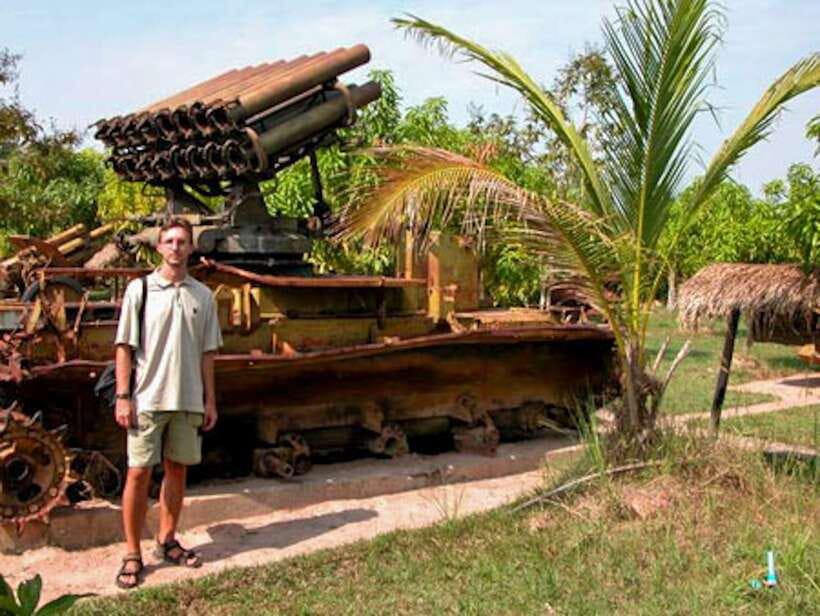
- War Museum Cambodia gathers real weapons from former conflict areas: Items came from places including Anlong Veng, Siem Reap, and Oddar Meanchey.
- The guide makes the difference: Sok Vuthy and Buth Veasna are named as English-speaking guides who explain the subject with care and strong subject knowledge.
- The $78 price covers the basics: Hotel transport, guide service, entry fees, cold water, and a wet towel are included.
- This is a serious history day, not a light sightseeing outing: Give yourself time afterward to process what you have seen.
Three places, one difficult Cambodian story
This tour works because each stop answers a different question. What happened to ordinary people? What weapons were left behind? How did armed conflict shape modern Cambodia?
The first question is addressed at Wat Thmei. The Landmine Museum shows the long tail of war, while War Museum Cambodia focuses on the weapons and battle history. Taken together, the stops give you a broader view than visiting a single memorial.
You will not get a cheerful day of temples and markets here. You will get a day of learning about loss, fear, recovery, and the strength of people living with the consequences. I would pair this outing with a quieter evening rather than another major attraction.
A few more things to do in Siem Reap worth a look
- Bantey Srei, Kbal Spean and Landmine museum Private Tuk-Tuk
★ 4.7 · 30 reviews - Siem Reap City Tour with War Museum and Killing Field
★ 5.0 · 27 reviews - Private Tour: HERO Rats & Angkor National Museum
★ 4.5 · 16 reviews
Wat Thmei: facing the human cost
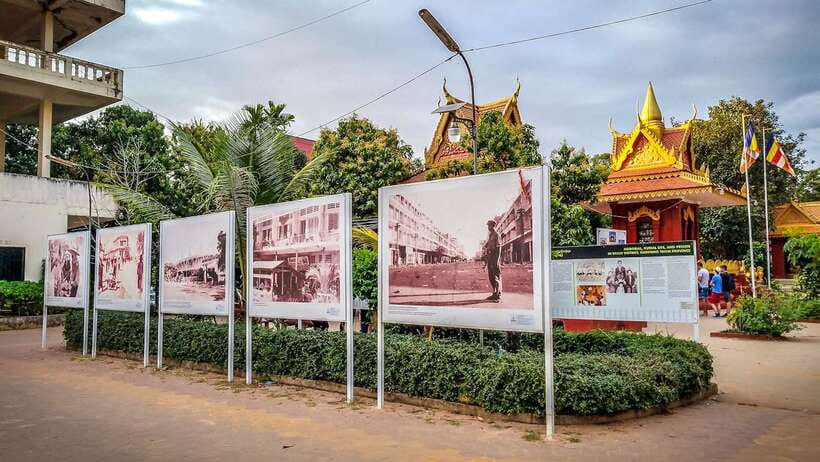
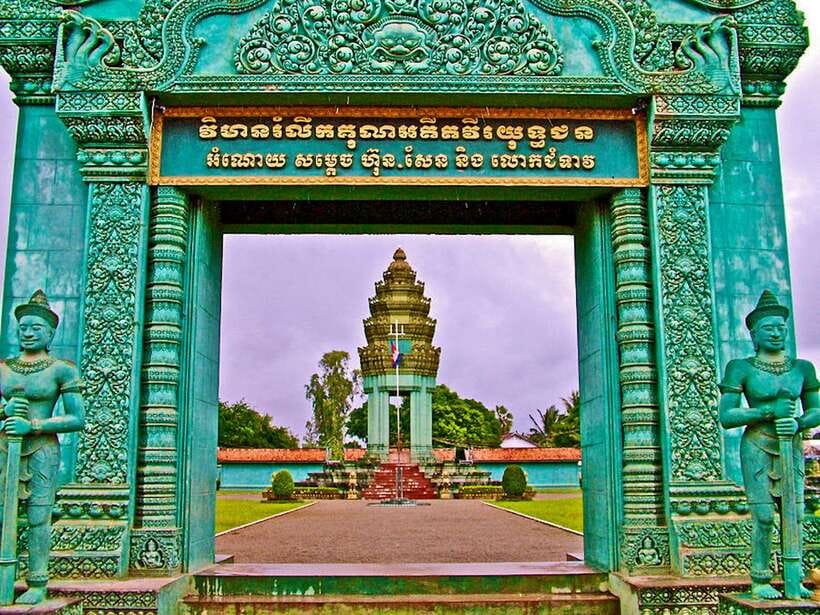
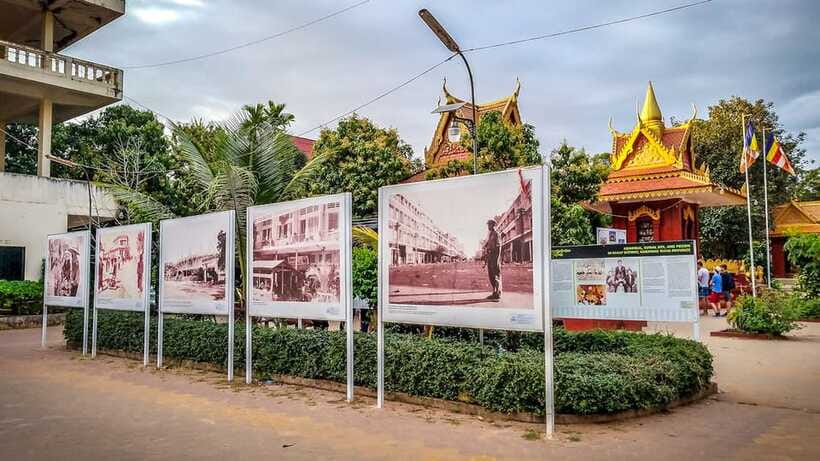
Wat Thmei is a temple site in Siem Reap connected with the Killing Fields of the Khmer Rouge period. The visit lasts about two hours, making it the longest stop of the day.
This is a place for quiet attention. The site is described as heavy and sad, but also educational. You can expect your guide to provide context for what happened during one of Cambodia’s most devastating periods, rather than simply pointing out a memorial and moving on.
That guidance matters. A place connected to mass violence can be difficult to understand when you are seeing it without background. With an English-speaking guide, you can ask questions and connect the site to the wider story of Cambodia’s war and recovery.
I appreciate that Wat Thmei is part of a local Siem Reap visit rather than a distant historical detour. It shows how the Khmer Rouge period affected communities close to where people live today. At the same time, you should not expect a polished museum experience. The value is in the setting, the explanation, and the chance to pay attention.
Show respect here. Keep your voice low, listen to the guide, and remember that this is a memorial site, not simply another stop for photographs. Flash photography is not allowed anywhere on the activity.
The Cambodia Landmine Museum and the war that did not end
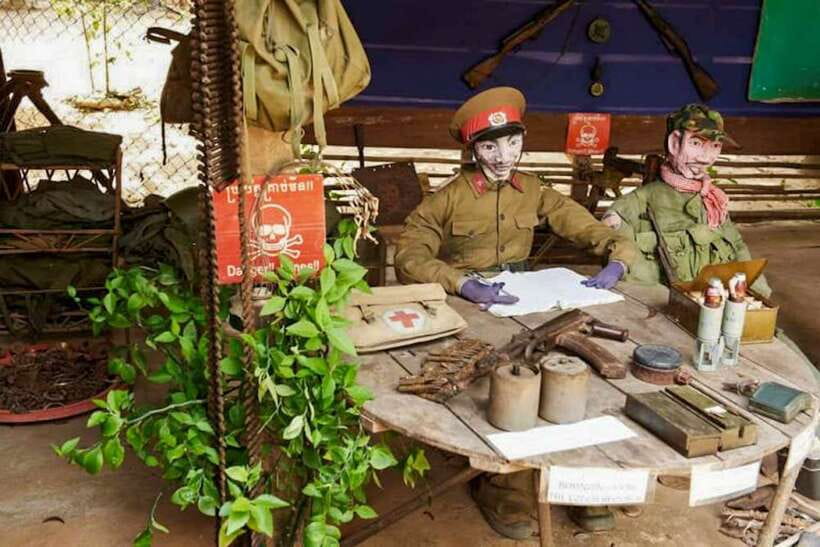
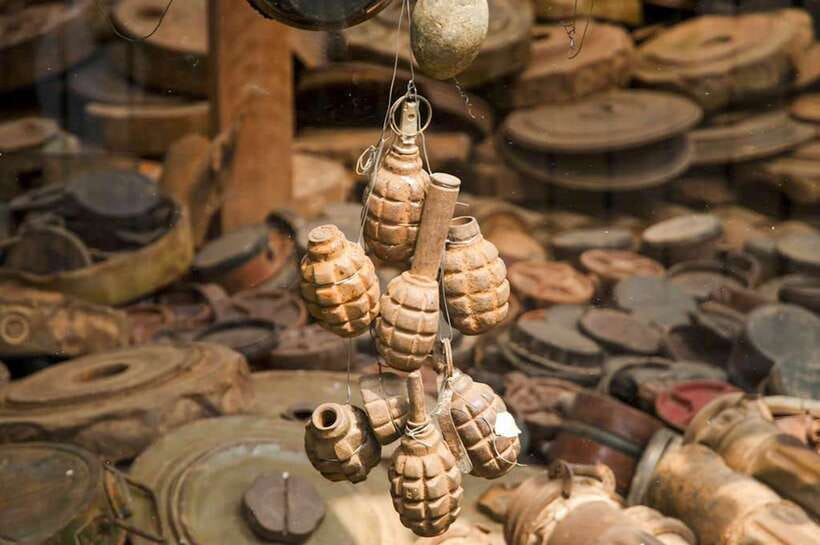
The Cambodia Landmine Museum receives about an hour and a half. It was established by a former child soldier and contains thousands of decommissioned landmines and other weapons.
That origin gives the visit a personal angle. The museum is not only about the period when fighting took place. It is also about what happens after wars officially end, when dangerous devices remain in the ground and continue to threaten communities.
For me, this is one of the most useful stops because it moves the subject from past tense into the present. You will learn about the harm caused by landmines and the wider effort to remove these weapons. The museum also explains how you can help support the work of clearing these remnants of war.
The collection may be confronting. You are looking at objects designed to injure or kill, even though the examples on display have been taken out of service. Your guide can help separate the technical details from the human consequences.
The stop includes a guided visit and walking time. Wear something comfortable for a day that combines indoor and outdoor movement, although the supplied information does not give a detailed description of the walking surfaces. Cold water and a wet towel are provided, a small but welcome touch in Cambodia’s heat.
War Museum Cambodia: weapons with places attached
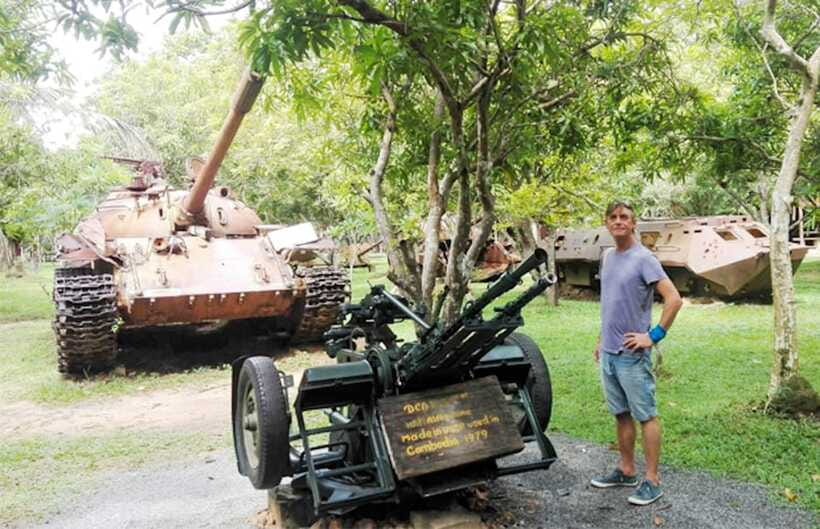
War Museum Cambodia gives you about an hour and a half to examine weapons gathered since 1999 from areas where fighting took place. The collection includes material connected with Anlong Veng, Siem Reap, and Oddar Meanchey.
This is not just a room of anonymous military hardware. The location attached to each object helps you understand that Cambodia’s conflicts were fought in real places, among real communities. Your guide explains the different pieces and places them within Cambodia’s complex conflict history.
I find this stop valuable after the Landmine Museum because it widens the frame. The Landmine Museum shows one especially destructive form of warfare. The War Museum shows a broader collection of weapons and equipment, helping you see how conflict operated at a larger scale.
Still, the museum may be less emotionally direct than Wat Thmei. If you are mainly interested in personal stories and memorials, the weapon collection may feel more factual. If you want to understand the tools of war and how different conflicts shaped the country, it adds useful detail.
The visit includes guided sightseeing and walking. Flash photography is not allowed, so keep your camera settings respectful and follow the guide’s instructions.
Same base, a different kind of day out:
- Angkor Wat Sunrise or Sunset Tour with Guide from Siem Reap
★ 5.0 · 12,109 reviews - Siem Reap: Angkor Wat: Small-Group Sunrise or Sunset Tour
★ 5.0 · 9,444 reviews - From Siem Reap: Kampong Phluk Floating Village Tour by Boat
★ 4.9 · 6,979 reviews - Sunset tour of Kampong Phluk stilts home village on the Tonle Sap
★ 5.0 · 4,865 reviews
How the eight-hour schedule works
The day begins with hotel pickup in Krong Siem Reap. You are asked to wait in the hotel lobby 20 minutes before the scheduled pickup time, which gives the driver a clear chance to find you without a last-minute scramble.
The published route lists the Cambodia Landmine Museum first, followed by a drive of about one hour to War Museum Cambodia. After another drive of about one hour and a further 45-minute vehicle segment, you visit Wat Thmei for around two hours. A final drive of about 30 minutes brings you back to Siem Reap.
The exact order may be worth confirming when you book or when your guide collects you, since the day’s routing can depend on the pickup plan. The key point is that the transport takes a meaningful part of the eight hours. You are not spending the entire day walking through exhibits.
That travel time has a mixed effect. It can make the day feel long, especially when combined with serious subject matter. But it also gives you space to pause between stops. After Wat Thmei, the ride back to your hotel may be useful quiet time.
A minivan is used for the tour. No group size is provided, so I would not book this expecting a private outing unless that is confirmed separately. The guide and driver handle the transfers, leaving you free to focus on the sites rather than arranging separate transport.
What the $78 price really covers
At $78 per person, this is not the cheapest way to spend a day in Siem Reap. The price makes more sense if you value a planned route and historical explanation.
Included are hotel pickup and drop-off, an English-speaking guide, museum entry fees, cold water, and a wet towel. Those inclusions remove several small costs and make the day easier to manage. You also avoid arranging transport between three sites that are not all in the same part of town.
Food and soft drinks are not included. Plan for that when deciding how the day fits your schedule. The supplied details do not specify a meal stop, so do not assume lunch is part of the outing.
The strongest part of the value is the guide. Sok Vuthy is described as experienced and well informed, while Buth Veasna is noted for strong subject knowledge and passion when explaining the material. Those qualities matter more here than they would on a simple sightseeing loop. Cambodia’s modern history has many layers, and a good guide can make the information easier to follow without turning the day into a lecture.
The price is easier to justify for a first visit to Siem Reap, for visitors who do not have their own transport, and for anyone who wants the three locations connected into one story. If you prefer to move slowly, eat at your own pace, or spend a full day at one museum, a self-arranged plan may suit you better.
Who should take this tour?
I would recommend it to adults and older children who can handle serious historical material. It suits people who want more than Angkor-era temples and are ready to learn about the country’s recent past.
It is also a practical choice for anyone staying in Siem Reap without a car or motorbike. Pickup and return are included, and the route covers three substantial sites in one day.
You should think twice if you want a relaxed holiday outing. The topic is painful, and the day contains long vehicle transfers. It may also be a poor fit if you want detailed temple architecture, food experiences, or a broad general tour of Siem Reap. This activity has a clear focus: conflict, loss, weapons, and recovery.
The tour is listed as wheelchair accessible. Since the supplied information does not describe the exact surfaces or access arrangements at each stop, it is sensible to confirm the practical details before departure if you use a wheelchair.
Practical advice for a respectful visit
Wait in your hotel lobby 20 minutes before pickup. That simple step is especially useful in Siem Reap, where hotel entrances and names can be easy to confuse.
Wear comfortable clothing for walking and bring a calm frame of mind. You receive cold water and a wet towel, but food and soft drinks are your responsibility. Since no meal arrangements are listed, plan accordingly.
Listen closely at Wat Thmei and avoid treating the memorial like a casual photo stop. Flash photography is not allowed, and respectful behavior is important at every location.
I would also avoid scheduling a packed evening after the tour. You may want time to think, write notes, or talk quietly about what you learned. The day aims to show both the horror of conflict and Cambodia’s ability to recover, but that message is best understood when you are not rushing straight into another activity.
Should you book this Siem Reap history tour?
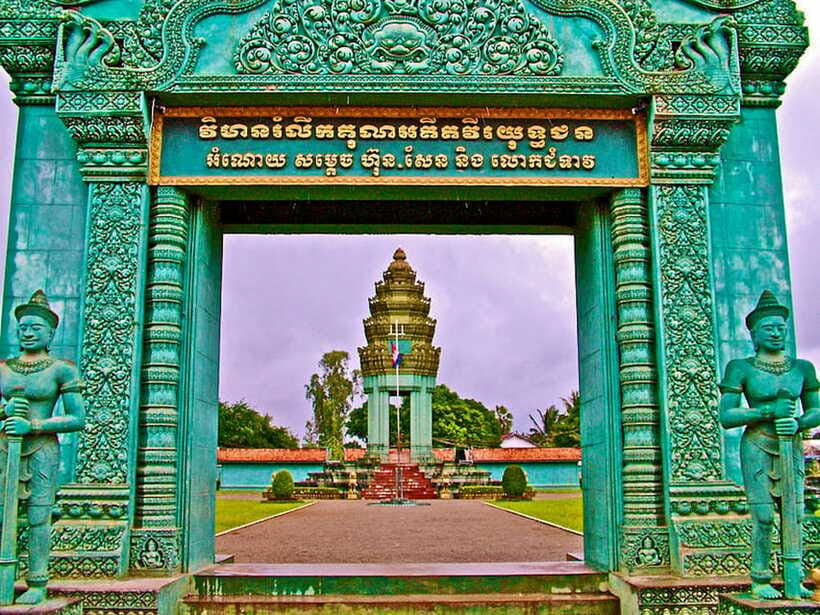
Book it if you want a guided, organized look at Cambodia’s Khmer Rouge period, the continuing damage caused by landmines, and the weapons used in the country’s conflicts. The combination of Wat Thmei, the Landmine Museum, and War Museum Cambodia gives you three useful angles in one day.
The $78 cost is fair for the included transport, entry fees, guide, and refreshments, especially if you would otherwise need to arrange several separate trips. The English-speaking guides, including Sok Vuthy and Buth Veasna, are an important part of the value.
Skip it if your priority is a light day, flexible meals, or a short outing. This tour asks for attention and emotional energy. For the right visitor, it offers an honest look at Cambodia’s painful past and its continuing work toward a safer future.
FAQ
Where does the tour take place?
The tour takes place in Siem Reap Province, Cambodia, with pickup and drop-off in Krong Siem Reap.
How long does the tour last?
The activity lasts eight hours.
What sites are included?
The tour includes the Cambodia Landmine Museum, War Museum Cambodia, and Wat Thmei.
Is hotel pickup included?
Yes. Hotel pickup and drop-off in Krong Siem Reap are included.
What language does the guide speak?
The live tour guide speaks English.
Are museum entry fees included?
Yes. Museum entries are included in the tour price.
Is food included?
No. Food and soft drinks are not included.
What refreshments are provided?
Cold water and a wet towel are included.
Is flash photography allowed?
No. Flash photography is not allowed.
Can I cancel the tour for a refund?
You can cancel up to 24 hours in advance for a full refund.
Do I have to pay at the time of booking?
No. The reserve now and pay later option lets you book without paying immediately.
Just added in Siem Reap
- Twilight Tastes of Siem Reap Include Dinner★ 5.0 · 13 reviews
- Ultimate Sunrise to Angkor Wat, Angkor Thom and Bayon Temple★ 5.0 · 3 reviews
- Trekking Tour at Phnom Kulen National Park from Siem Reap★ 5.0 · 3 reviews
- Full-Day Private Tour of Angkor Wat with Pick Up★ 5.0 · 12 reviews
- Private Day Trip to Angkor Temples with Expert Guide★ 5.0 · 4 reviews
- Siem Reap City Tour with War Museum and Killing Field★ 5.0 · 27 reviews
- Waterfall & River of 1000 Siva Linga- Kulen Mountain Private Tour★ 5.0 · 3 reviews
- Angkor Wat Experience Temple Pass and Siem Reap Food Tour★ 5.0 · 13 reviews
Museums, compared.
Killing field and Toul Sleng genocide museum Tour
Read our review →
Private Half Day To Killing Field & S21 Genocidal Museum in Phnom Penh
Read our review →
Tuol Sleng Genocide Museum (S-21) and Choeung Ek Killing Fields Tour
Read our review →
Phnom Penh City Tour, Silver Pagoda, Genocide Museum, Killing Fields
Read our review →
Bantey Srei, Kbal Spean and Landmine museum Private Tuk-Tuk
Read our review →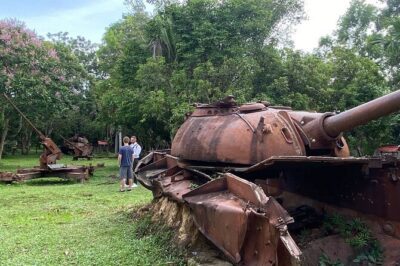
Siem Reap City Tour with War Museum and Killing Field
Read our review →
Khmer Rouge, genocide museum &killing field tour
Read our review →
Private Tour: HERO Rats & Angkor National Museum
Read our review →Browse the lists this tour appears in