
Reviewed · KILLING FIELDS & GENOCIDE MUSEUM TOURS
War Museum, Killing Field, and APOPO Hero RATs Tour
Cambodia’s recent past comes into sharp focus on this five-hour Siem Reap tour, which links military relics, the Wat Thmey memorial, and APOPO’s remarkable landmine-detecting rats. The shift from sorrow to practical hope gives the day its shape, and guides such as Somra and Londgy have been praised for making the history clear and personal.
I like the private air-conditioned transport, since you can move between several sites without wasting time arranging tuk-tuks. I also like the unusual mix of places: Satcha introduces living Cambodian craft, while APOPO offers a memorable look at animals doing serious lifesaving work. The main consideration is emotional weight. The War Museum and Killing Field can be difficult, and lunch is not included.
Key points to know before you book

- Five stops in about five hours: The schedule covers the War Museum, Wat Thmey, APOPO, Satcha, and the Royal Residence.
- A private tour: Only your group participates, with hotel pickup and drop-off in an air-conditioned vehicle.
- The strongest educational visit: APOPO explains how African giant pouched rats locate landmines, with petting optional.
- A serious look at Cambodia’s past: Expect military equipment, memorials, and reminders of Khmer Rouge-era suffering.
- Crafts add a useful local angle: Satcha supports and trains Cambodian artisans through long-term programs.
- Plan for your own meal: Lunch is not included, and the food portion of the tour is not laid out in detail.
Why this half-day route works

This is not a light sightseeing loop. It deals with war, genocide, unexploded landmines, and the work still being done to make Cambodia safer. That makes it a good choice if you want more than temple photographs during your time in Siem Reap.
The route also avoids becoming one long memorial visit. After the sober first stops, APOPO introduces a practical and hopeful subject. Satcha then turns your attention to present-day Cambodian skill and enterprise. The Royal Residence provides a final glimpse of the city’s royal and colonial-era setting.
At $75 per person, the value depends partly on your group size. You receive hotel pickup and drop-off, an English-speaking guide, private transport, and entrance fees for the War Museum, Killing Field, and APOPO Visitor Center. For one or two people, that convenience may justify the price more easily than arranging each stop alone. A larger group can spread the cost across the party.
The tour is listed at about five hours, though five stops and driving between them leave little room for long pauses. I would treat it as a focused half-day, not a leisurely day of wandering. The overview also refers to local street food and artisan culture, but the scheduled stops do not specify a separate food tasting or meal. Do not book this expecting lunch to be built in.
Other history you should not skip in Siem Reap:
- Siem Reap City Tour with War Museum and Killing Field
★ 5.0 · 27 reviews - War Museum, Killing Field and Floating village ( Chong Kneas) Tour
★ 5.0 · 14 reviews - Half Day War Museum Siem Reap Killing Fields and Artisans Angkor
★ 4.0 · 9 reviews
War Museum Cambodia: a direct look at wartime remains
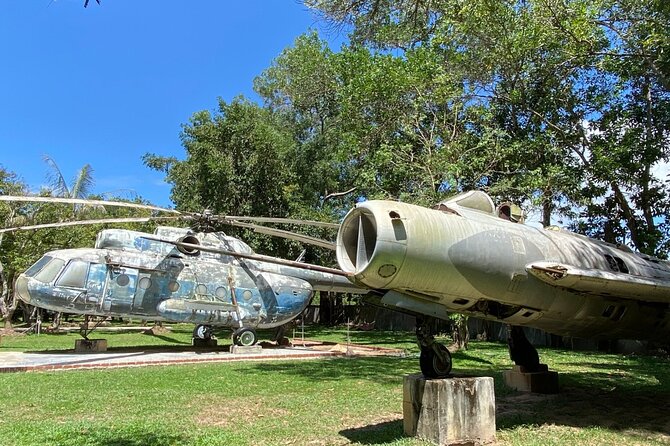
Your first major stop is the War Museum Cambodia on National Road 6, between central Siem Reap and the international airport. The museum occupies more than two hectares and was founded in 2001. You have about 90 minutes here, and the admission fee is included.
The appeal is the physical nature of the collection. You can expect military equipment and other wartime remains displayed outdoors, including the rusting pieces that make the setting feel less polished than a modern indoor museum. That roughness is part of the experience. These are not distant textbook images. They are large, tangible reminders of the wars that shaped Cambodia.
You should give yourself time to listen to the guide rather than simply walk among the exhibits. The site’s meaning comes from context: what the equipment was used for, how conflict affected Cambodia, and how the country continues to live with the consequences. Guides Somra and Londgy have been singled out for clear explanations and passionate storytelling, so a strong guide can make a real difference here.
This stop is not designed as entertainment. Some displays may feel confronting, especially if you have little background on Cambodia’s modern past. I would avoid rushing through it with a camera-first attitude. The best use of the 90 minutes is to pause, ask questions, and let the guide connect the objects to Cambodian life.
Wat Thmey and the Killing Field memorial

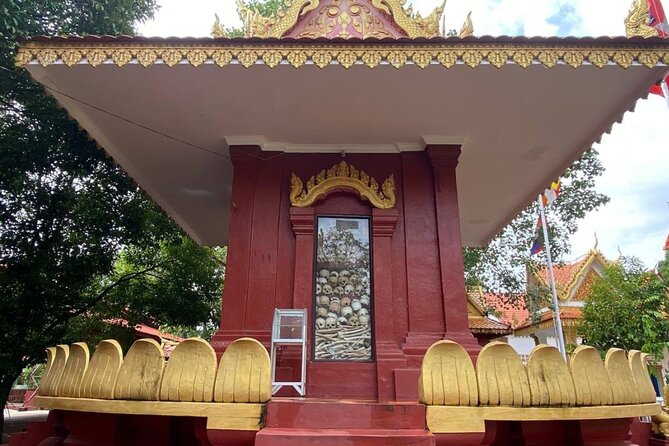
The next stop is Wat Thmey, a functioning Buddhist pagoda that also contains a memorial to victims of the Khmer Rouge regime. You have about 40 minutes here, and admission is included.
The site is smaller than the War Museum, but its scale does not make it less important. The memorial setting asks you to slow down and consider the people behind the numbers. Because it is within a working pagoda, the visit also shows how remembrance exists alongside everyday religious life in Cambodia.
This can be the most emotionally difficult portion of the tour. The War Museum presents the machinery of conflict, while Wat Thmey brings the human cost closer. You may find the visit quiet and sobering rather than visually dramatic, which is exactly why it deserves respectful attention.
Wear clothing suitable for a Buddhist religious site, and keep your manner subdued. The tour allows 40 minutes, enough for an explanation and a thoughtful look, but not for a long visit to the wider pagoda grounds. If you are traveling with children, this is a good point to decide how much detail is appropriate. One family brought a 12-year-old daughter, and the tour was described as educational and sensitive, but every child responds differently to memorial sites.
APOPO HeroRATs: the day’s most unusual stop
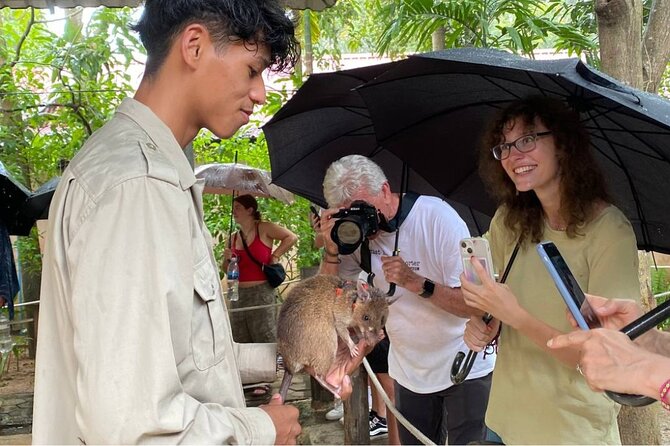
APOPO Visitor Center is the tour’s most distinctive stop. You spend about an hour learning how specially trained African giant pouched rats detect landmines and help save lives in Cambodia and other countries.
The idea sounds almost comic until you understand the task. These rats are trained to identify the smell of explosive materials. Their light weight is useful because they can move across ground without triggering many mines, and their work helps locate dangerous areas for clearance. The visit gives you a practical view of how an organization addresses a problem left by decades of war.
The center is educational, but it is also memorable because the animals themselves are part of the presentation. Petting the rats is optional, so you can enjoy the demonstration without handling one. That small detail matters if you are interested in the work but not comfortable with close contact with animals.
I would place this stop in the middle of the tour for a reason. After the difficult memorial visits, APOPO offers a clear example of problem-solving in the present. It does not erase Cambodia’s past, but it shows how people and organizations are working with the country’s remaining dangers.
This is also where a good guide can help you connect the dots. The War Museum and Wat Thmey explain why landmines remain such a serious issue. APOPO shows one method used to find them. The experience has a strong educational payoff without requiring you to be an expert in military history.
A few more things to do in Siem Reap worth a look
- Bantey Srei, Kbal Spean and Landmine museum Private Tuk-Tuk
★ 4.7 · 30 reviews - Private Tour: HERO Rats & Angkor National Museum
★ 4.5 · 16 reviews - Kbal Spean Trekking Tour with Banteay Srei and Landmine Museum
★ 5.0 · 14 reviews - Siem Reap: War Museum included Ticket and Pickup Drop Off
★ 4.9 · 12 reviews
Satcha: meeting Cambodia’s craft economy

Satcha, at #256 BBU Road, is Cambodia’s first handicraft incubation center. It opened in March 2023 and gives local artisans training and support through intensive, multi-year programs. Your visit lasts about 40 minutes.
This stop changes the pace. Instead of looking at the physical remains of war, you see current Cambodian craft and the effort to build sustainable careers for makers. The center’s purpose is not simply to display attractive objects. It trains artisans and helps develop their work, which gives the visit more substance than a quick souvenir-shop stop.
You might find this the most useful place to buy something, if shopping is part of your plans, because the setting links purchases with local production. Still, the provided schedule does not promise a particular workshop, product range, or hands-on activity. Go expecting an introduction to the center and its artisan programs, not a guaranteed craft lesson.
The 40-minute slot is short. If you are serious about shopping or want a longer look at Cambodian handicrafts, you may need a separate visit. On this tour, Satcha works best as a compact bridge between the difficult history stops and the Royal Residence.
Royal Residence: a brief royal landmark

The Royal Residence, or Preăh Réachôdâmnăk, is a royal villa built in 1904. It serves as the official residence of Cambodia’s king when he visits Siem Reap and has links to the period of the French protectorate.
The tour allows about 30 minutes here. That is enough for an introduction and a look at the site, but not enough for an extended architectural visit. The information provided does not state that you enter the residence, so you should not assume an interior tour. Think of this as a brief landmark stop rather than a full palace museum experience.
Its value comes from contrast. After the War Museum, Wat Thmey, APOPO, and Satcha, the Royal Residence adds a glimpse of Cambodia’s royal institutions and early twentieth-century setting. It rounds out the day without asking you to absorb another heavy subject.
If you have already visited major royal sites elsewhere in Cambodia, this may feel like the least substantial stop. If you are new to Siem Reap, it helps place the city within a wider political and architectural story.
What the private format adds
This is a private activity, so only your group participates. That gives you more control than a large bus tour. You can ask the guide to explain a difficult point again, spend a little longer at an exhibit, or keep moving if a stop has made its point.
The included vehicle is air-conditioned, an important comfort in Siem Reap’s heat. Pickup and drop-off at your hotel also remove the need to find each location yourself. Since the route crosses different parts of the city and includes a stop along National Road 6, that transport is more than a minor convenience.
The guide is central to the experience. English-speaking guides Somra and Londgy have been praised for making the historical material understandable and for bringing energy to a serious subject. You cannot request either name based on the information provided, but it is worth asking at booking if a particular guide matters to you.
The tour is described as suitable for most people and near public transportation, but it is still a site-to-site outing with several stops. If you have mobility concerns, ask the operator for current details before booking. No special accessibility information is provided.
Food, timing, and what to bring

The promotional description connects the experience with Siem Reap street food, but lunch is specifically excluded and the scheduled stops do not list a restaurant or fixed tasting. I would eat before departure or carry money for food afterward. If food is a main reason you are considering the tour, ask Angkor Daily Trip exactly what, if anything, is included.
Five hours is a useful length for a morning or afternoon. It gives you a concentrated look at several important places without taking an entire day away from Angkor Wat. At the same time, the schedule is fairly full. The listed stop times total about four hours and 20 minutes, leaving only a limited margin for transfers and unexpected delays.
Bring water, sun protection, and respectful clothing for Wat Thmey. You will want comfortable footwear because the sites are not a single compact museum complex. A phone or camera can be useful, but the memorial portions call for restraint and attention.
The cancellation terms are forgiving if your plans change: you can receive a full refund when cancelling at least 24 hours before the start time. Changes or cancellations inside that window are not accepted for a refund.
Who should book this Siem Reap tour?
I would recommend it to you if you want a guided introduction to Cambodia’s recent past and present-day recovery efforts. It suits first-time visitors who want context beyond the temples, families with older children who can handle serious subjects, and anyone curious about APOPO’s unusual work.
It is also a good fit if you value door-to-door transport and prefer a private outing. The combination of museum, memorial, HeroRATs, crafts, and royal architecture gives you a broader picture of Siem Reap than a single museum visit can provide.
I would think twice if you want a relaxed food tour, a long shopping session, or a detailed palace visit. The food element is not clearly scheduled, lunch costs extra, and each stop receives a limited amount of time. The emotional material may also feel too heavy for some visitors.
Should you book it?
Book this tour if you want a serious, unusual half-day that explains both Cambodia’s painful past and some of the practical work shaping its future. The APOPO HeroRATs visit is the standout idea, while the War Museum and Wat Thmey provide the necessary context.
At $75 per person, it is most appealing when you value a private guide, included admissions, hotel transport, and a carefully linked route. Ask about the food portion and guide assignment before paying, and plan your own lunch. If those details suit you, this is a thoughtful way to spend five hours in Siem Reap.
FAQ
How long does the tour last?
The tour lasts approximately five hours.
Is this a private tour?
Yes. Only your group participates in the activity.
Is hotel pickup and drop-off included?
Yes. Hotel pickup and drop-off are included, along with an air-conditioned vehicle.
Which entrance fees are included?
Admission to the Siem Reap War Museum, the Killing Field, and the APOPO Visitor Center is included.
Is lunch included?
No. Lunch is not included in the tour price.
Can I pet the HeroRATs at APOPO?
Petting the rats is optional. You can visit the center and learn about their work without handling them.
What is the cancellation policy?
You can cancel for a full refund if you do so at least 24 hours before the experience start time. Cancellations or changes made less than 24 hours in advance are not accepted for a refund.
Just added in Siem Reap
- Twilight Tastes of Siem Reap Include Dinner★ 5.0 · 13 reviews
- Ultimate Sunrise to Angkor Wat, Angkor Thom and Bayon Temple★ 5.0 · 3 reviews
- Trekking Tour at Phnom Kulen National Park from Siem Reap★ 5.0 · 3 reviews
- Full-Day Private Tour of Angkor Wat with Pick Up★ 5.0 · 12 reviews
- Waterfall & River of 1000 Siva Linga- Kulen Mountain Private Tour★ 5.0 · 3 reviews
- Private Day Trip to Angkor Temples with Expert Guide★ 5.0 · 4 reviews
- Siem Reap City Tour with War Museum and Killing Field★ 5.0 · 27 reviews
- Angkor Wat Experience Temple Pass and Siem Reap Food Tour★ 5.0 · 13 reviews
Killing Fields & Genocide Museum Tours, compared.
Killing field and Toul Sleng genocide museum Tour
Read our review →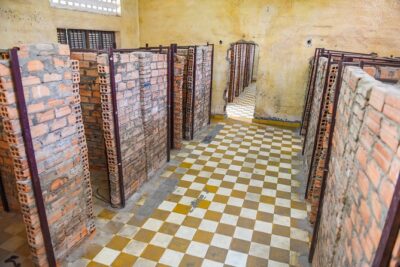
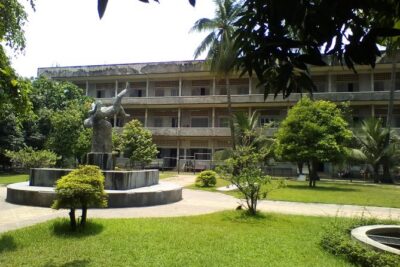
Private Half Day To Killing Field & S21 Genocidal Museum in Phnom Penh
Read our review →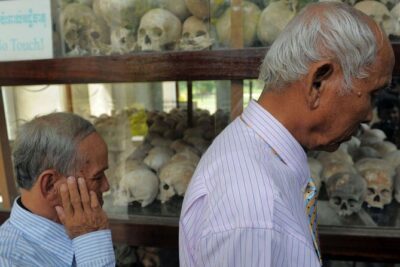
Tuol Sleng Genocide Museum (S-21) and Choeung Ek Killing Fields Tour
Read our review →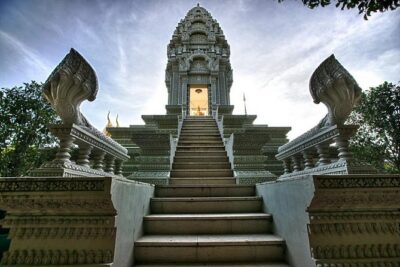
Phnom Penh City Tour, Silver Pagoda, Genocide Museum, Killing Fields
Read our review →
A Full Day Tour for Royal Palace, S21, Killing Fields & More
Read our review →
Full-Day Phnom Penh Sightseeing Tour & Killing Field
Read our review →
10 Stop Phnom Penh Tour by Tuk-Tuk, includes S21 & Killing Fields
Read our review →Browse the lists this tour appears in