
Reviewed · HISTORICAL TOURS
2 Days Guided Historical Tour in Angkor
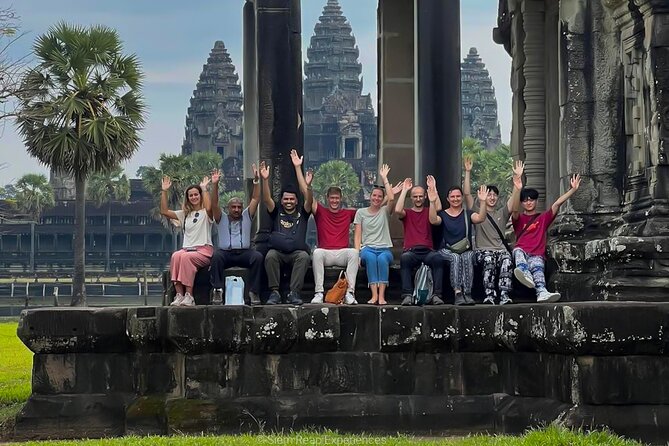
Angkor Wat at sunrise is the hook, but the real strength of this tour is the wider circuit. Over two days, you visit the headline temples, smaller ruins, forest-framed sites, and sunset viewpoints with a guide who can connect stones, kings, religion, and daily life. Sam, Vone, Sok, and Heang are among the guides praised for clear explanations, humor, patience, and a knack for answering questions.
I like the small maximum of 15 people, which gives the guide room to help with photos and questions. I also like the practical touches: air-conditioning, cold water, wet towels, and regular toilet breaks matter greatly in Cambodia’s heat. The main drawback is the very early 4:30 a.m. start, plus the separate $62 temple pass, meals, and the amount of walking.
Key points before you book
- Angkor Wat sunrise begins at 4:30 a.m. Hotel pickup gets you moving before the crowds and heat build.
- Two days cover the main circuit and quieter temples, including Bayon, Ta Prohm, Preah Khan, Ta Som, and Neak Pean.
- Guides add much more than transport, with stories about Khmer kings, Buddhist and Hindu beliefs, architecture, and Cambodian history.
- The group is limited to 15 people, a useful middle ground between a private tour and a large coach.
- Cold water, wet towels, air-conditioning, and hotel drop-off are included, but food and the $62 entrance pass are not.
- Day two ends with a sunset stop at Phnom Bakheng, although the listed visit time there is only two minutes.
Why this two-day Angkor plan works
You can see Angkor Wat alone with a tuk-tuk and a map. But the complex is not simply a collection of old buildings. Its gates, towers, carvings, reservoirs, causeways, and galleries make more sense when someone explains how they fit into Khmer royal power and religious life.
This plan gives you a clear first day with the best-known sights, then uses day two for less-visited places. That rhythm is useful. You get the famous images early, including the sunrise and Ta Prohm’s tree-covered ruins, then have more space to look closely at smaller temples without feeling that every stop must be a photo contest.
The advertised route covers 11 temples over two days. The detailed schedule names Angkor Wat, Angkor Thom South Gate, Bayon, Ta Keo, Ta Prohm, Pre Rup, Ta Som, Neak Pean, Preah Khan, and Phnom Bakheng, with Angkor Thom treated as the wider ancient city around its South Gate and Bayon. In practical terms, expect a full temple circuit rather than eleven equally large visits.
A few more things to do in Siem Reap worth a look
- Siem Reap: Banteay Srei and Grand Circuit Heritage Tour
★ 4.9 · 163 reviews - Banteay Srei and Grand Circuit Heritage Tour from Siem Reap
★ 5.0 · 142 reviews - Bokor Mountain Adventure – History, Sights and Waterfalls
★ 5.0 · 65 reviews
Day one: sunrise, royal faces, and Ta Prohm
Angkor Wat before breakfast
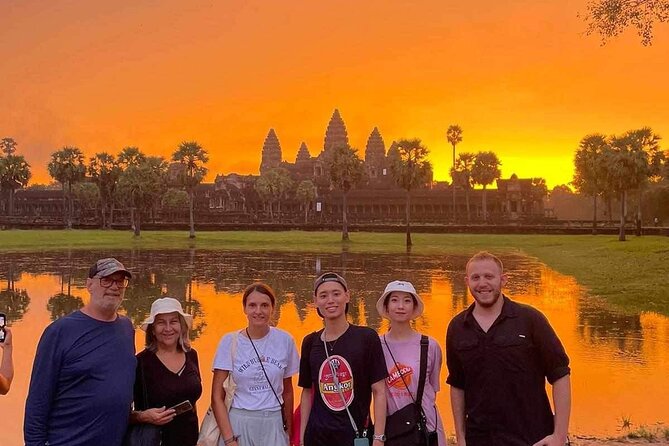
Pickup begins at about 4:30 a.m. You head first to Angkor Wat to watch the sunrise, then enter the temple complex with the guide. The schedule allows about two hours here, though the exact pace can depend on the morning light, crowds, and how long your group spends at key areas.
Sunrise is the tour’s most dramatic opening. It also makes practical sense. The first light gives the towers a changing outline, and the cooler early hours are far easier for walking than midday. Bring a small flashlight if you have one, since the approach begins in darkness. The tour information says one is provided, but having your own can still be useful.
Do not expect the sunrise alone to tell you what Angkor Wat means. The guide’s explanation is the valuable part. You can learn how the temple’s layout reflects sacred ideas, then have time to explore and take photographs. Several guides, including Sam and Vone, are praised for giving enough information without filling every minute with talk.
The entrance pass is not included. The stated price is $62 per person for the temple ticket, separate from the $35 tour price. That makes the basic combined cost $97 before meals, so keep the full budget in mind when comparing tours.
Angkor Thom South Gate and its stone guardians
After Angkor Wat, the route moves to the South Gate of Angkor Thom. The stop lasts about 30 minutes and focuses on the 12th-century gate, its carved faces, and the stone figures lining the causeway.
This is a short stop, but it sets up the next visit. The causeway and gate show that Angkor Thom was planned as a grand royal city, not just a temple site. Look at the figures on both sides of the water crossing and the faces above the gate. A guide can point out the difference between details that are easy to miss from a vehicle.
Because this stop is brief, you may want to ask your guide for a few minutes to take photographs before the group moves on. The route is active and timed, so this is not a place for a long, quiet wander.
Same base, a different kind of day out:
- Angkor Wat Sunrise or Sunset Tour with Guide from Siem Reap
★ 5.0 · 12,109 reviews - Siem Reap: Angkor Wat: Small-Group Sunrise or Sunset Tour
★ 5.0 · 9,444 reviews - From Siem Reap: Kampong Phluk Floating Village Tour by Boat
★ 4.9 · 6,979 reviews - Sunset tour of Kampong Phluk stilts home village on the Tonle Sap
★ 5.0 · 4,865 reviews
Bayon and its many smiling faces
Bayon receives about two hours, and that is welcome. This is one of the most visually striking parts of Angkor Thom, with enormous carved faces looking out from the temple towers. The temple was built in the late 12th or early 13th century as a state temple associated with Buddhism.
Bayon can feel confusing at first. Towers overlap, galleries turn unexpectedly, and the famous faces are not always visible from the first approach. A guide gives you a route through the layers and explains what to look for in the bas-reliefs and architecture.
I would use this stop for questions. Ask about the shift toward Buddhist imagery, the royal role of Jayavarman VII, and how the carvings differ from Angkor Wat. Guides such as Sok, Sam, and Heang are repeatedly praised for explaining the history clearly and patiently, which is especially helpful here.
Ta Keo and the breakfast break
Ta Keo is a steep temple-mountain built largely of sandstone. Before entering, the schedule allows time for breakfast at your own expense. That is a useful pause after the early start, and you should plan to eat something rather than rely on the included water alone.
The visit lasts about an hour. Ta Keo has a more severe, geometric character than Ta Prohm. Its high terraces and strong lines make it a good place to think about how Khmer builders shaped temples as symbolic mountains.
The climb can be demanding, especially after several hours of walking and an early wake-up. Wear shoes with a firm grip and take your time. The guide can explain the design, but you still have to manage the steps and heat at your own pace.
Ta Prohm, trees, and familiar movie scenery
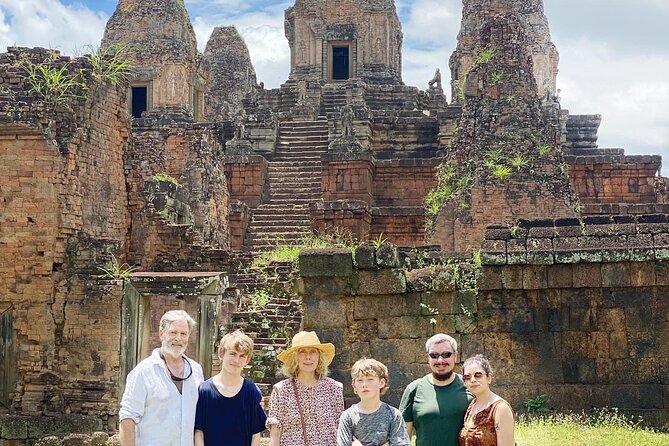
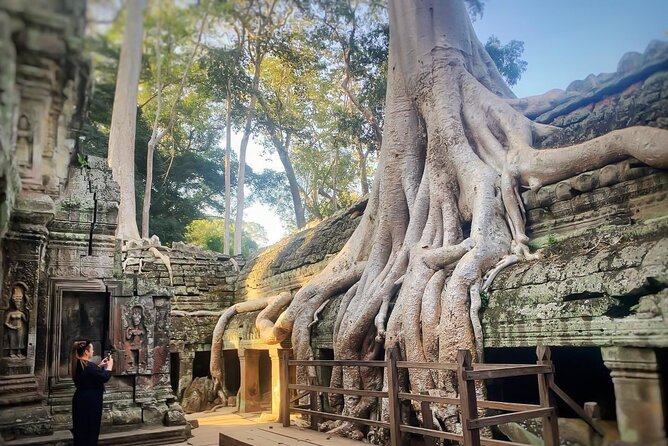
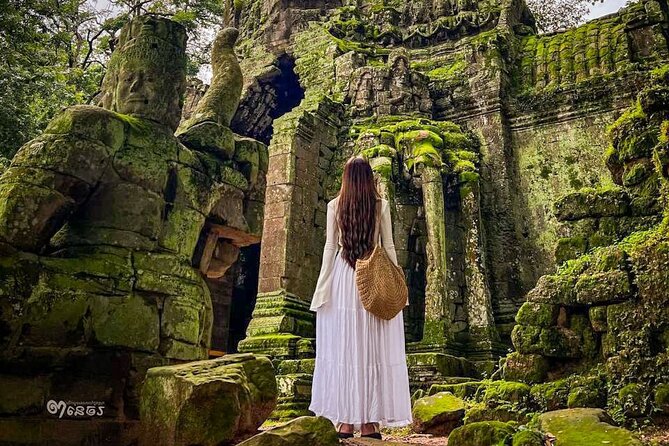
Ta Prohm gets about an hour and is likely to be one of your favorite stops. Trees wrap around walls and doorways, roots push into old masonry, and the temple feels less ordered than Angkor Wat or Bayon.
The forest setting is the attraction, but do not let it reduce Ta Prohm to a photo stop. The temple was built in the Bayon style and forms part of the large building program linked with Jayavarman VII. Your guide can help you see the carved details and explain how a religious foundation once functioned.
By this point, the heat may be noticeable. The cold water, wet towel, and air-conditioned vehicle become more than nice extras. One participant described being able to sit in the air-conditioning when the heat became too much, and that kind of flexibility is worth having on a long temple day.
Day two: quieter ruins and a sunset finish
Pre Rup and the morning temple light
Day two begins at Pre Rup, a Hindu temple built as the state temple of King Rajendravarman and dedicated in 961 or early 962. The schedule gives it about two hours.
Pre Rup is a temple-mountain made with brick, laterite, and sandstone. Its terraces and warm-colored stone can look especially good in morning light. Compared with Angkor Wat, it feels less enclosed and more direct, with broad views over the surrounding area from its upper levels.
This stop also helps you see that Angkor was built over many generations. The temples are not all from one period or one religious tradition. A good guide can place Pre Rup within the older Hindu phase of Khmer construction before the later Buddhist projects associated with Jayavarman VII.
Ta Som and a smaller-scale Angkor
Ta Som is a smaller temple built at the end of the 12th century for King Jayavarman VII. The planned visit lasts about an hour, giving you more time to look closely rather than simply pass through.
Ta Som is a welcome change after the scale of Pre Rup. Its passageways, carvings, and quieter setting make it easier to focus on details. If you enjoy photography, this is the kind of stop where patience pays off. The tree-covered stonework and narrower spaces can produce more intimate images than the grand central monuments.
The second day is designed for this slower feeling. You still cover a lot of ground, but the less famous temples may give you room to notice how each site has its own mood and plan.
Neak Pean on its artificial island
Neak Pean receives about an hour. This temple sits on a circular island in the Jayatataka Baray, an artificial reservoir associated with Preah Khan. The setting is different from the temple-mountains and enclosed galleries elsewhere on the route.
The approach across the water helps explain the engineering behind Angkor. Reservoirs were not just decorative features. They formed part of the wider system that supported the city and its religious buildings. Your guide can connect the island temple with the waterworks and the reign of Jayavarman VII.
This stop is more about the setting and layout than a huge temple interior. If water levels or conditions affect the view, the experience may feel more limited, but it remains a useful contrast within the two-day plan.
Preah Khan, the day two centerpiece
Preah Khan gets about two hours and is arguably the strongest stop on the second day. Built in the 12th century for King Jayavarman VII to honor his father, it lies northeast of Angkor Thom near the Jayatataka Baray.
The complex has long corridors, courtyards, carved details, and a sense of depth that rewards a slow walk. It is large enough to show the scale of an important religious and institutional center, yet often feels less concentrated than Angkor Wat.
This is where a good guide earns the fee. You can easily walk past a doorway or inscription without understanding its purpose. Guides including Heang, Sam, and Vone are praised for mixing historical facts with personal stories and humor, which can keep a long visit lively without turning it into a lecture.
Phnom Bakheng and the sunset question
The final listed stop is Phnom Bakheng, a Hindu temple-mountain dedicated to Shiva and built near the end of the 9th century during the reign of King Yasovarman. The tour description says the group stays for sunset, but the itinerary lists only two minutes at the site.
That mismatch deserves attention. If sunset at Phnom Bakheng is important to you, confirm the plan before booking. The short listed duration may be a formatting error, a brief stop, or a reference to the temple visit rather than the entire sunset period. Do not assume you will have a long climb and extended viewing time without checking.
Even with that caveat, the sunset finish is a fitting close to two days of monuments. You have moved from Angkor Wat’s sunrise to a later temple-mountain viewpoint, with the day’s cooler final light providing a different mood.
Guides, transport, and the pace of the days
The tour uses an air-conditioned vehicle and includes hotel pickup and drop-off in Siem Reap. The stated meeting point is Siem Reap Pub Hostel behind the Angkor Night Market, but drop-off can be arranged at your hotel or somewhere around Pub Street.
The group limit is 15. That is not private, but it is small enough for a guide to hear questions and keep track of the group. Names repeatedly associated with strong guiding include Sam, Vone, Sok, Heang, Sary, Sayon, Pheap, and Sem. Individual assignments can vary, but the common thread is a focus on temple history, Cambodian history, and practical help in the heat.
Expect walking, steps, early mornings, and long outdoor periods. One full day can feel demanding in temperatures near 40 degrees Celsius. Take the water offered, use the wet towel, and do not feel obliged to stay in the sun when the vehicle is available.
Meals are not included. Breakfast comes after Ta Keo on day one, and lunch breaks are at restaurants, with food paid separately. Clean restroom stops are built into the day, which is a small but important comfort on a route this long.
The real cost and who gets the best value
The tour costs $35 per person, but the $62 temple pass is extra. Add meals, and your likely total is higher than the headline price. Even so, the package can be good value if you want transport, a guide, hotel pickup, water, and a structured two-day route without arranging each temple yourself.
I would choose this tour if you want the main temples plus several quieter sites, and if you value explanations more than setting your own pace. It suits first-time visitors who want to understand what they are seeing, families who appreciate transport and water, and solo visitors who prefer a small group.
It is less suitable if you dislike 4:30 a.m. starts, need long unscheduled breaks, or want to spend an entire morning at one temple. One serious practical lesson comes from a reported pickup problem: make sure the guide and hotel pickup details are clear before departure. A late phone call or missed meeting can be hard to fix once the vehicle has left.
Cancellation is free up to 24 hours before the start time. Changes or cancellations inside that window are not accepted or refunded.
Should you book the two-day Angkor tour?
Book it if you want a well-covered Angkor introduction with sunrise, sunset, major temples, smaller ruins, transport, and a guide who can make the architecture understandable. The strongest features are the broad route, small group limit, and thoughtful comforts in the heat.
Before paying, budget for the $62 temple pass and meals, confirm your pickup details, and ask how long the Phnom Bakheng sunset stop will be. If you can handle the early start and steady walking, this is a practical way to see far more than Angkor Wat alone.
FAQ
How long is the tour?
The experience lasts two days, with approximately two days of temple visits in the Angkor complex.
What time does the tour start?
The stated start time is 4:30 a.m., allowing you to reach Angkor Wat for sunrise.
Is hotel pickup included?
Yes. Hotel pickup and drop-off in Siem Reap are included. Drop-off can be at your hotel or somewhere around Pub Street.
Is the Angkor temple entrance ticket included?
No. The temple ticket is separate and is stated as $62 per person.
What else is not included?
Meals are not included. You pay separately for breakfast, lunch, and other food during the two days.
How many people can join the group?
The maximum group size is 15 people.
What is provided during the tour?
The tour includes an air-conditioned vehicle, a guide, cold water, wet towels, hotel pickup, hotel drop-off, and visits to the advertised temple sites.
Which temples are visited?
The route includes Angkor Wat, Angkor Thom South Gate, Bayon, Ta Keo, Ta Prohm, Pre Rup, Ta Som, Neak Pean, Preah Khan, and Phnom Bakheng. The tour is advertised as covering 11 temples over two days.
Is the tour suitable for most people?
The supplied information says most people can participate. You should still expect substantial walking, temple steps, heat, and a very early start.
Can I cancel for a full refund?
Yes, if you cancel at least 24 hours before the experience starts. Cancellations or changes made less than 24 hours before the start are not accepted or refunded.
More 2-Day Experiences in Siem Reap
- Siem Reap: Angkor Wat 2-Day Tour with Sunrise and Sunset
★ 4.9 · 4,429 reviews - Angkor 2-Day Sunset & Sunrise Small-Group Tour
★ 5.0 · 2,567 reviews - 2 Days Exclusive Temple Highlights with Sunset and Sunrise Tour
★ 5.0 · 1,157 reviews - Siem Reap: Angkor Sunrise 1- or 2-Day Guided Temples Tour
★ 4.9 · 1,132 reviews
Just added in Siem Reap
- 1-Day Angkor Wat Private Tour with Spanish Tour Guide.★ 5.0 · 9 reviews
- Angkor Wat: Small-Group Tour with Balloon Ride and Lunch★ 4.6 · 13 reviews
- Sky Venture Microlight Siem Reap★ 4.9 · 18 reviews
- Angkor Wat plus Balloon Ride with Khmer Lunch★ 5.0 · 46 reviews
- Angkor Wat Sunrise: Exclusive Private Tour!★ 5.0 · 70 reviews
- NhumBai, The Village Experience★ 4.5 · 66 reviews
- 3-Day Angkor Wat & All Interesting Major Temples & Kulen Mount Waterfall★ 5.0 · 63 reviews
- One Full Day Private tour of Angkor Wat, Ta Prohm, Angkor Thom & Banteay Srie★ 5.0 · 64 reviews
Historical Tours, compared.
Bokor Mountain Adventure – History, Sights and Waterfalls
Read our review →Browse the lists this tour appears in