
Reviewed · TONLE SAP & FLOATING VILLAGE TOURS
Angkor Wat: Sunrise 2.5 Days Temples & Tonle Sap-Small Group
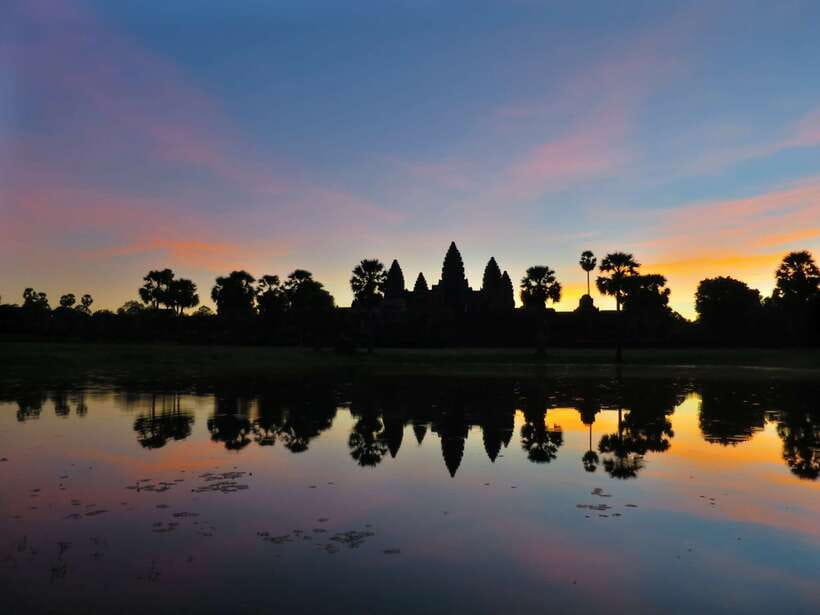
Angkor Wat at sunrise is the headline, but the real strength of this tour is the range. You see the grand temple before the heat builds, then move on to Banteay Srei’s fine carvings and the eerie roots of Ta Prohm. I also like the small group limit of 15, which gives your guide room to explain Khmer stories instead of simply pointing at stones.
The practical bonus is the care between stops. Drivers such as Keal, Ro, and Mao have been noted for cold water and fresh towels after temple walks, while guides including Pal Saruon, Sam, AJ, and Pireak bring useful context about Cambodian culture. The drawback is the pace: three early starts and long temple walks can be tiring, and the $69 price does not include the required $62 three-day temple pass or breakfast.
Key points to know before booking
- Sunrise at Angkor Wat begins before dawn and includes the temple’s eastern side, corridors, and long bas-reliefs.
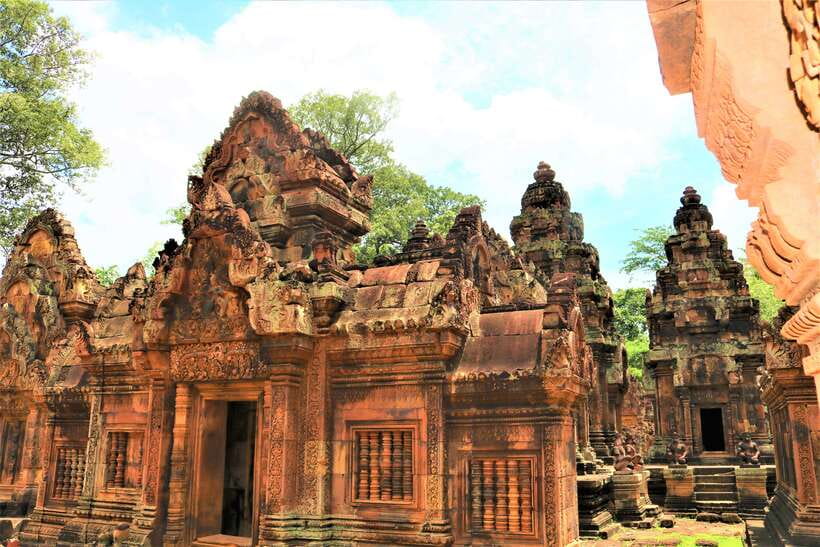
- Banteay Srei is smaller than Angkor Wat but famous for unusually detailed sandstone carving.
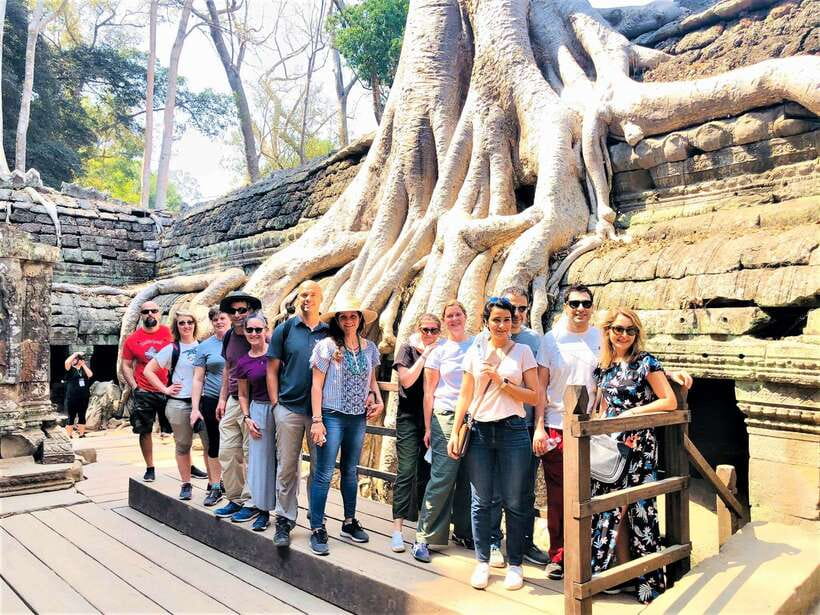
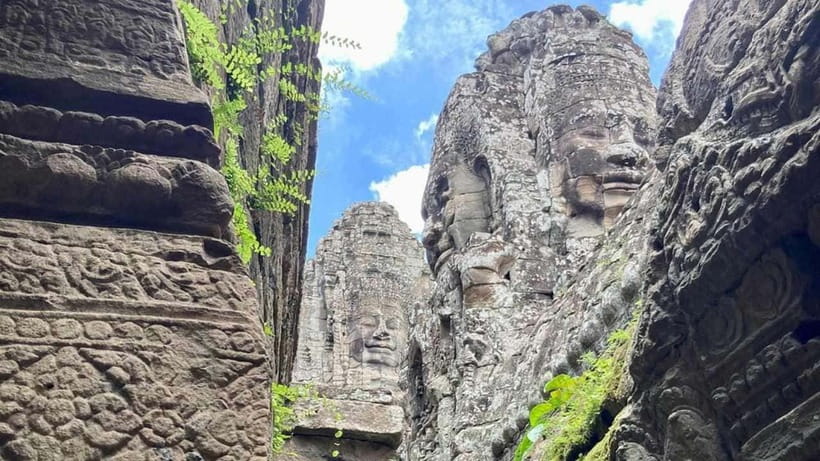
- Bayon and Ta Prohm give you two very different Angkor experiences: giant stone faces at one, tree-covered ruins at the other.
- Kampong Phluk on Tonle Sap shows stilted homes, fishing life, and a flooded forest by boat.
- Phare Circus replaces Tonle Sap from March 1 through June 31, according to the tour details.
- Cold water, towels, hotel transport, and an English-speaking guide make the hot temple days easier.
Why this 2.5-day Angkor tour works well
Siem Reap has enough temples to overwhelm even an organized visitor. You can spend days choosing between distant ruins, grand gates, small shrines, and half-restored towers. This itinerary gives you a sensible first look at the major sites while adding two experiences beyond the main Angkor circuit: Tonle Sap or Phare Circus.
The $69 tour price is good value for transport, guiding, hotel pickup and drop-off, bottled water, and the Tonle Sap boat trip or a seat at Phare Circus. But you need to budget another $62 per person for the three-day temple pass. Breakfast is also on you, so the true cost is higher than the headline figure.
The group is limited to 15 people. That is small enough for questions and easier movement than a large coach tour, though it is not a private tour. Group size can change the feel of the day, especially at sunrise, where every person wants a clear view and a good position.
Other trips out on the lake from Siem Reap:
- From Siem Reap: Kampong Phluk Floating Village Tour by Boat
★ 4.9 · 6,979 reviews - Sunset tour of Kampong Phluk stilts home village on the Tonle Sap
★ 5.0 · 4,865 reviews - Kompong Phluk Floating Village Half-Day Tour ( Morning / Sunset )
★ 5.0 · 1,494 reviews
Day 1: Pre Rup, Banteay Srei, Neak Pean, and Preah Khan
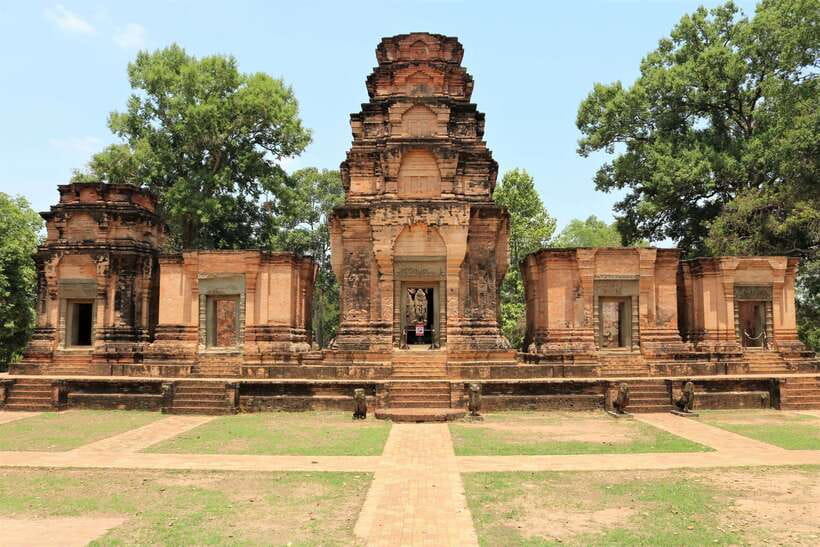
The first temple day heads away from Angkor Thom and into the wider temple area. That matters because you begin with a mix of settings and styles rather than spending every hour among the same famous ruins.
Pre Rup is a Hindu temple built as a state temple. Its stepped, mountain-like form uses brick, laterite, and sandstone. The structure feels solid and formal, with broad levels that help you understand how Khmer temple builders created height before modern machinery.
You should expect stairs and uneven surfaces. Comfortable shoes are not a minor suggestion here. They will help on every temple day, especially when stone is hot, worn, or irregular.
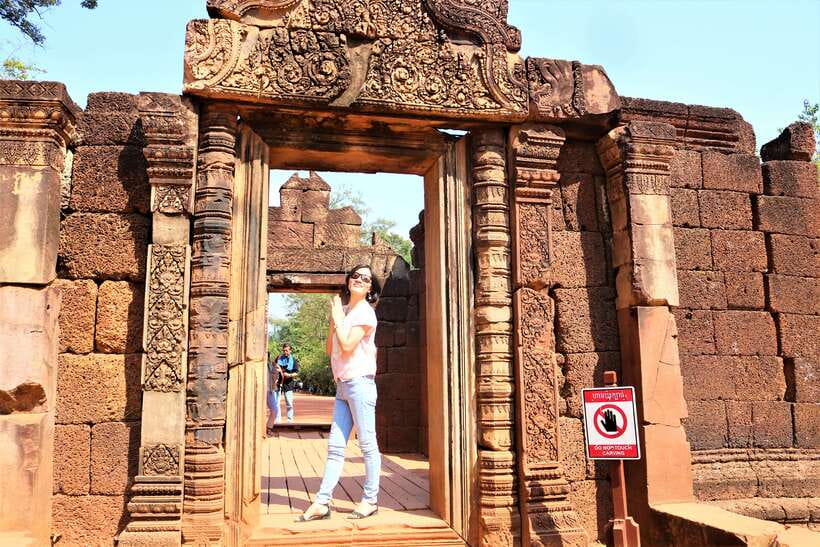
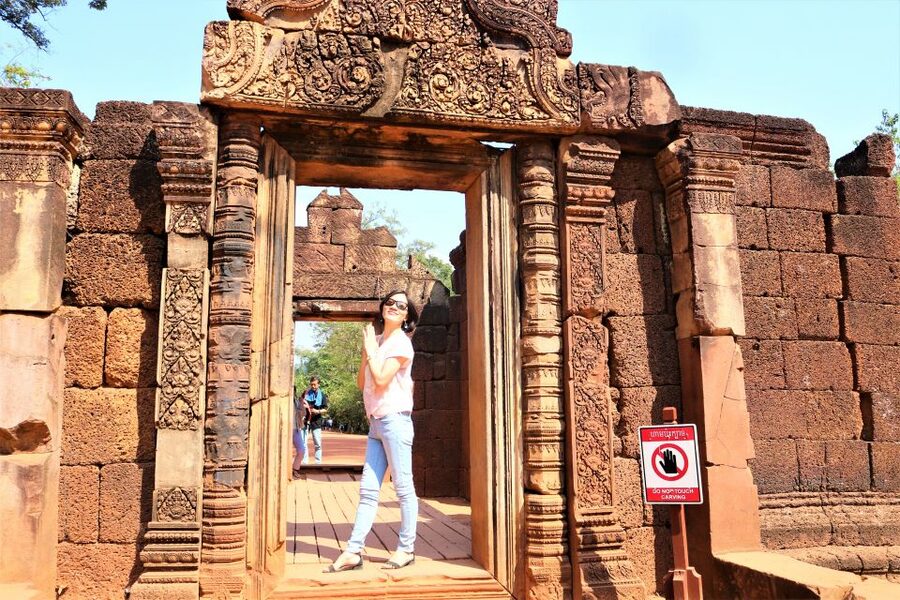
Banteay Srei is the day’s star for detail. This smaller sandstone temple is known for finely cut reliefs that remain remarkably clear. The scale is more intimate than Angkor Wat, and the decoration rewards a close look rather than a distant view.
Your guide can help you read the Hindu stories and carved figures instead of treating the walls as decoration alone. The site only became accessible to visitors in the late 1990s after the Khmer Rouge left the area, adding a sobering modern layer to the visit.
Neak Pean changes the mood again. The temple sits on an artificial island with a Buddhist shrine on a circular island. Water and open space make it feel different from the heavier stone complexes, though the approach and viewing area may feel less substantial if you are expecting another Angkor Wat.
Preah Khan finishes the day with atmospheric ruins, tree roots, and crumbling stone. I like this stop because it feels less orderly than a restored monument. You can see how time, plants, and weather have altered the site, while still making out the former scale of the complex.
This day has a lot of driving between stops. That is the price of seeing Banteay Srei and the outer temples in one outing. The air-conditioned vehicle and hotel pickup matter here, since you can cool off between walks rather than managing the distances yourself.
Day 2: Angkor Wat before dawn
The second day starts very early. You leave your hotel before sunrise, enter Angkor Wat in darkness, and walk with a torch toward the eastern side of the temple.
The famous sunrise view is the obvious goal, but the early entry has another advantage. You begin in a quieter part of the complex and approach its corridors before the day becomes fully crowded. The exact light and crowd level will vary, so treat sunrise as a beautiful possibility rather than a guaranteed perfect photograph.
Angkor Wat is not only a postcard view across water. Inside, you pass long galleries and some of the world’s most extensive bas-relief carvings. The guide’s role is especially useful here. The carved scenes can look like a continuous stone story unless someone explains the gods, battles, symbols, and daily life shown in them.
Guides such as Pal Saruon, Sam, Pireak, and AJ have been praised for detailed English explanations and for answering questions about both the Khmer Empire and present-day Cambodian customs. Names can vary by departure, but the tour assigns a licensed English-speaking guide rather than leaving you to decode the temple alone.
After the morning visit, you have breakfast outside the temple and a short rest. Breakfast is not included, so bring money and plan for that pause. This break also matters physically. A pre-dawn start followed by several hours of walking can catch up with you quickly.
Angkor Thom and the stone faces of Bayon
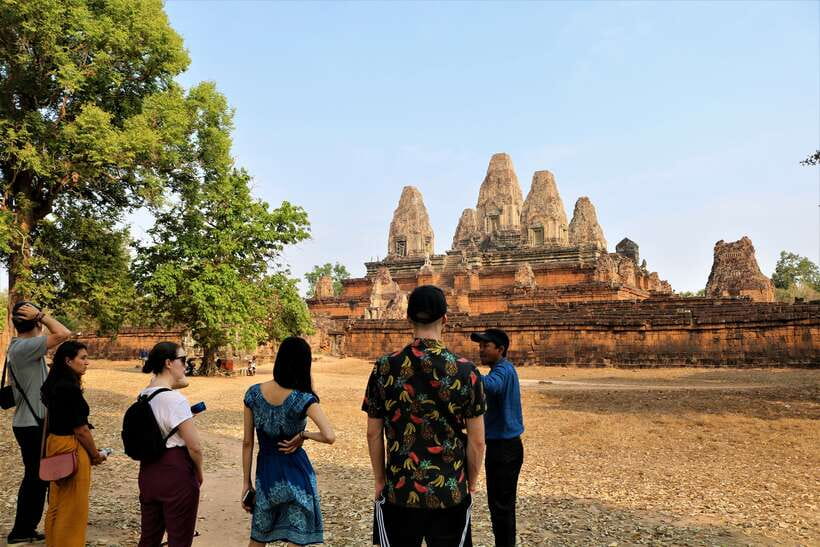
The route continues to the southern gate of Angkor Thom. The entrance is flanked by rows of 54 figures representing gods and demons. These statues give you an immediate sense of the empire’s scale and religious ideas before you even reach the city itself.
Angkor Thom was a fortified city, not just a single temple. The broad enclosure and monumental gates help you picture a planned royal center rather than a collection of unrelated ruins.
At Bayon, the focus shifts upward. More than 200 enormous faces cover the central towers, creating one of the most memorable scenes in Angkor. The faces appear from different angles as you move around the temple, and the close quarters make the site feel more personal than the vast galleries of Angkor Wat.
Bayon can be confusing without guidance because towers, corridors, and carvings overlap. Your guide can point out the central design and explain how the temple fits into the wider Khmer religious world. Allow yourself time to look up, not just ahead. The faces are easiest to miss when you are concentrating on your footing.
Lunch and a rest break follow before the final major stop of the day. The split is sensible. You get a chance to escape the heat and regain energy before Ta Prohm.
A few more things to do in Siem Reap worth a look
- Angkor Wat Sunrise and Tonle Sap Lake 1.5 Days
★ 5.0 · 39 reviews - Private Cambodia 5 Days Tour from Siem Reap to Phnom Penh
★ 5.0 · 19 reviews - 5-Day All Major Temples & Kulen Mount Waterfall & Koh Ker & Beng Mealea
★ 5.0 · 13 reviews - 5-Day ‘All The Sights’ Tour
★ 5.0 · 11 reviews
Ta Prohm and the appeal of unfinished ruins
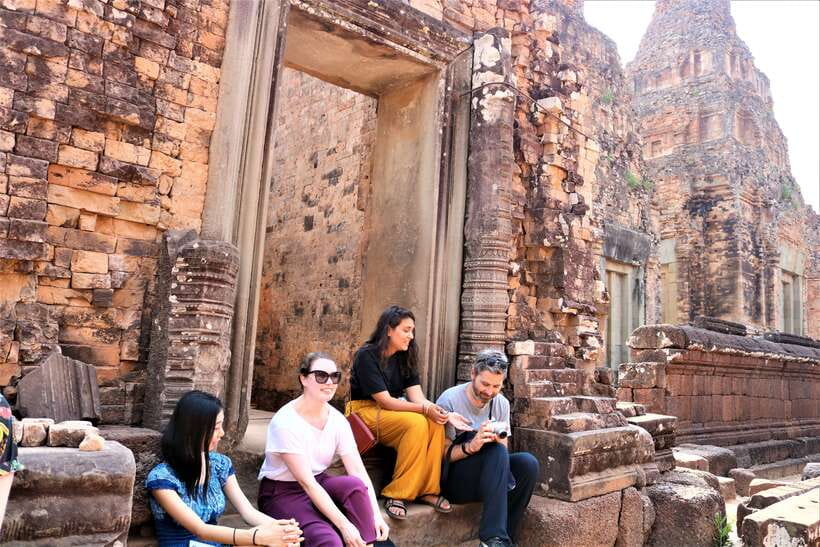
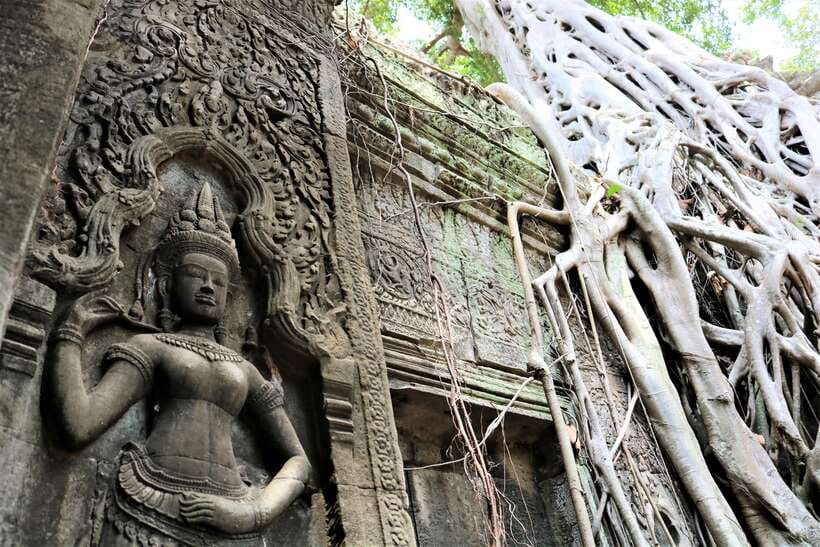
Ta Prohm is the temple most likely to feel like a film set, but its appeal is not only photographic. Trees have grown through walls and over galleries, leaving a mixture of roots, stone, shadow, and open sky.
I like Ta Prohm after Angkor Wat and Bayon because the contrast is so strong. Angkor Wat feels grand and controlled. Bayon feels crowded with faces and ideas. Ta Prohm feels exposed to time.
The site can be uneven and tiring, and tree-covered areas may draw crowds toward the same famous views. Still, it is one of the best stops for understanding what these monuments look like when nature is allowed to press back against them.
The second day is the busiest and most physically demanding part of the tour. You will walk, climb steps, stand in warm conditions, and repeat the process at several large sites. The vehicle becomes a welcome refuge, especially because drivers have provided cold water and small chilled towels at return points.
Day 3: Kampong Phluk and life on Tonle Sap
The final morning leaves the temple zone and heads through the countryside to Tonle Sap, one of the world’s largest freshwater lakes. The boat trip visits Kampong Phluk, a group of three fishing villages in a flooded forest setting.
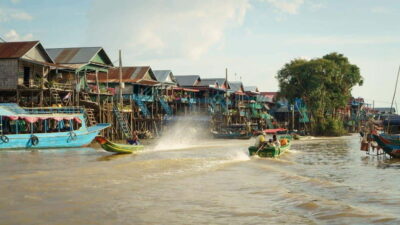
You will see houses built on stilts, local work on and near the water, and a village environment shaped by seasonal flooding. The boat ride gives you a different view of Cambodia. After two days focused on royal temples and religious monuments, you see how water affects ordinary homes, transport, and work.
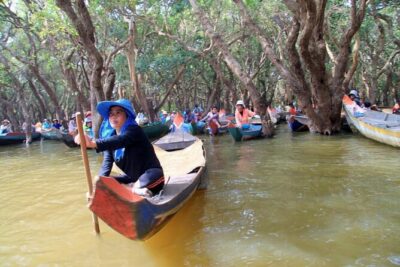
The flooded forest is a key part of the experience. It is not simply a ride across open water. Depending on conditions, you move through a setting of submerged trees and raised homes. The timing of the lake visit can affect what you see, so keep your expectations flexible.
Some departures have placed Tonle Sap on the first day rather than the final morning. That suggests the order may change to fit the season or the operator’s schedule. Confirm the day-by-day plan when booking if the order matters to you.
From March 1 through June 31, the tour information says Phare Circus is used as the alternative to Tonle Sap during the dry season. The date range includes June 31, which is not a calendar date, so confirm the exact seasonal cutoff before you pay. The circus is listed as a Category C seat, while the Tonle Sap option includes the entrance fee and boat cruise.
What the guide and driver add
A temple tour rises or falls on explanation. Stone alone can blur together after several hours, especially when you visit four or five sites in one day. A good guide gives each place a clear purpose and helps you notice carvings, layouts, and religious changes.
The guides named in the tour feedback include Pal Saruon, Sam, Usa, AJ, Pi, Pireak, and Sokpee Sumsot. The consistent strengths are patient English explanations, cultural context, and help with photographs. Pal Saruon, in particular, has been noted for taking good pictures as well as explaining the sites.
The driving service is just as practical. Keal, Ro, and Mao have been singled out for cold water and refreshing towels. That may sound small, but after walking across hot stone, it changes the rhythm of the day. Drivers also time their return to the vehicle so you do not wait long at the exit.
Do not expect a luxury vehicle experience to replace the walking. Air conditioning helps between sites, but it does not make the temples accessible to everyone. The tour is not suitable for people with mobility impairments, and short skirts are not allowed. Dress respectfully and choose shoes for uneven ground.
Timing, cost, and the small-group tradeoff
The 2.5-day format is a good middle ground. A single day gives you a quick look at Angkor Wat and perhaps one or two nearby temples. This tour gives you time for the main complex, distant sites, and Tonle Sap or Phare Circus without packing everything into one exhausting day.
The early start is the biggest practical cost. Sunrise at Angkor Wat means leaving before dawn, and the next temple stops continue after the first light. You should choose this tour because you want depth and variety, not because you want a relaxed holiday schedule.
At $69 per person, the included transport and guide make the base price attractive. Add the $62 three-day temple pass, breakfast, and any personal expenses. The temple pass is necessary for the Angkor sites and should be treated as part of the total budget, not an optional extra.
Free cancellation up to 24 hours before the tour and reserve-now, pay-later booking give you some planning flexibility. Pickup is from your hotel lobby, and you should be ready there at the stated time.
Who should book this tour?
I would choose this tour if you have roughly three days in Siem Reap and want the major Angkor sights explained in English. It suits first-time visitors who prefer a planned route, air-conditioned transport, and a small group rather than arranging several temple days alone.
It also suits people who want more than temple photographs. Banteay Srei adds detailed carving, Tonle Sap adds a view of present-day waterside life, and Phare Circus offers a cultural alternative in the dry season.
I would hesitate if you dislike early mornings, long walks, uneven stone, or fixed schedules. A private tour would give you more control over pace and stops, while a self-guided plan could cost less if you already have transport and strong temple research.
Should you book the Angkor Wat 2.5-day tour?
Book it if you want a well-organized first visit that combines the major temples with a local cultural outing. The strongest reasons are the range of sites, the small group, the early Angkor Wat entry, and the practical care from the guide and driver.
Before booking, confirm the final itinerary, the Tonle Sap or Phare Circus option, and the total cost after adding the $62 temple pass and breakfasts. If those details suit you, this is a strong-value choice for seeing Angkor without spending your short Siem Reap stay on transport planning.
FAQ
How long does the tour last?
The experience lasts 2.5 days and includes temple visits, Tonle Sap Lake or Phare Circus, hotel transport, and a local English-speaking guide.
Is sunrise at Angkor Wat included?
Yes. Day 2 begins with a pre-dawn hotel pickup so you can enter Angkor Wat before sunrise and see the temple’s eastern side.
Is the Angkor temple entrance fee included?
No. The three-day temple pass costs $62 per person and is not included in the tour price.
Is breakfast included?
No. Breakfast is not included, so you need to arrange and pay for it yourself.
What happens at Tonle Sap Lake?
You take a boat to Kampong Phluk, a group of three fishing villages. The trip includes views of stilted homes, local work, and a flooded forest setting.
Is Tonle Sap available all year?
The tour information says Phare Circus replaces Tonle Sap during the dry season from March 1 through June 31. Confirm the exact option for your dates before booking.
How large is the group?
The group is limited to 15 participants. Hotel pickup and drop-off are provided in an air-conditioned vehicle.
Is the tour suitable for people with mobility impairments?
No. The tour is not suitable for people with mobility impairments. Comfortable shoes are recommended, and short skirts are not allowed.
Just added in Siem Reap
- Twilight Tastes of Siem Reap Include Dinner★ 5.0 · 13 reviews
- Ultimate Sunrise to Angkor Wat, Angkor Thom and Bayon Temple★ 5.0 · 3 reviews
- Trekking Tour at Phnom Kulen National Park from Siem Reap★ 5.0 · 3 reviews
- Full-Day Private Tour of Angkor Wat with Pick Up★ 5.0 · 12 reviews
- Private Day Trip to Angkor Temples with Expert Guide★ 5.0 · 4 reviews
- Siem Reap City Tour with War Museum and Killing Field★ 5.0 · 27 reviews
- Waterfall & River of 1000 Siva Linga- Kulen Mountain Private Tour★ 5.0 · 3 reviews
- Angkor Wat Experience Temple Pass and Siem Reap Food Tour★ 5.0 · 13 reviews
Tonle Sap & Floating Village Tours, compared.
Sunset tour of Kampong Phluk stilts home village on the Tonle Sap
Read our review →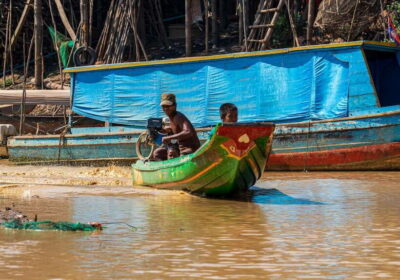
Siem Reap Floating Village Kampong Phluk Sunset with Boat
Read our review →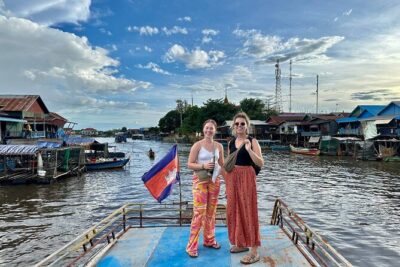
Kompong Phluk Floating Village Half-Day Tour ( Morning / Sunset )
Read our review →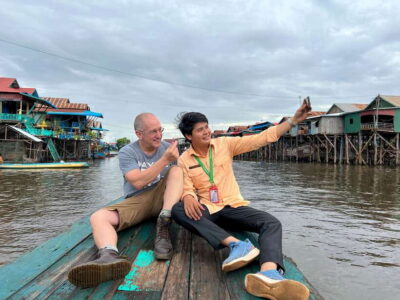
Kulen Mountain, Beng Mealea and Tonle Sap Tour
Read our review →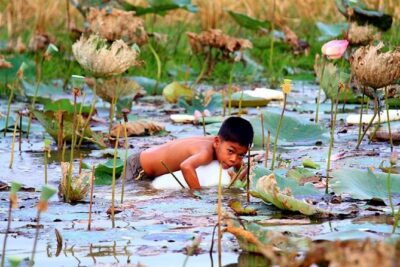
Tonle Sap Lake & Kampong Phluk Village Half-Day Tour
Read our review →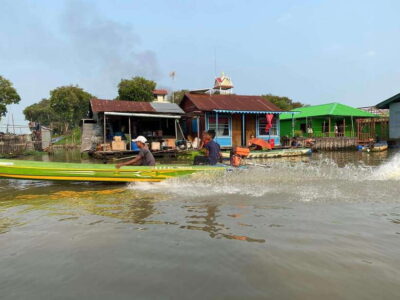
Tonle Sap, Kampong Phluk & Floating Village Tour
Read our review →
Sunset Dinner Tour: Tonle Sap Lake Floating Village
Read our review →Browse the lists this tour appears in